

AI lead conversion automation refers to intelligent software systems that automatically manage, qualify, and convert sales leads through personalized engagement workflows without manual intervention. These systems use artificial intelligence to analyze lead behavior, trigger timely responses, and guide prospects through conversion pathways while adapting to individual buyer signals in real time.
For service businesses struggling with inconsistent follow-up, slow response times, and missed opportunities, AI lead conversion automation creates a reliable infrastructure that operates 24/7. Rather than relying on manual outreach or basic email sequences, these platforms deploy intelligent conversation logic, behavioral tracking, and adaptive messaging to move leads toward booking decisions faster.
The core advantage lies in consistency and speed. While human sales teams manage limited conversations simultaneously, AI lead conversion automation handles hundreds of concurrent engagements, responds within seconds, and maintains personalized context across every touchpoint. This operational efficiency directly impacts revenue by reducing lead leakage and shortening sales cycles.
Modern conversion automation goes beyond simple chatbots or drip campaigns. It functions as an integrated sales infrastructure that connects inquiry capture, qualification logic, appointment scheduling, and CRM synchronization into one intelligent system. The result is a scalable customer acquisition engine that improves performance as it processes more interactions.
How AI Lead Conversion Automation Works

AI lead conversion automation operates through interconnected components that handle different stages of the conversion journey. The system begins when a prospect submits information through a website form, social media message, or phone inquiry. Instead of waiting for a sales representative to respond, the automation platform immediately initiates contact through the prospect’s preferred channel.
The intelligence layer analyzes incoming lead data against predefined qualification criteria such as service interest, location, budget indicators, and urgency signals. Based on this analysis, the system assigns a lead score and routes the prospect into the appropriate conversion workflow. High-intent leads receive immediate appointment booking options, while exploratory inquiries enter nurturing sequences designed to build interest over time.
Conversation management forms the operational core of these systems. Using natural language processing, the platform interprets prospect questions, detects objections, and delivers contextually relevant responses that guide the conversation toward conversion goals. The system recognizes buying signals like pricing questions or availability inquiries and dynamically adjusts its approach to accelerate the booking process.
Integration capabilities ensure that every interaction updates your business systems automatically. When a prospect books an appointment, the automation platform syncs the details to your calendar, sends confirmation messages, creates CRM records, and triggers pre-appointment preparation sequences. This eliminates data entry work and ensures nothing falls through operational gaps.
Key Components of AI Conversion Workflows
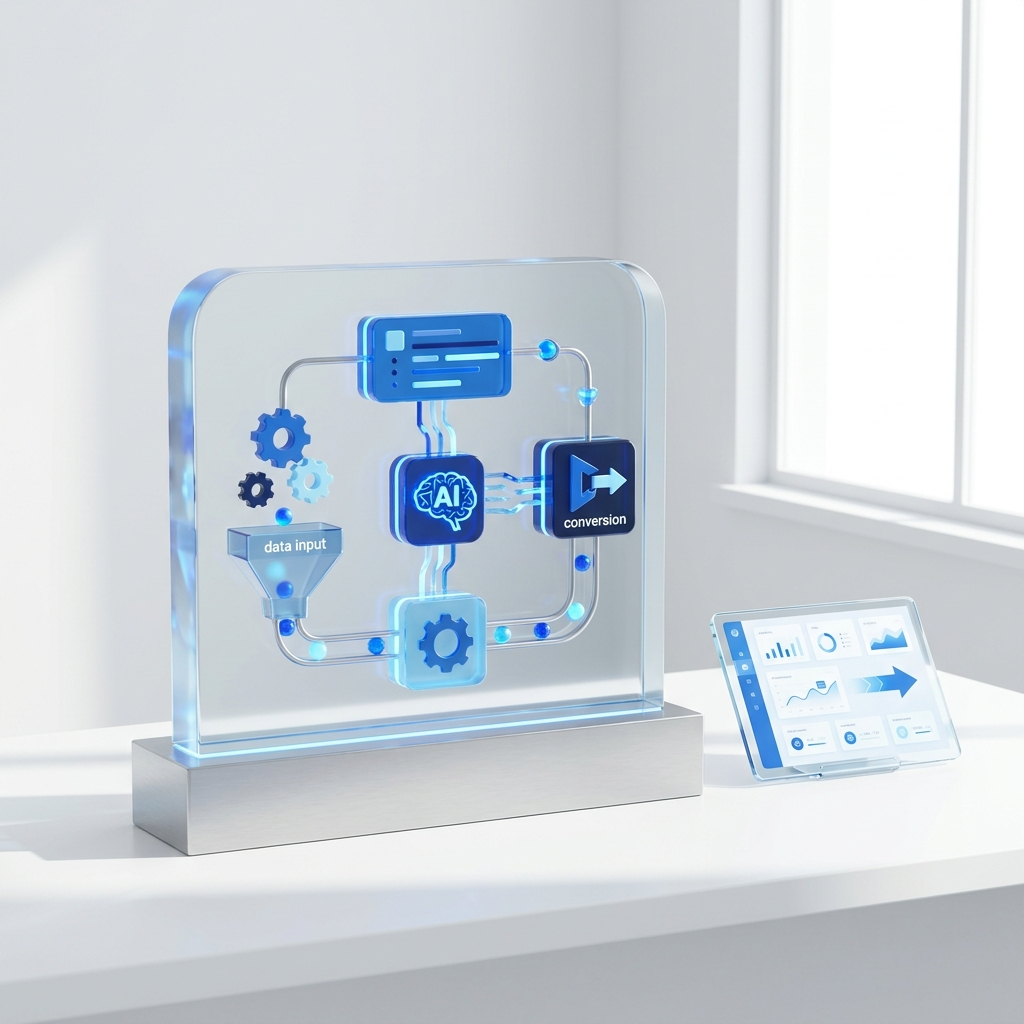
Effective AI conversion workflows consist of several specialized components working together. Lead capture mechanisms collect prospect information from multiple sources including website forms, social media platforms, phone systems, and email inquiries. The automation platform consolidates these inputs into a unified engagement interface regardless of origin channel.
Qualification engines apply business logic to separate high-value opportunities from low-fit inquiries. These systems evaluate factors like geographic serviceability, project scope alignment, timeline compatibility, and budget feasibility. Rather than treating all leads equally, qualification automation prioritizes resources toward prospects most likely to convert and generate profitable business.
Engagement automation manages the ongoing conversation with each prospect. This includes sending initial responses, answering common questions, addressing objections, providing pricing information, and offering appointment options. The system maintains conversation context across multiple interactions, remembering previous exchanges and building on established information rather than repeating questions.
Scheduling infrastructure connects directly to your calendar systems, allowing prospects to view real availability and book appointments without human intervention. Advanced platforms handle timezone conversions, buffer time management, team member availability, and service duration requirements automatically. This removes scheduling friction that often causes prospects to abandon the booking process.
Follow-up sequences ensure consistent touchpoints with prospects who don’t immediately convert. These automated workflows deliver value-focused content, address common concerns, share social proof, and provide gentle conversion nudges over time. The system tracks engagement signals and adjusts message timing and content based on prospect behavior patterns.
Benefits of Automated Lead Nurturing
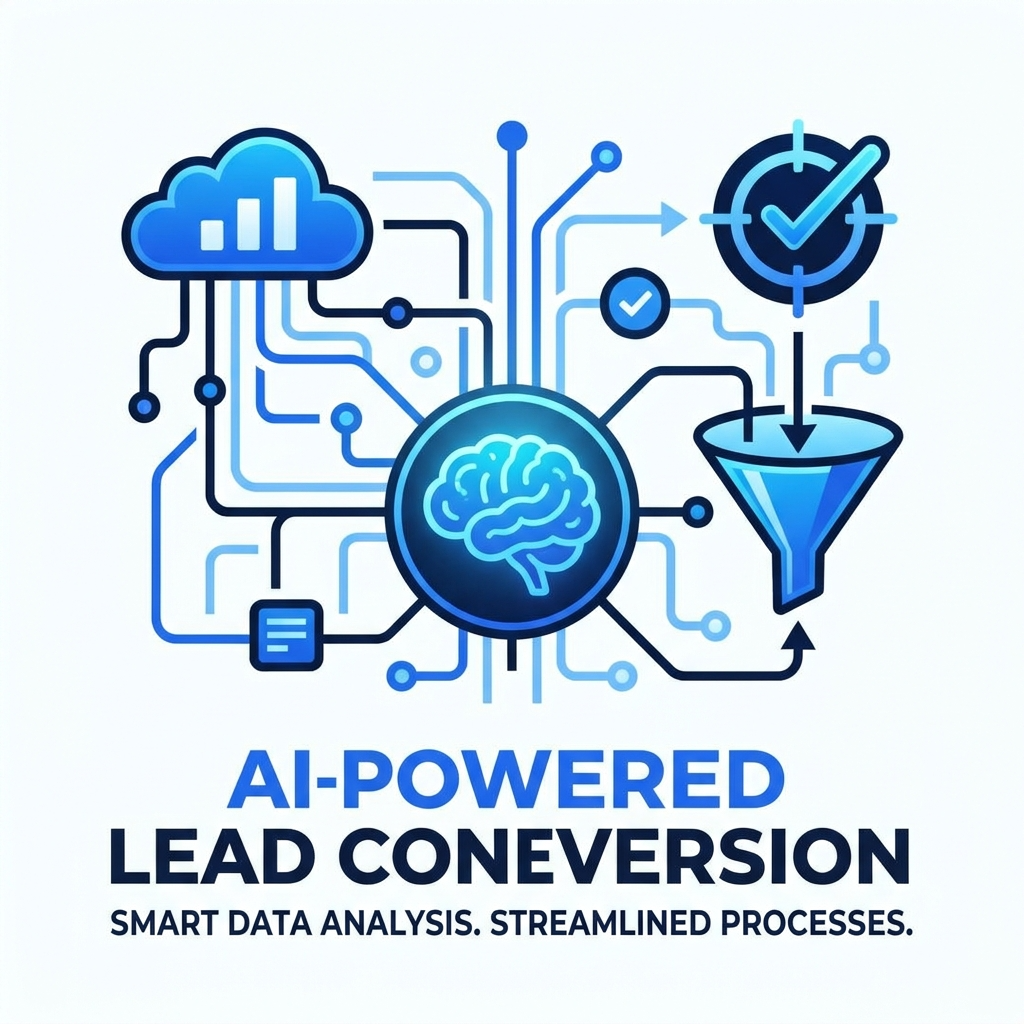
Automated lead nurturing transforms how service businesses maintain relationships with prospects who aren’t ready to buy immediately. Traditional manual follow-up fails because sales teams lack time to consistently contact every lead, remember individual conversation details, and deliver perfectly timed messages. Automation solves these operational challenges through systematic engagement that never misses a touchpoint.
Speed creates competitive advantage in lead conversion. Research consistently shows that businesses responding to inquiries within five minutes convert leads at significantly higher rates than those taking hours or days. Automated lead nurturing delivers instant initial responses and maintains rapid reply times throughout the conversation, preventing prospects from moving to competitors while waiting for your response.
Personalization at scale becomes possible when automation systems track individual prospect behaviors and preferences. The platform remembers which services interest each lead, what questions they’ve asked, which content they’ve engaged with, and how they prefer to communicate. This information powers increasingly relevant messaging that feels personal despite being systematically delivered.
Consistent brand experience results from automation handling all prospect communications according to defined standards. Every lead receives the same quality of response, the same level of detail, and the same professional tone regardless of when they inquire or which team member would have handled them manually. This consistency builds trust and reinforces your brand positioning.
Resource efficiency improves dramatically as automation handles routine qualification conversations, answers repetitive questions, and manages scheduling logistics. Your human sales team focuses exclusively on high-value activities like handling complex objections, closing large opportunities, and building relationships with key accounts. This division of labor optimizes both automation capabilities and human expertise.
AI Customer Acquisition Systems Architecture

Robust AI customer acquisition systems require careful architectural planning to deliver reliable performance. The foundation consists of multi-channel input processing that captures leads regardless of inquiry source. Modern prospects contact businesses through websites, social media, phone calls, text messages, and email, often using multiple channels during their decision journey.
Data centralization ensures all lead information flows into a single source of truth. When prospects interact through different channels, the system recognizes returning contacts and maintains unified conversation history. This prevents the frustrating experience of prospects having to repeat information or receiving contradictory messages from different touchpoints.
Intelligence layers apply machine learning models trained on historical conversion data from your business. These models identify patterns that predict conversion likelihood, optimal contact timing, effective messaging approaches, and common objection types. As the system processes more interactions, its predictions become more accurate and its recommendations more effective.
Workflow engines execute the operational logic that moves leads through conversion stages. These engines manage conditional branching based on prospect responses, time-based sequence advancement, behavioral trigger activation, and integration handoffs to external systems. Sophisticated platforms allow non-technical users to build and modify workflows through visual interfaces without coding requirements.
Reporting infrastructure provides visibility into conversion performance across every stage of your acquisition funnel. Quality systems track metrics like response times, qualification rates, appointment booking percentages, show-up rates, and ultimately conversion to paid customers. This data enables continuous optimization of your automated workflows based on actual results.
Implementing AI Sales Conversion Infrastructure

Successful implementation of AI sales conversion infrastructure begins with mapping your current lead journey and identifying friction points where prospects disengage. Common breakdown areas include slow initial response, unclear next steps, scheduling complications, and inconsistent follow-up. Understanding these gaps helps prioritize which automation components deliver the greatest immediate impact.
Defining qualification criteria establishes the business logic that routes leads appropriately. Work with your sales team to document what characteristics indicate a high-quality opportunity versus a poor fit. Consider factors like service area boundaries, minimum project sizes, required timelines, and customer type preferences. Translating these human decision criteria into automated rules ensures the system makes qualification decisions aligned with your business objectives.
Conversation design determines how your automation communicates with prospects. Develop response templates for common questions, objection-handling scripts, and value proposition messaging that reflects your brand voice. Quality conversation design feels natural and helpful rather than robotic or sales-heavy. Test your messaging with real prospects before full deployment to ensure it resonates effectively.
Integration planning connects your automation platform to existing business systems. Most service businesses need integration with CRM platforms, calendar applications, payment processors, and communication tools. Proper integration ensures data flows seamlessly between systems without manual transfer work or synchronization gaps that create operational problems.
Phased rollout reduces implementation risk by testing automation with a subset of leads before full deployment. Start with one lead source or service line, monitor performance closely, gather feedback from both prospects and your team, and refine workflows based on real-world results. Expand automation coverage as you build confidence in system performance and understand optimization opportunities.
AI Engagement Automation Best Practices

Effective AI engagement automation balances system efficiency with human touch at strategic moments. Not every interaction benefits from automation, and knowing when to route leads to human representatives separates high-performing systems from those that frustrate prospects. Complex questions, significant objections, and high-value opportunities often warrant human attention, while routine inquiries and scheduling tasks suit automation perfectly.
Response personalization improves engagement rates significantly. Rather than generic messages, quality automation references specific details from each prospect’s inquiry, mentions their location or service interest explicitly, and acknowledges their particular situation. Even automated messages should feel like they were written specifically for each recipient rather than broadcast to hundreds of leads.
Timing optimization recognizes that prospect attention varies throughout the day and week. Analyze your conversion data to identify when leads engage most actively, when they book appointments at highest rates, and when follow-up messages generate the best response. Schedule automated touchpoints during these high-performance windows rather than sending messages at arbitrary times.
Value delivery throughout the conversation builds trust before asking for commitments. Share helpful information, answer questions thoroughly, provide relevant resources, and demonstrate expertise through your automated interactions. Prospects who receive genuine value from your automation develop positive impressions of your business and convert at higher rates than those receiving purely promotional messages.
Continuous testing drives performance improvement over time. Experiment with different message variations, test various qualification questions, try alternative conversation flows, and measure the impact on conversion metrics. Small improvements across multiple touchpoints compound into significant performance gains when optimized systematically.
Common AI Lead Conversion Automation Challenges

Businesses implementing AI lead conversion automation encounter several recurring challenges that impact system effectiveness. Integration complexity tops the list, as most service businesses operate multiple disconnected software tools that resist seamless data sharing. Solving integration challenges often requires technical expertise, API documentation review, and sometimes custom development work to bridge gaps between platforms.
Conversation quality varies significantly between automation platforms and implementation approaches. Systems that sound robotic, provide unhelpful responses, or fail to understand prospect questions damage brand perception and reduce conversion rates. Achieving natural conversation flow requires investment in quality language models, extensive response library development, and ongoing refinement based on actual interaction analysis.
Lead routing logic determines whether prospects reach the right resources at the right time. Poorly configured routing sends high-intent leads into long nurturing sequences, routes unqualified inquiries to busy sales representatives, or fails to escalate complex situations appropriately. Effective routing requires deep understanding of your sales process, clear qualification criteria, and regular review of routing decisions to catch misconfigurations.
Data quality issues undermine automation performance when lead information contains errors, duplicates, or incomplete details. Garbage input produces garbage output, and automation systems amplify data problems by acting on flawed information at scale. Implementing validation rules, deduplication logic, and data enrichment processes improves the foundation that automation relies upon.
Change management challenges emerge as teams adapt to new workflows and shift responsibilities between automation and human staff. Sales representatives may resist automation if they perceive it as threatening their roles or producing lower-quality leads. Successful implementations involve team members in planning, clearly communicate how automation enhances rather than replaces human work, and demonstrate tangible benefits through pilot results.
Measuring AI Conversion Optimization Performance
Comprehensive performance measurement separates effective AI conversion optimization systems from those that consume resources without delivering results. Response time metrics track how quickly your automation engages new leads after initial inquiry. Industry benchmarks suggest five-minute response windows produce optimal results, with conversion rates declining significantly as response times extend to hours or days.
Qualification accuracy measures how effectively your automation identifies high-quality opportunities versus poor-fit inquiries. Calculate the percentage of qualified leads that ultimately convert compared to overall lead volume. Low conversion rates among qualified leads indicate either overly generous qualification criteria or ineffective sales processes, while high disqualification rates suggest overly restrictive qualification logic that filters out viable opportunities.
Engagement metrics reveal how prospects interact with your automated communications. Track message open rates, response rates, link click-through rates, and conversation continuation rates to understand where prospects engage actively versus where they disengage. Declining engagement at specific conversation stages highlights opportunities for message improvement or workflow redesign.
Appointment booking conversion measures the percentage of qualified leads that schedule consultations or service appointments. This metric directly reflects how effectively your automation moves prospects through the decision journey toward concrete next steps. Low booking rates despite high engagement suggest friction in the scheduling process or unclear value propositions.
Revenue attribution connects automation performance to actual business results. Track which leads entered through automated workflows, how many converted to paying customers, and what revenue they generated. Calculate customer acquisition cost for automated leads compared to manually handled prospects to demonstrate ROI. Quality attribution requires integration between your automation platform, CRM system, and financial tracking tools.
AI Lead Conversion Automation vs Traditional Methods
Traditional lead management relies on manual processes where sales representatives personally respond to inquiries, qualify opportunities through conversation, schedule appointments via phone or email exchanges, and maintain follow-up through individual initiative. This approach works for businesses with limited lead volume but breaks down as inquiry rates increase beyond what human teams can handle consistently.
Speed disadvantages plague manual methods because representatives handle one conversation at a time during business hours only. Prospects inquiring during evenings, weekends, or high-volume periods wait hours or days for responses, during which they often contact competitors or lose interest. AI lead conversion automation operates continuously without capacity constraints, ensuring instant engagement regardless of inquiry timing or volume.
Consistency challenges affect manual processes as different team members apply varying qualification criteria, deliver different information, and maintain different follow-up standards. This inconsistency creates uneven prospect experiences and makes performance analysis difficult since results reflect individual representative approaches rather than systematic processes. Automation delivers identical quality to every lead according to defined standards.
Scalability limitations restrict growth for businesses dependent on manual lead management. Adding capacity requires hiring, training, and managing additional sales representatives, each bringing incremental cost and management overhead. Automated systems scale nearly infinitely at minimal incremental cost, processing thousands of leads with the same infrastructure that handles dozens.
Data capture suffers in manual processes because representatives may forget to record conversation details, delay CRM updates until later, or omit important information entirely. Automation captures every interaction detail automatically, creating comprehensive records that support analysis, compliance requirements, and seamless handoffs between automation and human representatives.
Integration With Business Systems
Powerful AI lead conversion automation requires deep integration with your existing business infrastructure. CRM integration stands as the most critical connection, ensuring lead information, conversation history, qualification status, and conversion outcomes flow bidirectionally between systems. When a prospect books an appointment through automation, the CRM should automatically create the contact record, log the appointment, and trigger any internal workflows your business uses.
Calendar synchronization enables real-time availability checking and appointment booking without double-booking or scheduling conflicts. Quality integrations respect individual team member calendars, account for buffer time between appointments, recognize different service durations, and handle timezone conversions automatically. The result is appointment scheduling that works reliably without requiring manual calendar management.
Communication platform integration extends your automation across multiple channels where prospects prefer to engage. Connecting to email systems, SMS platforms, social media messaging, and phone systems allows the automation to reach prospects through their preferred channels rather than forcing them into specific contact methods. Omnichannel capability significantly improves response rates and conversion performance.
Payment processing integration streamlines the final conversion step by allowing prospects to complete purchases or pay deposits directly through automated workflows. Rather than sending separate payment links or requiring manual invoicing, integrated systems present payment options at optimal moments in the conversation and process transactions seamlessly.
Reporting tool integration consolidates performance data from multiple sources into comprehensive dashboards that reveal how automation impacts your overall business metrics. Connecting automation platforms to business intelligence tools enables analysis of conversion funnel performance, ROI calculation, channel effectiveness comparison, and identification of optimization opportunities.
Industry-Specific AI Conversion Applications
Home service contractors benefit enormously from AI lead conversion automation tailored to their operational realities. Service businesses face high inquiry volumes during peak seasons, operate with limited administrative staff, and lose revenue when leads contact competitors due to slow responses. Automation handles initial inquiry responses, collects project details, provides rough pricing guidance, and books estimate appointments automatically, ensuring no opportunity escapes due to delayed follow-up.
Professional services firms use conversion automation to qualify consulting inquiries, share relevant case studies, schedule discovery calls, and nurture long sales cycles common in B2B service environments. The system identifies decision-maker roles, company sizes, specific service interests, and budget timing to route opportunities appropriately and deliver targeted content that advances the decision process.
Healthcare providers deploy automation for appointment scheduling, insurance verification, symptom assessment, and patient intake processes. Medical practices face strict compliance requirements and privacy regulations that quality automation platforms accommodate through secure data handling and audit trail capabilities. Automation reduces administrative burden while improving patient access to scheduling and information.
Real estate professionals leverage conversion systems to qualify buyer readiness, schedule property showings, provide listing information, and maintain long-term nurturing relationships with prospects not immediately ready to transact. The extended sales cycles and relationship-dependent nature of real estate benefit from consistent automated touchpoints that keep agents top-of-mind until prospects enter active buying mode.
Financial services organizations apply automation to initial inquiry qualification, appointment scheduling with advisors, document collection, and compliance-required communication tracking. The regulated nature of financial services demands automation platforms with robust security, detailed audit capabilities, and configurable approval workflows that ensure communications meet regulatory standards.
Future of AI Customer Acquisition Technology
Emerging capabilities in AI customer acquisition technology promise to expand automation effectiveness significantly. Advanced natural language understanding will enable systems to handle increasingly complex conversations, interpret subtle objections, and adapt responses with human-like contextual awareness. As language models improve, the distinction between automated and human conversations will blur, making automation viable for more sophisticated sales scenarios.
Predictive analytics will evolve beyond simple lead scoring to forecast optimal engagement strategies for individual prospects. Systems will analyze historical patterns to recommend the best contact channel, ideal message timing, most effective value propositions, and likely objection types before prospects raise them. This predictive capability enables proactive rather than reactive engagement approaches.
Voice automation will mature to handle phone conversations with natural speech patterns, appropriate pacing, and emotional intelligence. Phone remains a preferred channel for many service business customers, and automation that handles inbound calls or conducts outbound follow-up expands coverage beyond text-based channels. Voice automation must achieve high quality thresholds to avoid negative brand impacts from poor implementations.
Visual engagement capabilities will incorporate video messaging, screen sharing, and augmented reality experiences into automated workflows. Service businesses that benefit from visual product demonstrations or project visualization will deploy automation that shares relevant visual content based on prospect interests and conversation context.
Autonomous optimization will reduce manual configuration requirements as systems automatically test message variations, adjust qualification logic, modify conversation flows, and allocate resources based on performance data. Rather than requiring human analysts to identify and implement improvements, future systems will evolve continuously through machine learning algorithms that optimize for defined business objectives.
Selecting an AI Lead Conversion Platform
Choosing the right AI lead conversion platform requires evaluating several critical factors that determine long-term success. Industry specialization matters significantly, as platforms built for specific verticals understand common workflows, terminology, and conversion patterns relevant to your business type. Generic automation tools require extensive customization to match industry-specific needs, while specialized platforms deliver value faster with less configuration effort.
Integration ecosystem depth determines how well the platform connects with your existing business systems. Evaluate native integrations with your CRM, calendar tools, communication platforms, and other critical software. Platforms with extensive integration libraries reduce implementation complexity and ongoing maintenance burden compared to those requiring custom API development for basic connections.
Conversation quality directly impacts prospect experience and conversion performance. Request demonstrations with realistic scenarios from your business, evaluate how naturally the system handles common questions, and test its ability to recognize and adapt to different prospect types. Poor conversation quality damages your brand and reduces effectiveness regardless of other platform capabilities.
Customization flexibility allows tailoring the system to your specific business processes rather than forcing you to adapt operations to software limitations. Assess how easily you can modify workflows, adjust qualification criteria, create custom conversation branches, and define unique business rules without requiring vendor professional services or development resources.
Support and training resources determine how effectively your team can leverage platform capabilities. Quality vendors provide comprehensive onboarding, ongoing education resources, responsive technical support, and strategic guidance to help you optimize performance over time. Platforms with poor support leave you struggling to resolve issues and missing optimization opportunities.
FAQ
What is the difference between AI lead conversion automation and chatbots?
AI lead conversion automation represents comprehensive systems that manage the entire conversion journey from initial inquiry through appointment booking and follow-up nurturing. Chatbots typically handle only initial website conversations. Conversion automation includes multi-channel engagement, CRM integration, qualification logic, scheduling infrastructure, and systematic follow-up workflows. Quality automation platforms function as complete sales infrastructure rather than single-purpose chat widgets.
How quickly can businesses implement AI conversion automation?
Implementation timelines vary based on business complexity and integration requirements. Simple deployments with basic workflows and minimal integrations can launch within two to four weeks. More complex implementations involving multiple system integrations, custom workflow logic, and extensive conversation design may require two to three months. Phased approaches allow businesses to achieve value quickly with core functionality while building more sophisticated capabilities over time.
Does AI lead conversion automation replace sales teams?
No, quality automation enhances rather than replaces sales teams by handling routine tasks, qualifying leads systematically, and ensuring consistent follow-up. This allows human representatives to focus on high-value activities like complex consultations, relationship building, and closing significant opportunities. The most effective approaches combine automation efficiency for repetitive processes with human expertise for situations requiring nuanced judgment and relationship skills.
What conversion rate improvements can businesses expect?
Businesses typically see 25% to 300% improvements in lead-to-appointment conversion rates after implementing quality automation, with results varying based on previous process maturity. Organizations with slow manual response times or inconsistent follow-up see the largest gains. Even businesses with strong sales teams benefit from automation’s 24/7 availability, instant response times, and perfect consistency. Specific results depend on industry, lead quality, automation configuration, and ongoing optimization efforts.
How does AI automation handle complex customer questions?
Modern AI platforms use natural language processing to interpret question intent and match inquiries to relevant responses from comprehensive knowledge bases. For questions the system can answer confidently, it provides immediate information. For complex or ambiguous inquiries, quality automation acknowledges the question, provides partial information if available, and seamlessly routes the prospect to human representatives who can address the complexity appropriately. Effective systems know their limitations and escalate rather than providing incorrect information.
What industries benefit most from lead conversion automation?
Service businesses with high inquiry volumes, time-sensitive opportunities, and appointment-based sales processes benefit significantly. Home service contractors, professional services firms, healthcare providers, real estate professionals, and financial services organizations see substantial value. Any business where rapid response impacts conversion rates, consistent follow-up drives results, and scheduling coordination creates friction can improve performance through automation.
How much does AI lead conversion automation cost?
Pricing varies widely based on platform capabilities, lead volume, and feature requirements. Entry-level solutions start around $200 to $500 monthly for basic automation with limited integrations. Mid-tier platforms handling moderate lead volumes with comprehensive features typically cost $1,000 to $3,000 monthly. Enterprise solutions with advanced capabilities, high volume capacity, and extensive customization can exceed $5,000 monthly. Most platforms offer tiered pricing that scales with business needs.
Can automation systems comply with privacy regulations?
Reputable AI lead conversion platforms include features specifically designed for regulatory compliance including GDPR, CCPA, TCPA, and industry-specific requirements. These capabilities include consent tracking, data retention controls, communication preference management, opt-out handling, and comprehensive audit trails. Businesses must configure these features appropriately and maintain policies that govern how automation uses customer data. Compliance requires both capable technology and proper operational practices.
Start Converting More Leads Today
AI lead conversion automation transforms how service businesses acquire customers by creating reliable, scalable infrastructure that engages every prospect consistently and moves them toward conversion systematically. The competitive advantage comes not from replacing human sales teams but from eliminating the operational gaps where opportunities currently disappear due to slow responses, inconsistent follow-up, and scheduling friction.
Businesses that implement quality AI lead conversion automation gain immediate benefits through faster response times, higher qualification accuracy, and improved appointment booking rates. Over time, the advantages compound as systems accumulate data, refine their approaches, and operate with increasing effectiveness. The result is predictable customer acquisition that scales efficiently as your business grows.
Success requires selecting the right platform for your specific business needs, implementing thoughtful workflows that balance automation efficiency with appropriate human touchpoints, and committing to ongoing optimization based on performance data. The investment delivers returns through increased conversion rates, reduced customer acquisition costs, and freed capacity for your team to focus on high-value activities that drive business growth.
