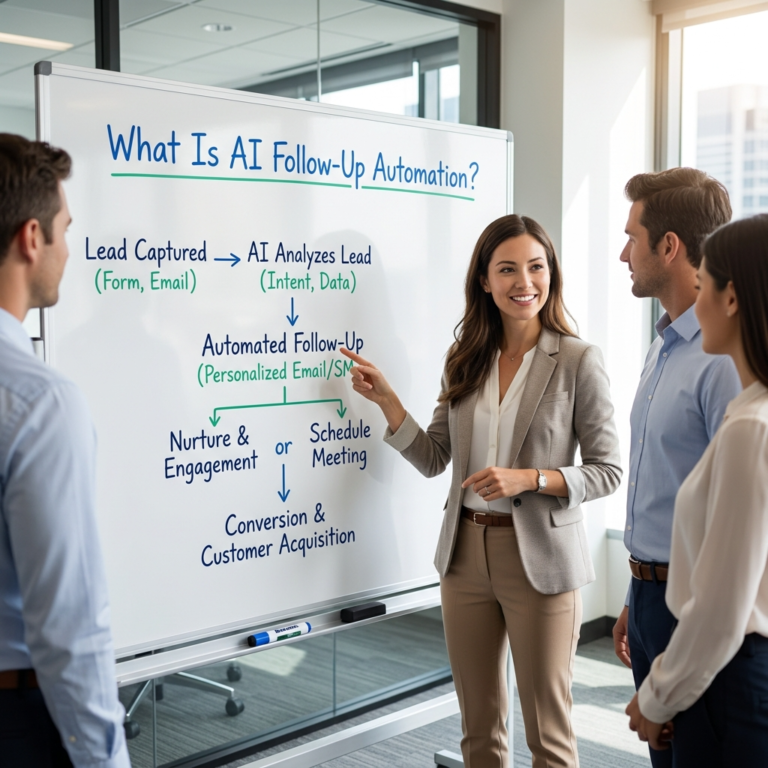

AI follow-up automation is a system that automatically sends timely, relevant messages to your leads and customers without anyone on your team lifting a finger. Instead of relying on a sales rep to remember who to call back or which quote never got a response, the system handles it for you, across multiple channels, at exactly the right time.
For service businesses that deal with a steady stream of inbound leads, this is not just a convenience. It is the difference between closing a job and losing it to a competitor who responded faster.
What Is AI Follow-Up Automation?
AI follow-up automation is a workflow system that monitors lead behavior, detects specific trigger events, and automatically sends personalized follow-up messages across channels like SMS and email, without any manual input from your team.
Unlike a basic autoresponder that fires a single pre-written message after a form submission, a true AI-powered follow-up system does much more. It tracks how a lead behaves over time, adjusts messaging based on where they are in the buying process, and continues reaching out across multiple touchpoints until the lead responds or is marked inactive.
A simple autoresponder sends the same message to everyone the moment they fill out a form. AI follow-up automation reads context. It knows whether this is a first-time inquiry or a returning customer, whether the lead clicked a link in your last message, or whether they booked and then no-showed. Based on that context, it decides what to say next, when to say it, and through which channel to reach out. This level of contextual responsiveness is what separates true AI follow-up workflows from basic email automation.
Why Follow-Up Is One of the Biggest Missed Opportunities in Sales

Most leads do not convert on the first contact. Research consistently shows that up to 80% of sales require at least five follow-up touchpoints to close, yet the majority of businesses stop reaching out after just one or two attempts. That gap is where revenue quietly disappears.
For service-based businesses, slow or inconsistent follow-up is one of the most common reasons leads go cold. A prospect requests a roofing estimate and hears nothing for three days. An HVAC company sends a quote and never follows up to see if the customer has questions. A dental practice sends a booking confirmation but never reminds the patient two days before their appointment. In each of these cases, the business did the hard work of generating the lead but failed at the step that actually turns interest into revenue.
The cost of this is real. When a lead does not hear back quickly, they move on. According to data from Lead Connect, 78% of customers buy from the first company that responds. If your follow-up depends entirely on a team member remembering to send a message, you are leaving a significant portion of your potential revenue to chance.
How Does AI Follow-Up Automation Work?
AI follow-up automation works by connecting triggers, logic, and messaging into a sequence that runs automatically based on lead actions and behavior. Here is a breakdown of how each component functions.
Trigger-Based Messaging
Every follow-up sequence starts with a trigger, which is a specific event that tells the system it is time to act. Common triggers include a form submission on your website, a missed call, a link click in a previous message, an appointment no-show, or a lead that has not responded in a set number of days.
When one of these events occurs, the system automatically initiates the appropriate sequence without any human input. A new roofing inquiry at 9 PM still gets an instant response. A quote that was sent three days ago and never opened gets a gentle check-in. The automation runs in the background while your team focuses on other work.
Multi-Channel Follow-Up Sequences
AI follow-up automation does not rely on a single channel. It delivers messages across SMS, email, and website chat simultaneously or in a coordinated sequence, depending on what gets a response. If a lead does not open your email, the system might follow up via text. If they engage on chat, the workflow adapts accordingly.
This approach works because different people prefer different channels. Some leads respond immediately to a text but ignore emails for days. Running follow-ups across multiple channels increases the probability that your message actually gets seen. You can read more about this in our guide on AI customer communication automation.
Personalization and Context Awareness
Generic follow-up messages perform poorly because they feel like mass communication. AI follow-up automation solves this by tailoring each message to the specific lead. The system knows what service the lead asked about, what stage of the funnel they are in, and how they have engaged with your previous messages.
A lead who requested a quote for a roof replacement gets a different follow-up than someone who asked a general question about your services. A customer who has already booked an appointment gets a reminder, not a sales pitch. This level of relevance makes the message feel personal, which improves open rates, response rates, and ultimately conversions.
Timing and Frequency Optimization
Sending a follow-up at the wrong time is almost as bad as not sending one at all. AI follow-up workflows analyze lead behavior and response patterns to determine when a particular lead is most likely to engage. Some systems also factor in general best-practice data, such as the fact that mid-morning texts on weekdays tend to get higher response rates.
Frequency is managed through intelligent throttling. The system tracks engagement signals and backs off when a lead stops responding or asks not to be contacted. This prevents over-messaging, which can damage trust and result in opt-outs, while keeping active leads engaged throughout the decision-making process.
What Types of Follow-Ups Can AI Automate?
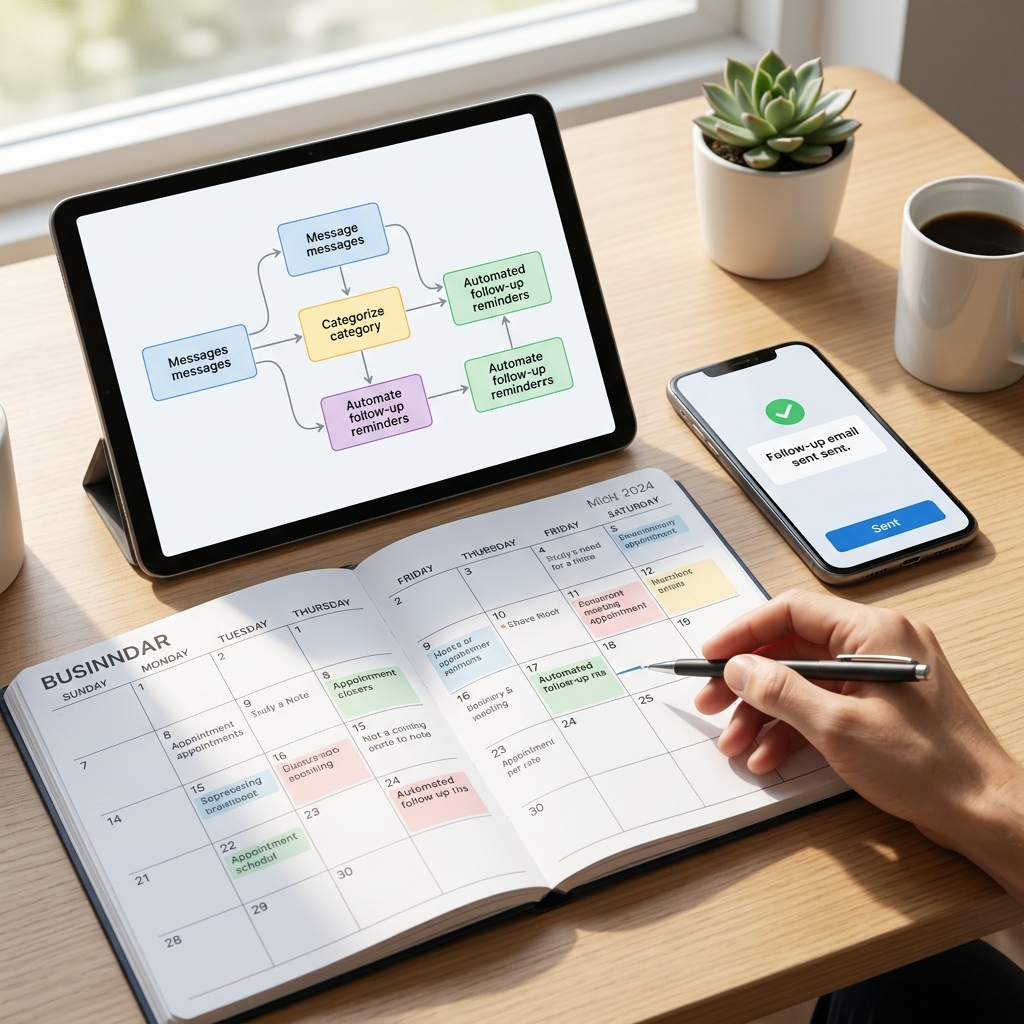
AI follow-up automation covers a wide range of scenarios that service businesses face every day. Each type serves a specific purpose in keeping leads and customers moving toward a conversion.
Post-inquiry follow-up is the most immediate use case. When a lead fills out a form or calls in, the system responds within seconds, confirms you received their request, and sets expectations for next steps. Post-quote follow-up handles the gap between sending an estimate and hearing back, automatically checking in with leads to answer questions or prompt a decision.
Appointment reminders reduce no-shows by sending automated confirmations and reminders ahead of scheduled visits. When a no-show does happen, the system handles re-engagement automatically, reaching out to reschedule rather than waiting for your team to notice. You can explore how this connects to scheduling in our overview of AI appointment booking automation.
Post-service check-ins keep the relationship going after the job is done, which creates opportunities for reviews, referrals, and repeat business. Cold lead re-engagement targets prospects who showed interest weeks or months ago but never converted, giving them a reason to revisit your offer.
Which Businesses Benefit Most from AI Follow-Up Automation?
Any service-based business with a consistent flow of inbound leads stands to benefit significantly from AI follow-up automation. The higher the volume of leads and the longer the typical sales cycle, the greater the impact.
Contractor businesses like roofing AI automation and HVAC AI automation companies see some of the strongest results because they deal with high volumes of quote requests and seasonal demand spikes. Real estate professionals benefit from the ability to stay in front of buyers and sellers over long consideration periods. Dental practices, med spas, and other appointment-based healthcare businesses use it to reduce no-shows and fill canceled slots quickly.
Solar companies, law firms, and automotive businesses all share a common challenge: leads come in hot and go cold fast. Automated follow-up keeps those conversations alive without requiring a dedicated person to manage each one manually. Agencies and consultants also use follow-up automation to stay responsive during busy periods when manual outreach simply cannot keep up with demand.
How AI Follow-Up Automation Fits Into a Broader Sales Workflow
AI follow-up automation does not work in isolation. It is one piece of a larger connected system that covers every stage of the lead-to-customer journey.
At the top of the funnel, AI sales funnel automation handles lead capture and initial response. Once a lead is in the system, follow-up automation takes over to keep the conversation moving. As the lead qualifies and moves toward a decision, AI CRM automation ensures that all interactions are logged, lead stages are updated, and nothing falls through the cracks.
When these systems work together, your sales process becomes predictable. Every lead gets the same quality of follow-up regardless of how busy your team is, what time of day an inquiry comes in, or whether a sales rep is on vacation. The result is a more consistent conversion rate and a clearer picture of where leads are at any given moment.
Key Features to Look for in an AI Follow-Up Automation Platform

If you are evaluating tools, not every platform that claims to offer AI follow-up automation delivers the same capabilities. Here are the core features that actually matter for service businesses.
Trigger-based workflows are non-negotiable. The platform must be able to detect specific events and launch the right sequence automatically. Multi-channel delivery across SMS, email, and chat ensures your messages reach leads where they are most active. CRM integration keeps your contact records accurate and up to date without requiring manual data entry after every interaction.
Lead segmentation allows you to send different messages to different types of leads based on the service they inquired about, their stage in the funnel, or their previous engagement history. Conversation tracking gives you visibility into every exchange so your team can step in when needed. Analytics and reporting show you which sequences are performing, where leads are dropping off, and what adjustments can improve results over time. You can review the full list of capabilities in the AI sales automation features overview.
Common Mistakes Businesses Make Without AI Follow-Up Automation
Without automated follow-up in place, most service businesses fall into the same patterns that cost them leads.
Following up too late is the most common issue. Research from MIT found that the odds of qualifying a lead drop by over 21 times if you wait 30 minutes instead of responding within 5 minutes. Most businesses without automation cannot consistently respond that fast. Sending the same generic message to every lead is another frequent mistake. A homeowner asking about an emergency roof repair does not need the same message as someone casually exploring options for next spring. When every lead gets the same template, response rates suffer.
Failing to re-engage cold leads is a significant source of lost revenue. Many leads who went quiet are still in the market. They may have gotten busy, compared a few options, or simply forgotten to respond. A structured re-engagement sequence can recover a meaningful percentage of those contacts. Losing track of where each lead stands is perhaps the most damaging pattern because it creates gaps in follow-up that grow wider over time, leaving deals in limbo until they disappear entirely.
Is AI Follow-Up Automation Right for Your Business?

AI follow-up automation is a strong fit if the way you currently manage leads relies on memory, manual reminders, or the hope that a sales rep will remember to check in.
Ask yourself a few honest questions. Do you regularly lose track of leads after the first contact? Do quotes go out and rarely get followed up? Are your appointment no-show rates higher than they should be? Is your team too busy during peak seasons to stay on top of every open conversation? If you answered yes to any of these, automated follow-up for leads is not a luxury. It is a practical fix for a problem that is already costing you revenue.
The businesses that benefit most are service companies with consistent inbound lead flow, a sales cycle longer than one conversation, and a team that is stretched too thin to follow up with every prospect manually. The outcomes are straightforward: faster response times, fewer leads lost to silence, more appointments confirmed, and more deals closed with less manual effort. If you want to see how this works in practice, you can book a demo and walk through a setup built around your specific business.
Frequently Asked Questions
What is AI follow-up automation?
AI follow-up automation is a system that automatically sends personalized follow-up messages to leads and customers based on their behavior and actions, without any manual effort from your team. It uses triggers, workflows, and multi-channel delivery to keep leads engaged from first contact through to conversion.
How is AI follow-up automation different from a regular email autoresponder?
A basic autoresponder sends a single pre-written message to everyone who completes a form. AI follow-up automation tracks lead behavior over time, adjusts messaging based on engagement history, and continues reaching out across SMS, email, and chat until a response is received or the lead is marked inactive.
Can AI follow-up automation work across SMS and email at the same time?
Yes. Multi-channel follow-up automation delivers messages through SMS, email, and website chat either simultaneously or in a coordinated sequence. If a lead does not respond through one channel, the system can follow up through another automatically.
How quickly does AI follow-up automation send the first message after a lead comes in?
Most AI follow-up systems send the first message within seconds of a trigger event like a form submission or missed call. Speed matters significantly at this stage since responding within the first few minutes dramatically increases the chance of connecting with a lead.
Will automated follow-up messages feel impersonal to my customers?
Not when the system is set up with proper personalization. AI follow-up automation uses lead data such as the service they inquired about, their name, and their stage in the funnel to craft messages that feel relevant and specific rather than generic.
What triggers an AI follow-up sequence?
Common triggers include a form submission, a missed call, an unopened email after a set number of days, an appointment no-show, a link click, or a lead that has gone quiet for a defined period. Triggers can be customized to match the specific actions that matter most to your sales process.
How many follow-up messages should a sequence include?
The right number depends on your industry and sales cycle, but most effective sequences include between four and seven touchpoints spread over several days or weeks. The key is spacing them out appropriately and stopping when a lead responds or opts out.
Can AI follow-up automation help re-engage leads that went cold?
Yes. Lead re-engagement automation is one of the most valuable use cases. Leads that went quiet weeks or months ago can be re-entered into a targeted sequence that offers new information, a time-sensitive offer, or simply checks in to see if they are still interested.
Does AI follow-up automation integrate with my existing CRM?
Most platforms built for service businesses include CRM integration as a core feature. This means lead data, conversation history, and stage updates are synced automatically so your team always has a current view of each contact without manual data entry.
Is AI follow-up automation suitable for small service businesses?
Absolutely. Small businesses often benefit the most because they typically have fewer staff available to follow up manually. Automated follow-up for leads levels the playing field by ensuring every inquiry gets a fast, consistent response regardless of how busy the team is.
