
AI appointment booking uses automation to handle scheduling tasks without human involvement. The system responds to customer inquiries, checks calendar availability, confirms appointments, and sends reminders—all through intelligent workflows that run 24/7. Service businesses use these systems to reduce response time, eliminate scheduling conflicts, and convert more leads into booked consultations. This guide explains how the technology works, what happens behind the scenes, and why it matters for businesses that depend on scheduled appointments.
What AI Appointment Booking Actually Does
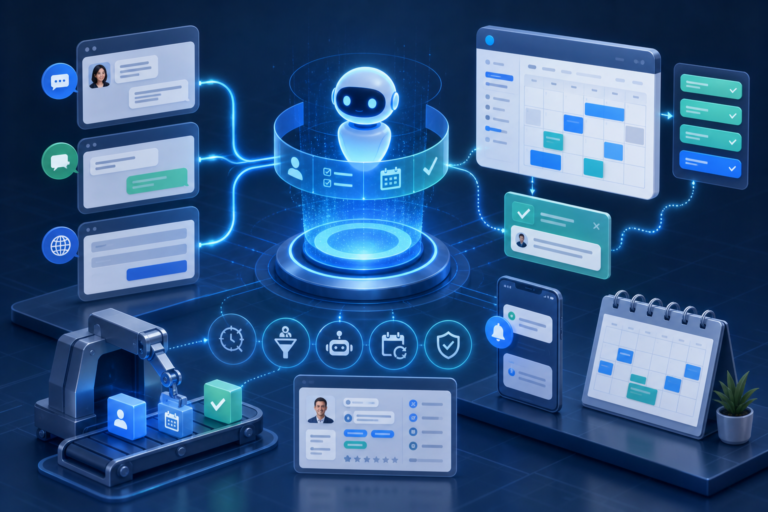
AI appointment booking automates the entire scheduling process from first contact to confirmed appointment. When a lead reaches out through your website, social media, or text message, the AI responds immediately with available time slots. It asks qualifying questions, checks your calendar in real time, books the appointment, and sends confirmation details to both parties.
The system handles follow-ups automatically. If someone doesn’t respond, the AI sends reminder messages at set intervals. If they need to reschedule, the system processes the request and updates the calendar without staff involvement. This removes the back-and-forth that typically happens with manual scheduling.
The result is faster booking times and fewer missed opportunities. Most leads expect responses within minutes, not hours. AI appointment booking systems meet that expectation consistently, which directly impacts conversion rates.
The Core Components of AI Scheduling Systems
Every AI booking system relies on several connected parts that work together to automate the scheduling workflow.
Intelligent Lead Capture
The process starts when a potential customer makes contact. AI systems monitor multiple channels—website forms, chat widgets, SMS, social media messages, and email. When a new inquiry arrives, the system identifies it as a scheduling opportunity and begins the conversation immediately.
This initial response happens in seconds, not minutes or hours. Speed matters because research shows that responding to leads within five minutes increases conversion rates by up to 400% compared to waiting 10 minutes or longer.
Calendar Integration and Availability Checking
The AI connects directly to your scheduling system. It knows which time slots are open, which are blocked, and which team members are available. When presenting options to a lead, the system only shows genuinely available times.
This eliminates double-bookings and scheduling conflicts. The calendar updates in real time across all platforms, so your team always sees accurate information. Popular integrations include Google Calendar, Outlook, Calendly, and custom CRM systems.
Conversation Management and Lead Qualification
Before booking an appointment, the AI asks questions to qualify the lead. It gathers information about their needs, budget, timeline, and specific requirements. This ensures that only qualified leads get scheduled, which saves your team from spending time on conversations that won’t convert.
The system adapts its questions based on previous answers. If someone indicates they’re not ready to buy, the AI can route them to a nurture sequence instead of booking immediately. This flexibility ensures that each lead receives appropriate follow-up.
Automated Confirmation and Reminders
Once an appointment is booked, the system sends confirmation messages through the lead’s preferred channel. It includes appointment details, location information, preparation instructions, and cancellation policies.
Reminder messages go out automatically at scheduled intervals—typically 24 hours before and one hour before the appointment. These reminders reduce no-show rates significantly. Some systems also include links for easy rescheduling if the customer needs to change their time.
How the AI Processes Scheduling Requests
Understanding the technical workflow helps explain why AI booking automation outperforms manual scheduling.
Natural Language Processing for Scheduling Intent
When a message arrives, the AI uses natural language processing to understand what the person wants. It recognizes phrases like “I’d like to schedule a consultation,” “What times are available next week?” or “Can I book an appointment?” even when the wording varies.
The system extracts key information from the message—preferred days, time ranges, service type, and urgency level. It then formulates an appropriate response that moves the conversation toward booking.
Real-Time Availability Matching
The AI queries your calendar system to find available slots that match the lead’s preferences. If they requested mornings next week, it returns only morning slots within that timeframe. The system considers buffer times, meeting durations, and team member specializations when suggesting options.
When presenting choices, the AI typically offers three to five specific time slots rather than asking open-ended questions. This reduces decision fatigue and speeds up the booking process.
Handling Objections and Scheduling Conflicts
If a lead can’t commit immediately, the AI handles common objections. It might offer flexible scheduling options, explain the value of booking sooner rather than later, or provide alternative times if the first suggestions don’t work.
When conflicts arise—like a team member calling in sick—the system can proactively reach out to affected appointments and offer rescheduling options before the customer shows up to find no one available.
Integration with Business Systems
AI scheduling automation works best when connected to your existing business tools. These integrations enable seamless data flow and eliminate manual data entry.
CRM Synchronization
Every booked appointment creates or updates a record in your CRM. The system logs conversation history, appointment details, qualification notes, and follow-up status. This gives your sales team complete context before they speak with the lead.
Platforms like GetDMFlow offer AI CRM automation that goes beyond basic logging. The system can trigger specific workflows based on appointment status, update deal stages automatically, and alert team members when action is needed.
Multi-Channel Communication
Leads contact businesses through various channels—website chat, SMS, Facebook Messenger, Instagram DMs, and email. AI booking systems handle all these channels from a single platform. The conversation stays consistent regardless of where it started.
This multi-channel capability matters because customers expect to communicate on their preferred platform. Forcing them to switch channels creates friction and increases drop-off rates.
Payment and Documentation Systems
Some businesses require deposits or payments at booking time. AI systems can integrate with payment processors to collect fees automatically. They can also send intake forms, service agreements, or preparation documents that customers need to complete before their appointment.
These integrations reduce administrative work and ensure that necessary steps happen before the scheduled meeting.
Business Impact of Automated Scheduling
The operational benefits of AI scheduling automation extend beyond convenience. They directly affect revenue and efficiency metrics.
Speed-to-Booking Optimization
Time matters in lead conversion. The faster you respond and book an appointment, the higher your conversion rate. AI systems respond instantly, which means leads often book within minutes of their initial inquiry.
This speed advantage becomes critical in competitive markets where multiple businesses compete for the same customer. The first company to respond and make booking easy usually wins the business.
Increased Booking Capacity
Manual scheduling limits how many appointments your team can handle. Staff can only process one conversation at a time, and they’re unavailable outside business hours. AI systems have no such limits. They handle unlimited simultaneous conversations and operate 24/7.
This expanded capacity means you can book more appointments without hiring additional staff. Evening and weekend inquiries—which previously went unanswered until Monday morning—now convert at the same rate as business-hour leads.
Reduced No-Show Rates
Automated reminders significantly reduce missed appointments. When customers receive timely notifications with easy rescheduling options, they’re more likely to show up or give advance notice if they need to cancel.
Lower no-show rates mean better resource utilization and more predictable revenue. Your team spends less time dealing with gaps in their schedule caused by last-minute cancellations.
Better Lead Quality and Qualification
AI systems ask consistent qualification questions for every lead. This standardization ensures that your team only meets with prospects who fit your ideal customer profile. The AI can route unqualified leads to alternative workflows, like educational content or lower-touch sales processes.
Improved qualification saves time and increases close rates. Your sales team focuses on conversations with high conversion potential rather than spending time with poor-fit prospects.
AI Appointment Booking for Different Business Types
Different industries have unique scheduling requirements, and AI systems adapt to these needs.
Service-Based Businesses
Roofing companies, HVAC contractors, and home service businesses often schedule on-site consultations. AI booking systems gather property information, understand urgency (like emergency repairs), and route appointments to technicians with appropriate expertise and availability.
These businesses benefit particularly from geographic routing capabilities that ensure technicians are scheduled efficiently based on location.
Healthcare and Wellness Providers
Dentists, med spas, and healthcare practices need appointment types that vary in length and require specific resources. AI systems handle these complexities by matching appointment types with provider availability and required equipment.
Compliance requirements also matter in healthcare. AI systems can collect necessary consent forms and insurance information during the booking process.
Professional Services
Law firms, consultants, and agencies typically schedule discovery calls or consultation meetings. AI systems qualify leads by understanding their specific legal issues, business challenges, or project requirements before booking time with expensive professional resources.
This qualification ensures that attorneys and consultants spend their time on cases and projects that align with their expertise and business goals.
Real Estate Professionals
Real estate agents schedule property showings, buyer consultations, and listing appointments. AI systems can present available properties, coordinate showing times that work for multiple parties, and send property details automatically.
The system can also prioritize leads based on pre-qualification criteria like budget, timeline, and financing status.
Advanced Features in Modern AI Booking Systems
Leading platforms include capabilities that go beyond basic scheduling automation.
Intelligent Rescheduling and Cancellation Handling
When customers need to change appointments, AI systems process these requests automatically. The system finds alternative times, updates all parties, and adjusts the calendar without staff involvement.
Some systems also implement smart rescheduling policies that prioritize high-value appointments and manage waitlists for popular time slots.
Lead Nurturing for Not-Ready-to-Book Contacts
Not every inquiry results in an immediate appointment. AI systems recognize when someone is researching or comparing options and can switch to a nurture sequence instead of pushing for an immediate booking.
These nurture workflows provide educational content, answer common questions, and periodically check in to see if the lead is ready to schedule. This keeps your business top-of-mind without being pushy.
Team Coordination and Resource Allocation
For businesses with multiple team members, AI systems handle scheduling complexity by routing appointments based on specialization, experience level, and current workload. The system ensures balanced distribution of appointments across your team.
It can also recognize when certain team members are overbooked and automatically redirect new inquiries to available colleagues.
Performance Analytics and Optimization
AI booking platforms track detailed metrics about your scheduling process. You can see conversion rates at each step, average time-to-booking, most common drop-off points, and channel performance.
This data enables continuous optimization. You can test different qualification questions, adjust your available time slots, and refine your messaging based on what actually drives more bookings.
Implementation Considerations
Successfully deploying AI appointment booking requires planning and proper setup.
System Configuration and Workflow Design
Before going live, you need to define your booking workflows. This includes qualifying questions, available appointment types, team member assignments, and follow-up sequences. Most platforms like GetDMFlow offer implementation support to help design workflows that match your business processes.
Proper configuration ensures the AI represents your brand accurately and handles edge cases appropriately.
Integration with Existing Tools
Your AI booking system needs to connect with your calendar, CRM, payment processor, and communication channels. Most modern platforms offer pre-built integrations with popular tools, but custom integrations may be necessary for specialized systems.
Plan for integration testing to ensure data flows correctly between systems and that no appointments fall through the cracks during the transition.
Staff Training and Change Management
Your team needs to understand how the AI system works and how their role changes. They’ll spend less time on scheduling and more time on actual appointments and higher-value activities.
Provide clear documentation about how to manage the system, override automated decisions when necessary, and handle exceptions that the AI escalates to human staff.
Monitoring and Continuous Improvement
After launch, regularly review performance metrics and customer feedback. Look for patterns in dropped conversations, common questions the AI struggles with, and opportunities to improve conversion rates.
Most businesses see immediate improvements in response time and booking rates, with ongoing optimization delivering additional gains over time.
Security and Privacy in AI Scheduling
Automated systems handle sensitive customer information, which requires appropriate security measures.
Data Protection and Compliance
AI booking platforms must comply with privacy regulations like GDPR, CCPA, and industry-specific requirements (like HIPAA for healthcare). This includes secure data storage, encryption for data in transit, and clear policies about data retention and deletion.
Choose platforms that provide compliance documentation and take security seriously.
Customer Consent and Transparency
Customers should know they’re interacting with an AI system. Clear disclosure builds trust and sets appropriate expectations. Most customers don’t mind AI handling scheduling as long as the system works efficiently and offers easy escalation to human staff when needed.
Your booking workflows should include options for customers who prefer to speak with a person instead of completing booking through automation.
Frequently Asked Questions
How does AI appointment booking differ from traditional online scheduling?
Traditional online scheduling requires customers to visit a booking page and manually select times. AI appointment booking actively engages leads through conversation, asks qualifying questions, and guides them through the process. The AI reaches out across multiple channels rather than waiting for customers to find your booking page.
Can AI scheduling systems handle complex appointment types?
Yes. Modern AI booking systems manage multiple appointment types with different durations, required resources, and team member assignments. They can handle dependencies like “consultation before service” and coordinate multi-person appointments.
What happens when the AI can’t handle a scheduling request?
Advanced systems recognize when they need human help. They can escalate complex situations to staff members while maintaining conversation context. The human team member sees the full conversation history and can take over seamlessly.
How quickly can businesses implement AI appointment booking?
Basic implementation typically takes one to two weeks, including system configuration, integration setup, and staff training. More complex implementations with custom workflows and multiple integrations may take longer. Many platforms offer guided onboarding to speed up deployment.
Does AI scheduling work for businesses with irregular availability?
Yes. The system syncs with your calendar in real time and reflects current availability. When team members block time or unexpected schedule changes occur, the AI immediately updates the available slots it presents to leads.
How does the AI handle time zones for remote appointments?
AI systems detect the customer’s time zone and present available times in their local time. The system handles all time zone conversions automatically and includes time zone information in confirmation messages to avoid confusion.
Can the AI book appointments outside business hours?
Absolutely. One of the main benefits of AI booking workflows is 24/7 operation. Leads who reach out evenings, weekends, or holidays receive immediate responses and can book appointments just as easily as during business hours.
What ROI can businesses expect from AI appointment booking?
Most businesses see 30-50% increases in booking rates due to faster response times and 24/7 availability. They also reduce staff time spent on scheduling by 60-80%, which allows reallocation to higher-value activities. Specific ROI depends on lead volume, average appointment value, and previous manual process efficiency.
Choosing the Right AI Booking Platform
Not all AI scheduling systems offer the same capabilities. Consider these factors when evaluating options.
Core Scheduling Capabilities
Verify that the platform handles your specific appointment types, duration variations, and team member routing needs. Test the booking flow to ensure it feels natural and includes appropriate qualification steps.
Integration Ecosystem
Check which tools the platform integrates with natively. Strong integrations with your existing CRM, calendar system, and communication channels are essential for smooth operations. Platforms like GetDMFlow offer comprehensive integration capabilities that connect with popular business tools.
Customization and Flexibility
Your booking workflows should reflect your brand voice and business processes. Look for platforms that allow customization of conversation flows, qualification criteria, and automated messaging without requiring technical expertise.
Support and Implementation Assistance
Evaluation implementation support and ongoing customer service. Platforms that provide dedicated onboarding, workflow design assistance, and responsive support help ensure successful deployment and continued optimization.
Pricing Structure
Understand how the platform charges—per conversation, per booked appointment, per user, or flat monthly fee. Consider your expected volume and calculate the total cost. Compare this against the value of increased booking rates and reduced administrative time. Review pricing options to find a structure that aligns with your business model.
The Future of AI Appointment Booking
AI scheduling technology continues to advance with new capabilities that further improve business efficiency.
Predictive Scheduling and Demand Forecasting
Emerging systems use historical data to predict busy periods and suggest optimal availability configurations. They can recommend when to add staff capacity or adjust pricing based on demand patterns.
Voice-Based Booking Integration
Voice AI enables phone-based appointment booking with the same automation benefits. Customers can call your business and complete scheduling through natural voice conversation without waiting for a receptionist.
Enhanced Personalization
Future systems will remember customer preferences from previous interactions and proactively suggest appointment times based on their historical patterns. This level of personalization improves customer experience and increases rebooking rates.
Cross-Business Scheduling Coordination
Advanced platforms may coordinate scheduling across related businesses—for example, automatically booking follow-up appointments with specialists after an initial consultation or coordinating multi-service appointments that require sequential scheduling.
Getting Started with AI Appointment Booking
Businesses ready to automate their scheduling process should start with clear goals and proper planning. Identify your current scheduling challenges—slow response times, high no-show rates, limited booking capacity, or inconsistent lead qualification. Choose an AI booking platform that addresses these specific issues.
Start with a focused implementation rather than trying to automate everything at once. Many businesses begin by automating their most common appointment type and expand to additional services after confirming the system works well. This phased approach reduces implementation risk and allows your team to build confidence with the technology.
Track key metrics from the start so you can measure improvement. Monitor response time, booking conversion rate, no-show percentage, and staff time spent on scheduling. These metrics demonstrate ROI and guide ongoing optimization efforts.
AI appointment booking represents a significant operational upgrade for service businesses that depend on scheduled consultations. The technology eliminates scheduling friction, operates around the clock, and converts more inquiries into confirmed appointments. As customer expectations for immediate response continue to rise, automated scheduling systems become less optional and more essential for competitive businesses.
Explore how AI sales automation can transform your entire lead-to-booking process, or schedule a demo to see AI appointment booking in action for your specific business needs.
