
AI appointment booking is an intelligent automation system that schedules consultations, meetings, and service appointments without manual intervention. Instead of staff members responding to inquiries, checking calendars, and coordinating schedules, AI handles the entire booking workflow from first contact to confirmed appointment.
This technology transforms how service businesses capture and convert leads. When a potential customer reaches out, the system responds instantly, qualifies their needs, checks calendar availability, and books the appointment in real time. The entire process happens automatically, whether someone contacts you at 2 PM or 2 AM.
For businesses that rely on consultations, this automation eliminates booking delays that cause lost revenue. Every hour of delay in responding to a lead reduces conversion probability. AI appointment booking solves this by engaging prospects immediately and moving them directly into your calendar.
How AI appointment booking works
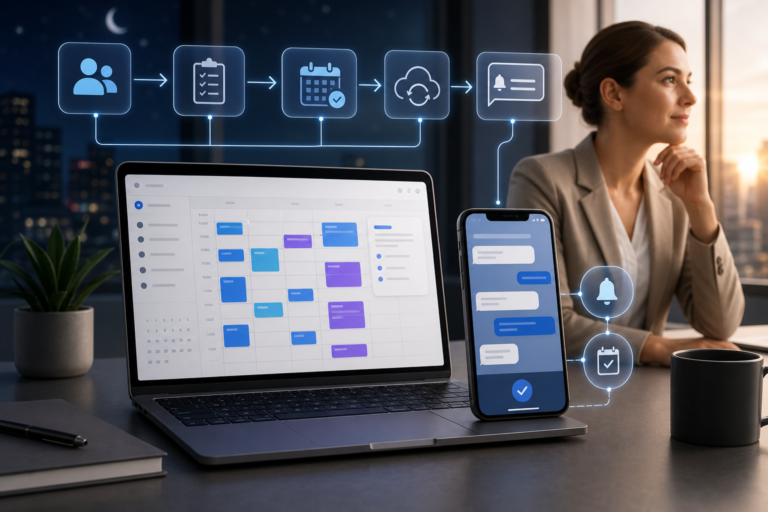
The system operates through a series of connected automation steps that replace manual scheduling tasks. When a lead comes in through your website, social media, or advertising, the AI immediately initiates a conversation. It asks qualifying questions, understands the customer’s needs, and determines which service or consultation type fits best.
Next, the system accesses your calendar in real time. It identifies available time slots based on your business hours, existing appointments, and any scheduling rules you’ve configured. The AI presents options to the prospect, allows them to select their preferred time, and confirms the booking instantly.
After booking, automated workflows continue working. The system sends confirmation messages, adds the appointment to your CRM, and schedules reminder communications. If the prospect doesn’t book immediately, follow-up messages go out automatically until they schedule or clearly decline.
This end-to-end automation means your team never touches the initial booking process. Staff only gets involved when the actual appointment happens. The system handles everything from first contact to showing up in your calendar as a confirmed consultation.
Why businesses need automated scheduling systems
Speed matters more than most businesses realize. Research shows that responding to leads within five minutes increases conversion rates dramatically compared to waiting even 30 minutes. Most service businesses can’t maintain that response speed manually, especially outside normal business hours.
Appointment booking represents a major operational bottleneck. Staff members spend hours each week answering phones, responding to messages, checking calendars, and coordinating schedules. This time costs money and pulls people away from higher-value activities. Automation eliminates this bottleneck completely.
Missed appointments create another problem. When bookings happen manually, confirmation and reminder steps often get skipped or happen inconsistently. Intelligent scheduling systems automate these touchpoints, sending confirmations immediately and reminders at optimal intervals. This reduces no-shows significantly.
The 24/7 availability factor changes lead capture completely. Potential customers research services at night, on weekends, and during holidays. If your booking system only works during business hours, you lose these opportunities. AI scheduling works around the clock, capturing leads whenever they’re ready to book.
Key features of AI booking automation
Effective appointment automation includes several essential capabilities that work together. Instant lead response forms the foundation. When someone inquiries about your services, the system engages them immediately with relevant questions and information. This immediate engagement prevents prospects from contacting competitors while waiting for your response.
Intelligent qualification happens during the conversation. The AI asks questions that determine whether the lead fits your ideal customer profile, what service they need, and how urgent their timeline is. This information gets captured automatically and used to prioritize follow-up or route the appointment to the right team member.
Calendar integration connects your scheduling tools directly to the booking workflow. The system sees your availability in real time across multiple team members or locations. When someone books, the appointment appears instantly in your calendar with all relevant details. No manual entry or double-checking required.
Multi-channel communication ensures prospects can book through their preferred method. Whether they start the conversation through website chat, SMS, social media messages, or email, the AI maintains context and continues the booking process seamlessly. The prospect doesn’t need to repeat information or switch platforms.
Automated follow-up workflows handle the critical touchpoints after initial contact. If someone doesn’t book immediately, the system sends strategically timed messages that address common objections and encourage scheduling. These follow-ups happen automatically based on rules you set, maintaining engagement without manual effort.
Real-time availability management
The system needs accurate calendar visibility to function properly. Integration with scheduling platforms like Google Calendar, Outlook, or specialized booking software ensures the AI always knows what time slots are actually available. This prevents double-bookings and scheduling conflicts.
Buffer times, preparation periods, and travel time between appointments get configured once and applied automatically. If you need 15 minutes between consultations, the system enforces that rule without exception. This protects your schedule from becoming overbooked or unrealistic.
Multi-location and multi-staff scheduling becomes manageable with proper automation. The system routes appointments based on service type, location, expertise, and availability. A roofing company with multiple crews can automatically distribute consultations across team members based on geographic territory and schedule capacity.
Confirmation and reminder automation
Booking confirmation happens instantly when someone schedules. The prospect receives immediate acknowledgment with appointment details, location information, and any preparation instructions. This confirmation reduces anxiety and establishes professional credibility.
Reminder messages go out at strategic intervals. A typical sequence includes a confirmation immediately after booking, a reminder 24 hours before the appointment, and a final reminder a few hours before. These touchpoints keep the appointment top-of-mind and reduce no-show rates substantially.
Two-way communication during reminders adds another layer of effectiveness. When the system sends a reminder, prospects can respond with questions or request to reschedule. The AI handles these interactions automatically, updating the calendar and managing the conversation without staff involvement.
Business benefits of AI scheduling workflows
Conversion rates improve when booking happens instantly. Every delay between initial inquiry and scheduled appointment creates opportunity for prospects to choose competitors, change their mind, or simply forget about the service. AI booking workflows eliminate this delay completely.
Operational efficiency increases dramatically. Staff members who previously spent hours managing schedules can focus on service delivery, customer relationships, or business development. The time savings compound across your team, freeing up capacity without hiring additional people.
Revenue grows through multiple mechanisms. More leads convert into appointments because response speed improves. Fewer appointments get missed because reminder automation works consistently. Your team can handle more volume because the administrative burden decreases. These factors combine to increase top-line revenue without proportional cost increases.
Customer experience improves from the first interaction. Instant responses feel professional and attentive. Clear communication about appointment details reduces confusion. Reliable reminders show respect for the customer’s time. These touchpoints build trust before the actual service appointment happens.
Industries using AI appointment booking
Home service businesses benefit significantly from scheduling automation. Roofing companies, HVAC contractors, plumbing services, and solar installers typically rely on consultations before providing quotes. AI booking systems help these businesses capture leads from advertising and convert them into scheduled site visits without delay.
Healthcare and wellness providers face unique scheduling challenges. Dental practices, med spas, physical therapy clinics, and medical offices need appointment automation that respects privacy regulations while maintaining efficiency. The technology handles patient scheduling, reminder communications, and intake processes automatically.
Real estate professionals use automated scheduling to manage property showings, listing consultations, and buyer meetings. The high volume of inquiries real estate generates makes manual scheduling impractical. AI handles the initial contact, qualifies buyer or seller intent, and books appropriate appointment types.
Professional services including law firms, accounting practices, consulting businesses, and marketing agencies rely on consultation bookings to acquire clients. These businesses often have complex calendars with multiple team members and varying availability. Intelligent automation manages this complexity while maintaining professional communication standards.
Automotive businesses from dealerships to detail shops to repair centers use appointment booking to coordinate service visits, test drives, and consultations. The system handles high inquiry volume during peak periods and maintains engagement during slower times.
Implementing AI booking automation
Successful implementation starts with defining your booking workflow. Map out the questions prospects need to answer, the information they should receive, and the appointment types you offer. This planning ensures the AI system handles conversations appropriately and books the right appointment types.
Calendar configuration comes next. Connect your scheduling tools, set business hours, define buffer times, and establish any scheduling rules. If you have multiple team members or locations, configure routing logic that distributes appointments appropriately.
Conversation design determines how the AI interacts with prospects. Write the initial greeting, qualifying questions, and responses to common objections. The system uses this foundation to conduct booking conversations that feel natural while gathering necessary information.
Testing validates that everything works correctly before going live. Send test inquiries through all your channels, book appointments at different times, and verify that confirmations and reminders send properly. Check that appointments appear correctly in your calendar with complete information.
Ongoing optimization improves results over time. Review conversation logs to identify where prospects drop off or express confusion. Adjust questions, messaging, and workflow logic based on real interaction data. This continuous improvement increases conversion rates and reduces friction.
Integration with sales automation platforms
Appointment booking works best as part of a complete AI sales automation system. Lead capture, qualification, booking, follow-up, and CRM updates should flow seamlessly without manual handoffs. This integration ensures no leads fall through gaps between systems.
CRM synchronization keeps customer data current across all platforms. When someone books an appointment, their information, conversation history, and appointment details should appear automatically in your CRM. This gives your team complete context when the appointment happens.
Marketing platform connections enable better tracking and attribution. Knowing which advertising campaigns, keywords, or channels generate bookings helps optimize marketing spend. Integration with platforms like Google Ads and Facebook allows proper conversion tracking.
Communication channel consolidation brings all customer interactions into one place. Website chat, SMS, social media messages, and email conversations should feed into the same system. This unified view prevents duplicate responses and maintains conversation context regardless of channel.
Measuring appointment booking performance
Response time metrics show how quickly the system engages new leads. While AI appointment booking provides instant response, tracking this metric proves the value compared to previous manual processes. Most businesses see response times drop from hours to seconds.
Booking conversion rate measures how many inquiries turn into scheduled appointments. This core metric indicates overall system effectiveness. Track conversion rates by lead source, time of day, and appointment type to identify optimization opportunities.
No-show rates reveal how well your confirmation and reminder workflow performs. Effective automation typically reduces no-shows by 30-50% compared to manual processes. If no-show rates remain high, adjust reminder timing or messaging to improve attendance.
Time-to-booking shows how long the booking process takes from first contact to confirmed appointment. Shorter times generally correlate with higher conversion rates. If prospects take too long to book, simplify the qualification process or reduce the number of questions required.
Revenue per lead quantifies the business impact. As booking conversion improves and more appointments get kept, revenue per lead should increase. This metric connects operational improvements to financial outcomes.
Common challenges and solutions
Complex scheduling requirements sometimes make automation seem difficult. Businesses with multiple service types, varying appointment lengths, or specialized equipment needs worry the system can’t handle their complexity. Modern AI booking automation manages these scenarios through configurable rules and intelligent routing.
Calendar accuracy concerns arise when businesses fear double-bookings or scheduling conflicts. Proper integration with calendar platforms and real-time availability checking prevent these issues. The system should never suggest times that aren’t actually available.
Personalization requirements make some businesses hesitant about automation. They worry AI interactions will feel robotic or generic. Well-designed systems maintain conversational, natural communication while gathering necessary information. The interaction should feel helpful rather than mechanical.
Data privacy and security matter especially for healthcare providers and professional services. Choose platforms that comply with relevant regulations and protect customer information appropriately. The system should handle sensitive information securely while maintaining communication effectiveness.
Future of intelligent scheduling systems
Predictive scheduling will anticipate customer needs based on behavior patterns and historical data. The system might suggest appointment times that typically work best for similar customers or proactively reach out when scheduling patterns indicate someone needs service.
Voice-based booking will expand as voice assistants become more prevalent. Customers will schedule appointments through phone calls with AI that sounds natural and handles complex scheduling conversations without human intervention.
Deeper personalization will tailor the booking experience based on customer history, preferences, and behavior. Returning customers might get expedited booking flows while new customers receive more detailed information and guidance.
Broader ecosystem integration will connect appointment booking with more business systems. Inventory management, resource allocation, route optimization, and financial systems will all coordinate automatically around scheduled appointments.
Getting started with AI appointment booking
Evaluate your current booking process to understand pain points and opportunities. Track how many leads you receive, current conversion rates, time spent on scheduling, and no-show rates. These baseline metrics help measure improvement after implementation.
Define your ideal booking workflow by mapping the customer journey from inquiry to confirmed appointment. Identify the questions that need answers, information customers should receive, and handoff points between automated and manual processes.
Choose a platform that fits your business needs and integrates with existing tools. Look for solutions that offer multiple features beyond just booking, including lead qualification, follow-up automation, and CRM integration. GetDMFlow provides enterprise-grade AI booking automation designed specifically for service businesses.
Start with one appointment type or service line rather than trying to automate everything immediately. This focused approach allows you to refine the workflow and prove value before expanding to additional use cases.
Monitor performance closely during the first few weeks. Review conversations, track conversion rates, and gather feedback from customers and team members. Use these insights to optimize messaging, qualification questions, and workflow logic.
FAQ
What is AI appointment booking?
AI appointment booking is an automated system that schedules consultations and service appointments without manual intervention. The technology handles lead response, qualification, calendar checking, booking confirmation, and reminder communications automatically.
How does AI booking automation work?
When a lead contacts your business, the AI immediately starts a conversation, asks qualifying questions, checks your calendar for availability, presents time options, confirms the booking, and sends reminders. The entire process happens automatically across multiple communication channels.
What businesses benefit from automated scheduling?
Service businesses that rely on consultations benefit most, including home services, healthcare providers, real estate professionals, law firms, consultants, automotive businesses, and any company where appointment booking drives revenue.
Does AI appointment booking work 24/7?
Yes, intelligent scheduling systems operate around the clock. Leads can book appointments at any time, including nights, weekends, and holidays when manual booking isn’t available.
How much does AI appointment booking cost?
Pricing varies by platform and features included. Most solutions charge monthly based on conversation volume, number of users, or appointments booked. Check pricing options to find a plan that fits your business size and needs.
Can AI booking integrate with my calendar?
Most platforms integrate with popular calendar systems including Google Calendar, Outlook, and specialized scheduling software. This integration ensures real-time availability checking and prevents double-bookings.
Will customers know they’re talking to AI?
Transparency varies by platform and preference. Some businesses disclose the AI immediately while others let the conversation feel naturally automated. The interaction should feel helpful and professional regardless of disclosure approach.
How quickly can I implement appointment booking automation?
Basic implementation typically takes a few days to configure calendars, design conversation flows, and test the system. More complex setups with multiple appointment types or locations might take one to two weeks.
Does automation reduce no-show rates?
Yes, automated confirmation and reminder messages typically reduce no-shows by 30-50% compared to manual processes. Consistent communication keeps appointments top-of-mind for customers.
What happens if someone needs to reschedule?
The AI handles rescheduling requests automatically. When customers respond to reminders or reach out separately, the system can cancel existing appointments and book new times without staff involvement.
Start automating your appointment booking
Manual scheduling limits your business growth. Every hour spent coordinating calendars, every lead that waits for response, and every missed appointment represents lost revenue. AI appointment booking eliminates these limitations by handling the entire scheduling workflow automatically.
GetDMFlow provides AI booking automation built specifically for service businesses. The platform responds to leads instantly, qualifies their needs, books appointments automatically, and sends reminders that reduce no-shows. Your team focuses on delivering service while the system handles scheduling operations.
Businesses using intelligent scheduling systems report faster response times, higher conversion rates, and increased revenue without adding staff. The technology scales with your growth, handling more volume without proportional cost increases.
See how AI appointment booking works for your business. Book a demo to explore the platform, discuss your specific scheduling needs, and learn how automation can improve your booking conversion rates. The implementation process is straightforward, and most businesses start seeing results within the first week of going live.
