
Every missed lead is lost revenue. When a potential customer reaches out, the speed and ease of booking an appointment can make or break the deal. Traditional scheduling methods create friction, slow down response times, and leave money on the table. AI scheduling automation removes these barriers and helps businesses convert more leads into paying customers.
This technology automates the entire booking process from initial inquiry to confirmed appointment. Instead of waiting hours for a callback or playing phone tag, prospects can schedule consultations instantly. For service businesses competing in crowded markets, this speed and convenience directly impact conversion rates and revenue growth.
Why Speed Matters in Lead Conversion
The first business to respond wins the customer. Research shows that responding to a lead within five minutes makes you nine times more likely to convert them compared to waiting 30 minutes. Most businesses miss this window because staff are busy, calls go to voicemail, or manual processes slow everything down.
AI scheduling automation solves this problem by responding instantly. When someone fills out a form, sends a message, or asks about services, the system engages immediately. It qualifies the lead, answers basic questions, and offers available appointment times without human intervention. This instant response creates a positive first impression and keeps prospects engaged before they contact competitors.
The conversion gap widens quickly. Leads who wait more than an hour are seven times less likely to book. Those who wait a full day rarely convert at all. Automated systems eliminate wait times entirely, capturing interest at the exact moment prospects are ready to move forward. This operational efficiency translates directly into more booked appointments and closed deals.
How AI Appointment Booking Works
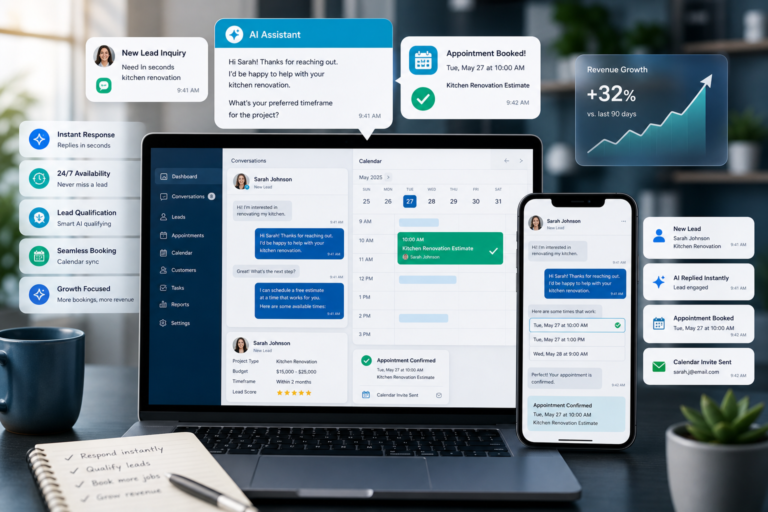
Modern AI appointment booking systems handle the complete scheduling workflow automatically. The process starts when a lead makes contact through any channel such as website chat, SMS, social media messages, or form submissions. The AI immediately acknowledges the inquiry and begins the conversation.
The system qualifies leads by asking targeted questions about their needs, timeline, budget, and service requirements. This qualification happens naturally through conversation, not rigid forms. Based on the responses, the AI determines if the prospect is a good fit and routes them accordingly. Qualified leads move immediately to booking, while unqualified prospects receive appropriate resources or alternative options.
Calendar integration makes scheduling seamless. The AI accesses real-time availability across team members and presents open slots that match the prospect’s preferences. Once they select a time, the system confirms the appointment, sends calendar invites, and adds the booking to your CRM. No double bookings, no scheduling conflicts, no manual data entry.
Confirmation and reminder automation keeps appointments on track. The system sends immediate confirmation with all relevant details. It follows up with strategic reminders via SMS and email before the appointment. If prospects need to reschedule, they can do so directly through automated messages without staff involvement. This reduces no-shows and keeps calendars full.
Key Features That Drive Conversion
Instant engagement captures attention before it fades. When prospects reach out, they want answers now. AI scheduling automation responds within seconds, maintaining momentum and preventing prospects from moving on to competitors. This immediate interaction shows professionalism and respect for their time.
24/7 availability removes booking barriers. Leads don’t only inquire during business hours. They browse websites late at night, send messages on weekends, and reach out whenever it’s convenient for them. Automated systems never sleep, capturing and converting leads around the clock without overtime costs or staffing concerns.
Multi-channel scheduling meets prospects where they are. Some prefer texting, others use website chat, and many reach out through social media. Intelligent scheduling systems work across all channels, providing consistent experiences regardless of contact method. This flexibility reduces friction and makes booking effortless for every prospect.
Smart qualification improves conversion quality. Not every lead is worth pursuing. AI systems ask the right questions to identify serious prospects quickly. They can detect buying signals, assess budget fit, and route high-value leads to senior team members. This filtering ensures your calendar fills with appointments likely to close, not tire-kickers wasting time.
Personalized scheduling increases booking rates. The AI references previous conversations, remembers prospect preferences, and tailors communication based on their specific situation. This personalization makes interactions feel human and builds rapport. Prospects are more likely to book when they feel understood and valued.
Business Benefits Beyond Booking
Higher conversion rates deliver immediate ROI. Businesses using AI booking workflows typically see 30-50% increases in lead-to-appointment conversion. The combination of speed, availability, and convenience removes obstacles that normally prevent bookings. More appointments mean more opportunities to close deals and generate revenue.
Reduced operational costs improve margins. Manual scheduling consumes significant staff time. Phone calls, email exchanges, calendar management, and coordination create hidden costs that add up quickly. Automation handles these tasks at scale without adding headcount, freeing staff to focus on high-value activities like sales and customer service.
Fewer missed opportunities protect revenue. Every lead that slips through represents lost income. Traditional methods lose prospects to slow response times, after-hours inquiries, and scheduling friction. Automated systems capture leads that would otherwise disappear, directly impacting bottom-line results.
Better customer experience builds reputation. Modern consumers expect instant gratification and seamless digital interactions. Businesses that deliver convenient, efficient scheduling earn positive reviews, referrals, and repeat business. This enhanced experience becomes a competitive advantage in crowded markets.
Scalable growth without proportional costs enables expansion. As lead volume increases, manual scheduling becomes overwhelming. Automated systems handle 10 appointments or 1,000 with the same efficiency. This scalability allows businesses to grow revenue without linear increases in overhead.
Integration with Sales Automation Workflows
Scheduling automation works best as part of a comprehensive AI sales automation strategy. When booking systems connect with lead response, follow-up, and CRM workflows, businesses create end-to-end conversion machines that maximize every opportunity.
Lead capture integration ensures no prospect falls through cracks. When someone expresses interest, the system immediately adds them to your CRM, initiates appropriate workflows, and begins the booking conversation. All prospect data flows automatically between systems, eliminating manual data entry and ensuring complete records.
Follow-up automation nurtures prospects who don’t book immediately. Not every lead is ready to schedule on first contact. Intelligent systems recognize this and launch nurture sequences that provide value, answer questions, and stay top-of-mind. When prospects are ready, booking remains one click away.
CRM synchronization maintains data accuracy. Every interaction, appointment, and conversation updates automatically in your customer relationship management system. Sales teams access complete prospect histories without asking leads to repeat information. This continuity improves conversations and increases close rates.
Pipeline visibility enables better forecasting. When scheduling data feeds into sales dashboards, managers gain clear visibility into appointment volume, conversion trends, and revenue projections. This insight supports better resource allocation and strategic planning.
Industry Applications and Use Cases
Service businesses across sectors benefit from intelligent scheduling systems. The specific implementation varies by industry, but the core value remains consistent: faster response, easier booking, more conversions.
Roofing and home services companies handle high inquiry volumes from multiple sources. Homeowners reach out urgently when they discover problems. AI booking automation captures these hot leads instantly, qualifies project scope, and schedules estimates before competitors respond. This speed advantage wins contracts in competitive markets.
HVAC contractors face seasonal demand spikes that overwhelm staff. Automated scheduling handles peak periods smoothly, ensuring every service request becomes a booked appointment. The system can prioritize emergency calls, schedule maintenance visits, and manage installer calendars without coordination chaos.
Real estate professionals juggle multiple clients and properties simultaneously. AI scheduling automation books property showings, buyer consultations, and listing appointments without back-and-forth communication. Agents spend time selling instead of coordinating calendars.
Medical and dental practices reduce administrative burden while improving patient experience. Patients book appointments instantly online, receive automated reminders, and reschedule easily. Staff focus on patient care instead of phone calls, while the practice maintains full schedules.
Professional services firms including law offices, consulting agencies, and financial advisors use automation to book initial consultations. The system qualifies prospects, sets appropriate expectations, and ensures the right team member handles each appointment.
Implementation Best Practices
Successful deployment starts with clear goals and proper configuration. Before launching automated scheduling, define what success looks like. Set targets for response time, booking conversion rate, and no-show reduction. These metrics guide setup decisions and measure ROI.
Calendar setup requires strategic thinking. Determine which team members should appear in booking flows, set realistic buffer times between appointments, and establish blackout periods for internal meetings. Proper calendar configuration prevents double bookings and maintains service quality.
Qualification questions should be concise but effective. Ask enough to identify serious prospects without creating form fatigue. Focus on key decision factors like timeline, budget range, and specific needs. Test different question sequences to find what converts best.
Confirmation and reminder timing impacts show rates significantly. Send immediate confirmations to build confidence. Schedule reminders at strategic intervals, typically 24 hours and 2 hours before appointments. Test different messaging and timing to optimize attendance.
Team training ensures smooth handoffs. Staff should understand how the system works, when to expect appointments, and how to access booking details. Clear protocols for appointment preparation improve customer experience and conversion rates.
Continuous optimization drives better results over time. Monitor conversion metrics, analyze drop-off points, and test improvements regularly. Small changes to messaging, qualification flows, or available times can significantly impact booking rates.
Measuring Success and ROI
Tracking the right metrics reveals true system performance. Response time shows how quickly the AI engages new leads. Target under 60 seconds for maximum impact. Slower responses indicate configuration issues or integration problems.
Booking conversion rate measures the percentage of qualified leads who schedule appointments. Strong systems convert 40-60% of qualified prospects. Lower rates suggest friction in the booking process or poor calendar availability.
No-show rate indicates appointment quality and reminder effectiveness. Well-configured systems keep no-shows under 10%. Higher rates may signal poor qualification, inadequate reminders, or scheduling too far in advance.
Time to book tracks how long the scheduling process takes from initial contact to confirmed appointment. Efficient systems complete booking in under 5 minutes. Longer timelines create drop-off opportunities and reduce conversion.
Cost per booked appointment reveals operational efficiency. Calculate total system costs divided by appointments scheduled. Compare this to the previous cost of manual scheduling including staff time and missed opportunities.
Revenue impact provides the ultimate measure. Track how many booked appointments convert to sales and the average deal value. Multiply additional appointments by close rate and average sale to calculate direct revenue increase from automation.
Common Challenges and Solutions
Calendar management complexity can overwhelm initial setup. When multiple team members provide different services across various locations, scheduling rules become intricate. Address this by starting simple with one service or team member, then expanding gradually as you master the system.
Low initial conversion often results from overly aggressive qualification. When systems ask too many questions or set rigid criteria, good prospects drop off. Start with minimal qualification and tighten requirements based on appointment quality data.
High no-show rates usually indicate poor lead quality or ineffective reminders. Review qualification criteria to ensure you’re booking serious prospects. Test different reminder timing and messaging to find what drives attendance.
Integration difficulties with existing systems create data silos and workflow gaps. Work with vendors that offer robust API connections and pre-built integrations with popular CRMs and calendar platforms. Prioritize data flow between systems during setup.
Staff resistance to automation stems from change anxiety or misunderstanding benefits. Address concerns early by explaining how automation handles repetitive tasks so they can focus on relationship building and closing deals. Share success metrics to build confidence.
Future of Intelligent Scheduling
AI scheduling capabilities continue advancing rapidly. Voice-based booking through phone calls already allows prospects to schedule appointments conversationally without typing. This removes another friction point and serves customers who prefer calling.
Predictive scheduling will anticipate customer needs before they request appointments. Systems will analyze behavior patterns, seasonal trends, and service histories to proactively suggest bookings. This shift from reactive to proactive engagement will increase appointment volume.
Deeper personalization through advanced data integration will enable hyper-relevant conversations. AI will reference customer history, preferences, previous purchases, and external signals to tailor every interaction perfectly. This level of customization will feel increasingly human.
Cross-platform intelligence will unify customer journeys across every touchpoint. When someone browses your website, texts a question, and calls your office, the AI will maintain context throughout. This continuity will create seamless experiences that build trust and increase conversion.
Expanded automation workflows will handle more of the customer lifecycle beyond initial booking. Follow-up appointments, service renewals, upsells, and long-term relationship management will all run automatically based on intelligent triggers and customer behavior.
Getting Started with AI Booking Automation
Beginning your automation journey requires selecting the right platform and approaching implementation strategically. Look for solutions that offer proven features specific to your industry needs. The platform should integrate seamlessly with your existing tools and provide flexible configuration options.
Start with a pilot program focused on one lead source or service type. This limited scope allows you to test, learn, and refine before full deployment. Choose a high-volume lead source for meaningful data quickly.
Set realistic expectations for the first 30 days. Early results may vary as you optimize qualification questions, calendar availability, and messaging. Plan for adjustment time and commit to weekly reviews of performance metrics.
Gather feedback from both prospects and staff. Ask customers about their booking experience and what would improve it. Check with team members about appointment quality and any operational issues. Use these insights to refine your approach.
Scale gradually once you’ve proven ROI. Expand to additional lead sources, team members, and service types. This measured growth prevents overwhelming your team and maintains service quality.
Explore comprehensive AI sales automation to maximize results. Scheduling automation delivers the best results when integrated with lead response, follow-up, and CRM workflows. This complete approach captures more leads and converts them more efficiently.
Frequently Asked Questions
How much does AI scheduling automation cost?
Pricing varies based on appointment volume, features, and integrations. Most platforms charge monthly subscription fees ranging from a few hundred to several thousand dollars. Calculate ROI by comparing the cost to the value of additional booked appointments. Even a few extra conversions per month typically cover the investment.
Will customers accept AI scheduling instead of human interaction?
Modern consumers strongly prefer self-service booking options. Studies show over 70% of customers would rather schedule appointments online than call. When implemented well, AI scheduling feels natural and convenient. Customers appreciate instant response and 24/7 availability.
How long does implementation take?
Basic setup can happen in days, while full optimization takes several weeks. Initial configuration includes calendar integration, qualification questions, and messaging setup. Fine-tuning based on real performance data continues over the first 1-2 months. Most businesses see positive results within the first week.
Can AI handle complex scheduling scenarios?
Yes, advanced systems manage multi-location businesses, different service types, team member specialties, and complex availability rules. The key is proper configuration that matches your specific operational needs. More complex businesses benefit from working with implementation specialists during setup.
What happens if the AI can’t answer a question?
Well-designed systems recognize their limitations and route complicated inquiries to humans smoothly. The AI handles routine scheduling tasks while escalating unusual situations. This hybrid approach maximizes automation benefits while maintaining service quality.
How do you prevent double bookings?
Real-time calendar integration ensures the AI only offers genuinely available times. The system checks current availability before suggesting slots and immediately blocks times once booked. This synchronization happens instantly across all booking channels.
Does this work for businesses with multiple locations?
Absolutely. Multi-location businesses configure separate calendars and routing rules for each site. The AI determines the appropriate location based on prospect preferences or service area, then books with the correct team. This keeps each location’s schedule organized without manual coordination.
Can prospects reschedule appointments themselves?
Yes, modern systems allow customers to reschedule or cancel directly through automated messages. They receive a link to view available times and select a new slot. This self-service option reduces administrative burden and improves customer satisfaction.
Convert More Leads Starting Today
AI scheduling automation transforms lead conversion by removing friction, improving response speed, and providing 24/7 booking convenience. Service businesses using these systems book more appointments, reduce operational costs, and deliver superior customer experiences. The technology has matured beyond early adoption into proven, reliable solutions that deliver measurable ROI.
The competitive advantage goes to businesses that respond fastest and make booking easiest. Manual scheduling can’t match the speed and availability of intelligent automation. Every day without these systems means lost opportunities to competitors who’ve already adopted this technology.
Success requires choosing the right platform, implementing thoughtfully, and optimizing continuously. Start with clear goals, measure what matters, and refine based on data. The businesses seeing the best results treat scheduling automation as an ongoing strategic initiative, not a one-time project.
Ready to convert more leads with intelligent scheduling? Book a demo to see how GetDMFlow automates appointment booking and transforms your lead conversion process. Discover how AI scheduling automation can increase your booked appointments, reduce no-shows, and grow revenue without adding staff.
