
Small businesses face a constant challenge: responding to leads quickly, staying organized, and converting inquiries into paying customers without hiring a full sales team. When a lead fills out a form at 9 PM, sends a message on Saturday, or reaches out during a busy workday, every minute counts. Research shows that responding to a lead within five minutes makes you 100 times more likely to connect than waiting an hour. Most small businesses can’t maintain that speed manually, and that’s where AI sales automation becomes essential.
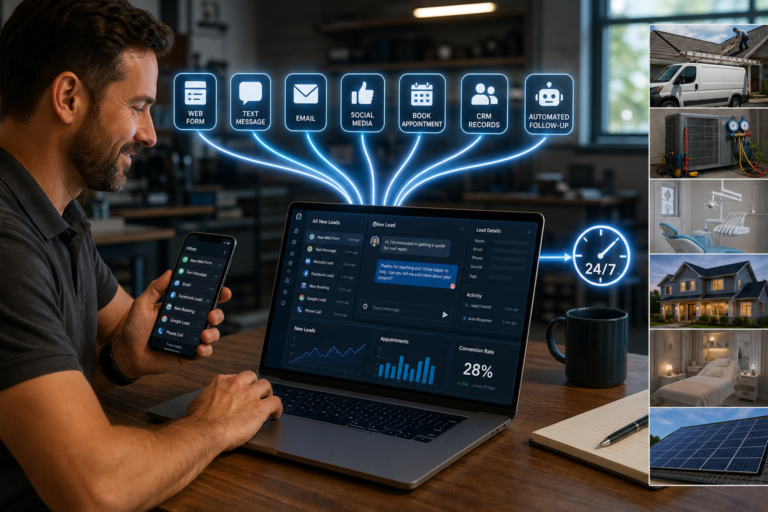
AI sales automation platforms help small businesses capture leads, respond instantly, qualify prospects, book appointments, and follow up automatically across multiple channels. The right platform acts like a 24/7 sales assistant that never misses an inquiry, never forgets to follow up, and consistently moves leads through your sales process. For service-based businesses like roofing companies, HVAC contractors, dentists, real estate professionals, med spas, solar companies, automotive shops, and law firms, this technology levels the playing field against larger competitors.
This guide explains what makes an AI sales automation platform effective for small businesses, which features matter most, and how to choose a solution that increases conversion efficiency without adding complexity to your operations.
What Is AI Sales Automation for Small Businesses
AI sales automation uses artificial intelligence to handle repetitive sales tasks that typically require human time and attention. Instead of manually responding to every lead, scheduling appointments, sending follow-up messages, and updating your CRM, the platform manages these processes automatically based on rules you configure and patterns it learns from your business.
For small businesses, this means lead response happens instantly whether you’re with a customer, driving between job sites, or closed for the day. When someone submits a contact form, the system immediately sends a personalized response, asks qualifying questions, offers available appointment times, and continues the conversation until the lead books or opts out. The AI understands context, recognizes customer intent, and adapts its approach based on how people respond.
The platform connects to your website, social media channels, text messaging, email, and phone systems to create a unified communication hub. Every interaction gets logged automatically, so your team always knows the full conversation history without asking leads to repeat themselves. This creates a better customer experience while reducing the administrative work that pulls small business owners away from revenue-generating activities.
Why Small Businesses Need AI Sales Automation
Small businesses operate with limited resources, tight schedules, and constant pressure to do more with less. Traditional sales processes require someone to monitor inquiries, respond quickly, qualify leads, schedule appointments, and follow up consistently. When you’re running a service business, those responsibilities compete directly with delivering services, managing teams, and handling operations.
The cost of slow response becomes clear when you look at conversion data. Leads contact multiple businesses when they need services, and the first company to respond professionally usually wins the opportunity. A roofing company that responds in two minutes books significantly more estimates than one that takes two hours. A dental office that offers instant appointment booking converts more inquiries than one requiring phone tag to schedule.
AI sales automation solves the response speed problem while also addressing consistency. Human teams have good days and bad days, get busy, forget follow-ups, and make mistakes. Automated systems maintain the same quality and persistence regardless of time, volume, or circumstances. Every lead receives professional communication, multiple follow-up touchpoints, and clear next steps without requiring additional staff.
The financial impact extends beyond winning more customers. Automating lead response, qualification, and appointment booking reduces the time your team spends on administrative tasks. An HVAC company might save 15 hours per week previously spent answering basic questions, scheduling service calls, and updating records. Those hours can go toward completing more jobs, improving service quality, or growing the business.
Key Features of the Best AI Sales Automation Platforms
Effective AI sales automation platforms share specific capabilities that directly impact lead conversion and operational efficiency. Understanding these features helps small businesses evaluate options and choose solutions that match their needs.
Instant Lead Response Automation
The best platforms respond to new leads within seconds, not minutes or hours. When someone submits a form, sends a message, or starts a chat conversation, the system immediately acknowledges the inquiry and begins qualifying the prospect. This instant response dramatically improves conversion rates by engaging leads when interest is highest.
Instant response works across all channels where customers reach you. A lead filling out your website contact form gets an immediate text message or email. Someone messaging your Facebook page receives an instant reply. A missed phone call triggers an automated follow-up text. This omnichannel coverage ensures no inquiry goes unanswered regardless of how people choose to contact your business.
The initial response should feel personal and helpful, not robotic. Advanced platforms use natural language processing to understand the lead’s question and provide relevant information immediately. If someone asks about pricing, the system addresses pricing. If they want to schedule a consultation, it offers available times. This contextual intelligence creates better experiences than generic auto-responses.
AI Appointment Booking Automation
Scheduling appointments represents one of the highest-value automations for service businesses. Instead of back-and-forth messages trying to find mutually available times, the platform shows the lead your real-time availability and lets them book directly. This removes friction from the conversion process and reduces no-shows by giving customers control over scheduling.
The booking automation should integrate with your existing calendar system, whether you use Google Calendar, Outlook, or another platform. When a lead selects a time, it blocks that slot automatically, sends confirmation messages, and creates any necessary reminders. Some platforms also handle rescheduling requests and cancellations without human intervention.
For businesses with multiple service types or team members, the system should route appointments appropriately. A dental office might offer different appointment types for cleanings, consultations, and emergency visits, each with specific durations and provider requirements. The automation handles these complexities while presenting a simple booking experience to customers.
Intelligent Lead Qualification
Not every lead represents an ideal customer, and qualifying prospects efficiently saves time and improves conversion focus. AI sales automation platforms ask qualifying questions during initial conversations, gathering information about budget, timeline, specific needs, and decision-making authority. The system scores leads based on your criteria and prioritizes follow-up accordingly.
Qualification happens conversationally through the same channels where customers prefer to communicate. Instead of forcing leads to complete lengthy forms, the platform asks a few key questions during natural back-and-forth exchanges. If someone indicates they’re ready to move forward quickly, the system escalates that lead for immediate human attention. If they’re researching options for next month, it schedules appropriate follow-up timing.
This intelligent sorting prevents your team from spending equal time on every inquiry. High-intent leads who need services now receive immediate personal outreach, while longer-term prospects get nurture sequences designed to maintain engagement until they’re ready to buy. The automation makes these distinctions consistently based on data, not gut feelings.
Automated Follow-Up Workflows
Most sales require multiple touchpoints before customers commit, but manual follow-up often falls through cracks when businesses get busy. Automated workflows ensure every lead receives consistent follow-up communication on a schedule proven to maximize conversion. The system sends messages, makes offers, shares relevant content, and moves leads through your sales process without requiring daily human management.
Effective follow-up automation adapts based on lead behavior. If someone opens emails and clicks links, the system recognizes engagement and continues communication. If multiple messages go unanswered, it tries different approaches or channels before pausing outreach. This responsive approach prevents annoying leads who aren’t interested while maintaining contact with those showing engagement signals.
Workflows should support multiple sequence types for different situations. New leads might enter a welcome sequence introducing your business and services. Leads who requested quotes but didn’t book enter a different sequence addressing common objections. Past customers receive reactivation campaigns offering seasonal services or special promotions. Each workflow runs automatically based on triggers you define.
Multi-Channel Communication Management
Customers expect to reach businesses through their preferred channels, whether that’s text messaging, email, social media, website chat, or phone calls. The best AI sales automation platforms unify these channels into a single conversation view, so your team sees complete communication history regardless of where messages originated.
Unified communication prevents the common problem of leads receiving conflicting information from different team members or duplicate outreach through multiple channels. When someone texts your business after filling out a contact form, your team sees both interactions in context. This coordination creates professional customer experiences and improves internal efficiency.
The platform should handle two-way communication across supported channels, not just send outbound messages. Leads can respond to automated texts, reply to emails, or continue chat conversations, and the system routes those responses appropriately. Simple questions get answered automatically while complex inquiries reach human team members with full conversation context.
CRM Automation and Data Management
Manual data entry wastes significant time and introduces errors that hurt sales effectiveness. AI sales automation platforms capture information from every customer interaction and update your CRM automatically. Lead sources, contact details, conversation history, appointment dates, service interests, and qualification data all get logged without requiring your team to type notes.
This automated record-keeping creates reliable data that improves decision-making. You can see which marketing channels generate the most qualified leads, which services attract the highest interest, when most inquiries arrive, and how long your typical sales cycle runs. These insights help optimize marketing spend and sales processes based on real performance metrics.
The platform should also automate routine CRM tasks like creating follow-up reminders, updating lead status, assigning owners, and triggering workflows based on data changes. When a lead books an appointment, the system might automatically assign them to the appropriate service provider, add them to a pre-appointment reminder sequence, and update their status to “scheduled.” These automations maintain clean, current data without manual maintenance.
How AI Sales Automation Improves Small Business Performance
Implementing AI sales automation creates measurable improvements across multiple business metrics that directly impact revenue and profitability. Understanding these benefits helps justify the investment and set appropriate performance expectations.
Faster Lead Response Times
Speed-to-lead represents one of the most critical factors in conversion success. Studies consistently show that businesses responding within five minutes convert at dramatically higher rates than those taking longer. AI automation eliminates response delays by engaging leads instantly, 24 hours per day, seven days per week. A lead submitting a form at 11 PM receives the same immediate attention as one reaching out at 11 AM.
This speed advantage becomes especially valuable when competing against other service providers. When a homeowner needs emergency HVAC repair, roof leak inspection, or urgent dental care, they often contact multiple businesses simultaneously. The company that responds first and books the appointment wins the job. Automation ensures you’re always first to engage, regardless of when inquiries arrive.
Faster response also improves customer perception of your business. Instant acknowledgment signals professionalism, reliability, and customer focus. Even if a human team member needs to provide detailed information later, the immediate automated response shows leads they’re important and won’t be ignored. This positive first impression sets the tone for the entire customer relationship.
Higher Appointment Booking Rates
Removing friction from the scheduling process directly increases the percentage of leads who book appointments. When customers can see available times and confirm appointments instantly without phone calls or email exchanges, more of them complete the booking process. Automated scheduling also reduces the window between initial contact and scheduled appointment, maintaining momentum while interest remains high.
The platform handles appointment logistics that typically require human coordination. It sends confirmation messages, provides directions or preparation instructions, delivers reminder notifications as the appointment approaches, and manages rescheduling when needed. These touchpoints reduce no-show rates and cancellations while freeing your team from administrative scheduling work.
For businesses where appointments represent the primary conversion goal, higher booking rates translate directly to revenue growth. A real estate agent who books 10% more property showings closes more sales. A med spa that converts 15% more consultation inquiries grows treatment revenue. These improvements compound over time as the platform consistently outperforms manual scheduling processes.
Improved Lead Conversion Efficiency
Not every improvement comes from booking more appointments. AI sales automation also helps convert a higher percentage of existing appointments into paying customers by ensuring better preparation and follow-up. The system can send pre-appointment questionnaires that gather relevant information, share content that addresses common concerns, and provide materials that educate leads about your services.
Automated follow-up after appointments keeps your business top-of-mind while prospects make decisions. If someone attended a consultation but hasn’t committed, the platform delivers a sequence of messages sharing testimonials, answering frequently asked questions, offering limited-time incentives, or simply checking in to address concerns. This persistent follow-up wins business that would otherwise go to competitors or fall through cracks.
The overall impact shows in conversion metrics. Businesses typically see 20-40% improvement in lead-to-customer conversion rates after implementing effective automation. These gains result from faster response, better qualification, consistent follow-up, and reduced administrative errors. The platform ensures your sales process executes perfectly every time, removing human inconsistency from the equation.
Reduced Missed Opportunities
Every small business loses potential customers to missed calls, forgotten follow-ups, and inquiries that arrive during busy periods. These missed opportunities represent the silent cost of manual sales processes. AI automation captures every lead regardless of timing or team availability, ensuring nothing falls through cracks.
The system also prevents internal miscommunication that causes missed opportunities. When multiple team members handle sales, manual handoffs sometimes fail. A message gets lost, a callback doesn’t happen, or a follow-up reminder expires without action. Automated systems assign ownership clearly, track required actions, and escalate overdue tasks so nothing gets forgotten.
For many small businesses, reducing missed opportunities creates the fastest path to revenue growth. You’re already paying for marketing that generates leads. Capturing more value from existing lead volume requires no additional marketing spend, just better execution. Automation delivers that execution improvement at a fraction of the cost of hiring additional sales staff.
Better Customer Communication Experience
Customers judge businesses based on communication quality, responsiveness, and convenience. AI sales automation improves all three dimensions by providing instant responses, allowing customers to communicate through preferred channels, and maintaining consistent service quality. When every interaction feels professional and helpful, customer satisfaction increases.
The platform also reduces common customer frustrations. No more playing phone tag to schedule appointments. No more waiting hours or days for email replies. No more repeating information because it wasn’t recorded properly. Automated systems remember everything, respond instantly, and make it easy for customers to get what they need.
Improved communication quality creates ripple effects throughout your business. Satisfied customers leave better reviews, refer more people, and return for additional services. They’re also more forgiving when occasional problems occur because the overall relationship is strong. These benefits accumulate over time, contributing to business growth beyond just winning more initial customers.
Choosing the Right AI Sales Automation Platform
Selecting an appropriate platform requires evaluating your specific business needs, budget constraints, and technical capabilities. The right choice delivers strong ROI without creating implementation headaches or ongoing management burdens.
Assess Your Current Sales Process
Start by documenting how leads currently flow through your business. Where do inquiries originate? How does your team respond? What percentage of leads book appointments? How many touchpoints does conversion typically require? Understanding current performance establishes a baseline for measuring improvement and identifies the highest-value automation opportunities.
Map out common customer journeys from initial contact through closed sale. A roofing company might see leads from Google Ads, website contact forms, and phone calls, then require a property inspection appointment before providing quotes. A dental office might receive appointment requests through multiple channels for various service types, each requiring different scheduling and preparation. Document these paths to understand what your automation needs to support.
Identify pain points in existing processes. Where do leads get lost? Which manual tasks consume the most time? What prevents faster response or better follow-up? These problems become your automation priorities. Solving the biggest bottlenecks first generates the fastest ROI and builds support for broader platform adoption.
Evaluate Platform Capabilities Against Your Needs
Not all platforms offer the same features or serve the same business types equally well. Evaluate options based on the specific capabilities you need most. A business focused on appointment booking needs strong scheduling automation and calendar integration. One handling complex sales cycles needs sophisticated workflow builders and lead scoring. Match platform strengths to your priority use cases.
Consider the channels where your customers communicate most. If most leads come through text messaging and social media, ensure the platform supports those channels well. If email and phone remain primary contact methods, prioritize capabilities there. Multi-channel platforms provide flexibility, but make sure supported channels include the ones your business actually uses.
Look at integration capabilities with your existing tools. The platform should connect with your website, calendar system, email provider, and any other critical software. Native integrations typically work more reliably than custom connections, so prioritize platforms offering pre-built integrations for your specific tech stack. Seamless integration reduces implementation complexity and ongoing maintenance.
Consider Ease of Implementation and Use
Small businesses typically lack dedicated IT teams, so choose platforms designed for quick setup by non-technical users. Look for visual workflow builders, template libraries, and guided configuration processes that help you get started without hiring consultants or developers. The faster you can implement and begin seeing results, the better your ROI.
Evaluate the learning curve for your team. Some platforms require extensive training while others work intuitively from day one. Consider who will manage the system ongoing and ensure they can handle configuration, troubleshooting, and optimization without constant vendor support. Complex platforms might offer more features but create dependencies that limit your operational flexibility.
Ask about customer support quality and availability. When you need help, can you reach knowledgeable support staff quickly? Do they offer implementation assistance, training resources, and documentation that helps you succeed? Strong vendor support becomes especially important during initial setup and when expanding platform use into new areas.
Analyze Pricing and ROI Potential
Understand total costs including subscription fees, setup charges, integration expenses, and any usage-based pricing components. Compare these costs against expected benefits like additional revenue from improved conversion, time savings from automation, and reduced need for administrative staff. Calculate realistic ROI based on your business size and lead volume.
Many platforms offer tiered pricing based on features, contact volume, or team size. Start with a plan matching your current needs while ensuring you can scale up as your business grows. Avoid overpaying for capabilities you won’t use, but also avoid platforms where essential features require expensive upgrades. Find the appropriate balance for your situation.
Consider the cost of not implementing automation. How much revenue are you losing to slow response times and missed opportunities? How many hours does your team spend on tasks the platform could automate? In most cases, effective AI sales automation pays for itself many times over through increased conversion and improved efficiency. The investment typically generates positive returns within the first few months.
Industry-Specific AI Sales Automation Benefits
Different types of small businesses face unique sales challenges that AI automation addresses in specific ways. Understanding benefits for your particular industry helps set appropriate expectations and configure the platform for maximum impact.
Roofing Companies
Roofing companies compete in local markets where speed and professionalism determine who wins inspection appointments. When a homeowner discovers a leak or storm damage, they contact multiple roofers simultaneously. AI automation ensures your company responds first with immediate acknowledgment, inspection scheduling options, and helpful information about what to expect.
Automated qualification questions identify urgent versus planned projects, helping prioritize inspection appointments appropriately. The system gathers property details, damage descriptions, and photos that prepare your estimators before arriving on-site. Follow-up sequences nurture leads after inspections, addressing common concerns about pricing, materials, warranties, and scheduling.
Seasonal volume fluctuations challenge roofing companies during storm seasons when lead volume surges beyond manual capacity. Automation scales instantly to handle increased inquiry volume without hiring temporary staff or letting opportunities slip away. The platform maintains consistent response quality whether you receive 10 leads or 100 leads per week.
HVAC Contractors
HVAC businesses handle both emergency repairs requiring immediate response and planned replacements with longer sales cycles. AI automation adapts to both situations, routing urgent service requests for quick human contact while nurturing equipment replacement leads over appropriate timeframes. The system asks questions that identify emergency versus routine needs and responds accordingly.
Appointment booking automation proves especially valuable for HVAC companies scheduling maintenance visits, system inspections, and installation quotes. Customers can book available service windows instantly without phone calls, and the system sends technician arrival notifications, preparation reminders, and follow-up satisfaction checks. This end-to-end automation creates professional experiences that drive positive reviews.
Seasonal messaging helps HVAC contractors stay connected with customers year-round. Automated campaigns remind customers about spring air conditioning tune-ups, fall heating system checks, filter replacement schedules, and seasonal promotions. These touchpoints generate repeat business and referrals while requiring minimal manual effort.
Dental Practices
Dental offices manage complex scheduling with multiple providers, various appointment types, and insurance verification requirements. AI automation simplifies this complexity by offering appropriate appointment options based on the requested service, checking availability across providers, and collecting necessary information before appointments. Patients book conveniently online while the system handles scheduling logic.
Automated reminders significantly reduce no-show rates that cost dental practices time and revenue. The platform sends appointment confirmations, preparation instructions, and timing reminders through patients’ preferred channels. If someone needs to reschedule, the system handles changes automatically and fills newly available slots with other patients.
New patient acquisition improves through instant response to consultation requests and emergency appointment needs. When someone searches for a dentist and submits contact forms to multiple offices, the practice with immediate response wins the patient. Follow-up sequences for new patients who completed initial visits drive treatment plan acceptance and ongoing preventive care appointments.
Real Estate Professionals
Real estate agents need to respond instantly when prospective buyers or sellers express interest. AI automation acknowledges inquiries immediately, asks qualifying questions about price range, location preferences, and timing, then offers available times for showings or consultations. This instant engagement keeps motivated prospects focused on your services rather than exploring other agents.
The platform manages communication across multiple active clients simultaneously, sending property alerts matching buyer criteria, delivering market updates to seller leads, and maintaining contact with past clients who might refer business. Automated workflows nurture different lead types appropriately, from first-time homebuyers needing education to investors requiring market data.
Following up after property showings or listing presentations often determines who wins the business. Automated sequences send thank-you messages, answer common questions, share relevant market information, and request feedback. This consistent follow-up maintains relationships during decision-making periods when prospects evaluate multiple options.
Med Spas and Aesthetic Practices
Med spas benefit from automation that elegantly handles consultation booking for treatments like Botox, fillers, laser services, and body contouring. The system presents available appointment times, collects necessary medical history information, and sends pre-consultation instructions. Removing scheduling friction converts more inquiries from people researching aesthetic treatments.
Automated education sequences address common concerns about safety, results, pricing, and recovery time. Prospective clients often need multiple touchpoints before committing to treatments, and the platform delivers helpful content that builds confidence and trust. Follow-up after consultations encourages treatment booking with information about current promotions or financing options.
Client retention automation drives repeat business critical for med spa profitability. The system schedules maintenance appointments for treatments requiring regular sessions, sends reminders about recommended treatment intervals, and promotes new services to existing clients. These automated touchpoints generate recurring revenue while strengthening client relationships.
Solar Companies
Solar installations involve complex sales cycles with significant education requirements and multiple decision-makers. AI automation initiates conversations by responding instantly to inquiries, qualifying homeowners based on property characteristics and energy costs, and booking consultations for qualified prospects. Early qualification prevents wasting time on properties unsuitable for solar installation.
Nurture sequences address common concerns about costs, financing, installation process, equipment warranties, and energy savings. The platform delivers case studies, savings calculators, financing information, and testimonials over multiple touchpoints. This education builds confidence while maintaining engagement during long consideration periods typical of major home improvements.
Following up after proposals represents a critical opportunity solar companies often miss manually. Automated sequences check in regularly, address new questions, offer to adjust proposals based on feedback, and create urgency through limited-time incentives. This persistent follow-up converts proposals that might otherwise go to competitors or stall indefinitely.
How GetDMFlow Helps Small Businesses Automate Lead Response and Conversion
GetDMFlow provides small businesses with comprehensive AI sales automation specifically designed for service-based companies competing in local markets. The platform combines instant lead response, intelligent appointment booking, automated follow-up workflows, and unified communication management in a solution built for businesses without dedicated IT teams.
When a lead contacts your business through any channel, GetDMFlow responds immediately with contextually relevant messages. The AI asks qualifying questions conversationally, determines lead priority based on your criteria, and moves prospects toward booking appointments or requesting quotes. This instant engagement converts more inquiries by connecting with leads when interest peaks.
Appointment booking automation integrates with your existing calendar, offering available times that fit both customer preferences and your operational capacity. The system handles confirmations, reminders, rescheduling requests, and preparation instructions automatically. Real-time synchronization prevents double-booking while making it easy for customers to schedule without phone calls.
Automated follow-up workflows ensure no lead gets forgotten regardless of team workload. GetDMFlow delivers multiple touchpoints through text, email, and other channels based on lead behavior and engagement. High-intent prospects receive immediate attention while longer-term leads get nurture sequences designed to maintain relationships until they’re ready to buy.
The platform unifies communication from your website, social media, text messaging, email, and phone systems into a single interface. Your team sees complete conversation history regardless of channel, preventing duplicate outreach and maintaining consistent messaging. Two-way communication allows leads to respond naturally while the AI handles routine questions and routes complex inquiries to appropriate team members.
CRM automation eliminates manual data entry by capturing information from every interaction automatically. Lead sources, contact details, conversation transcripts, appointment history, and qualification data all get logged without requiring your team to type notes. This automated record-keeping improves sales intelligence while reducing administrative work.
GetDMFlow serves businesses across industries including roofing companies, HVAC contractors, dental practices, real estate professionals, med spas, solar companies, automotive businesses, and law firms. The platform adapts to industry-specific sales processes while maintaining simplicity that allows quick implementation and daily management by non-technical users.
Businesses using GetDMFlow typically see measurable improvements in lead response speed, appointment booking rates, and overall conversion efficiency within weeks of implementation. The platform continues optimizing performance over time by learning from successful interactions and adapting to seasonal patterns in your business.
If your small business struggles with slow lead response, missed opportunities, inconsistent follow-up, or administrative workload that limits growth, GetDMFlow offers a practical solution. The platform delivers enterprise-level automation capabilities at pricing appropriate for small businesses, with implementation support that helps you succeed from day one.
Schedule a demo to see how GetDMFlow can automate lead response, increase appointment bookings, and improve conversion efficiency for your business. The demonstration shows the platform using examples from your specific industry and explains how automation integrates with your current sales process. Discovery calls typically take 20-30 minutes and provide clear understanding of implementation requirements, expected results, and investment costs.
Frequently Asked Questions
What is AI sales automation?
AI sales automation uses artificial intelligence to handle repetitive sales tasks like lead response, appointment scheduling, follow-up messaging, and CRM updates. The system responds to inquiries instantly, qualifies prospects, books appointments, and nurtures leads automatically without requiring human intervention for routine interactions.
How quickly does AI sales automation respond to leads?
AI sales automation responds to leads within seconds of initial contact, 24 hours per day. When someone submits a form, sends a message, or starts a chat conversation, the system immediately acknowledges the inquiry and begins qualifying the prospect. This instant response dramatically improves conversion rates compared to manual processes where response times range from minutes to hours.
Can AI sales automation book appointments automatically?
Yes, advanced AI sales automation platforms integrate with calendar systems to offer available appointment times and allow leads to book directly. The system shows real-time availability, confirms selected times, blocks calendar slots, sends confirmations and reminders, and handles rescheduling requests. This removes friction from the booking process and increases conversion rates.
Do customers know they’re communicating with AI?
This depends on how the business configures the system. Some businesses disclose that initial responses use automation while complex questions go to humans. Others design conversational AI that feels natural without explicit disclosure. Best practices involve being transparent while ensuring the experience remains helpful and professional regardless of whether AI or humans respond.
What happens when AI cannot answer a question?
Quality AI sales automation platforms recognize when questions exceed their capabilities and route those inquiries to human team members with full conversation context. The system provides immediate acknowledgment and sets expectations about when a person will respond. This hybrid approach ensures customers get help while allowing AI to handle routine interactions that don’t require human expertise.
How much does AI sales automation cost for small businesses?
Pricing varies significantly based on features, contact volume, and included services. Many platforms offer plans starting around $100-300 per month for basic automation with higher tiers for advanced features. Most small businesses find that improved conversion and time savings create positive ROI within the first few months of implementation.
How long does it take to implement AI sales automation?
Implementation timeframes range from a few days for basic setup to several weeks for complex configurations. Businesses can typically start seeing results from core features like instant lead response and appointment booking within the first week. Optimizing advanced workflows and integrations continues over longer periods as teams learn the platform and refine processes.
Will AI sales automation replace my sales team?
No, AI sales automation handles repetitive tasks that don’t require human judgment, allowing your team to focus on high-value activities like consultations, proposals, and closing sales. The platform augments human capabilities rather than replacing them. Most businesses find their teams become more productive and effective when freed from administrative work.
What industries benefit most from AI sales automation?
Service-based businesses with appointment-driven sales processes see the strongest benefits. This includes roofing companies, HVAC contractors, dental practices, real estate professionals, med spas, solar installers, automotive services, law firms, and local service businesses. Any business where speed-to-lead and appointment booking directly impact conversion rates gains significant value from automation.
How do I know if my business is ready for AI sales automation?
If your business struggles with slow lead response, missed follow-ups, appointment scheduling bottlenecks, or administrative work that limits growth, you’re ready for AI sales automation. The technology proves especially valuable when lead volume exceeds manual capacity or when team schedules prevent consistent response times. Most small businesses generating more than a few leads per week benefit from automation.
Conclusion
Small businesses competing in service industries need every advantage to win customers against larger competitors and other local providers. AI sales automation delivers competitive edge by ensuring instant response to every inquiry, consistent follow-up with all prospects, and professional communication that builds trust and drives conversions. The technology levels the playing field, allowing small teams to deliver enterprise-quality sales experiences.
The best AI sales automation platforms combine lead response automation, intelligent appointment booking, automated workflows, multi-channel communication management, and CRM automation in solutions designed for businesses without technical expertise. These capabilities work together to capture more value from existing marketing investments by converting higher percentages of leads into customers.
Implementing the right platform improves multiple business metrics simultaneously. Response speed increases, appointment booking rates rise, lead conversion efficiency improves, missed opportunities decline, and customer communication quality strengthens. These improvements translate directly to revenue growth while reducing the administrative burden on small teams.
Success requires choosing a platform matching your specific business needs, industry requirements, and technical capabilities. Evaluate options based on the features you need most, implementation simplicity, integration with existing tools, and realistic ROI potential. The right choice delivers strong returns within months while supporting business growth over years.
For small businesses ready to automate lead response and conversion processes, platforms like GetDMFlow provide comprehensive solutions specifically designed for service-based companies. The combination of AI-powered automation, multi-channel communication, and industry-specific capabilities helps businesses respond faster, book more appointments, and convert more leads without adding staff or complexity. Taking the step toward automation positions your business for sustainable growth in increasingly competitive markets where speed and efficiency determine success.
