
Most businesses lose sales opportunities not because they lack qualified leads, but because they fail to follow up consistently and at the right time. Research shows that 80% of sales require at least five follow-ups, yet nearly half of sales professionals never attempt a second contact. This gap between initial interest and closed deals represents billions in lost revenue every year.
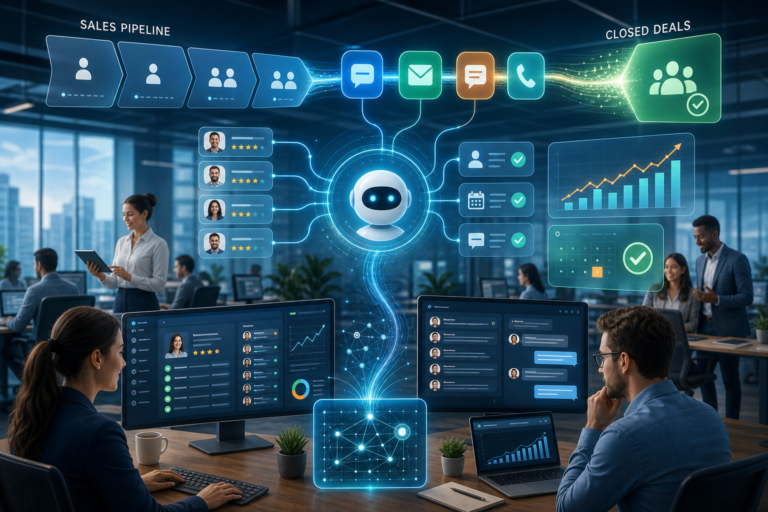
AI follow-up automation changes this equation completely. By automatically engaging leads at optimal moments with personalized communication, businesses can dramatically increase conversion rates while reducing the manual work that traditionally overwhelms sales teams. Companies using AI follow-up automation report conversion improvements ranging from 30% to 300%, depending on their industry and implementation.
This article explores how AI follow-up automation transforms lead conversion, the specific mechanisms that drive results, and how businesses across industries are implementing these systems to grow revenue and improve operational efficiency.
What Is AI Follow-Up Automation
AI follow-up automation refers to intelligent systems that automatically communicate with leads through multiple channels based on predefined triggers, behavioral signals, and customer data. Unlike simple email drip campaigns, AI-powered systems adapt their messaging, timing, and channel selection based on how each lead responds and behaves.
These systems monitor lead activity across websites, forms, phone calls, text messages, and email. When a lead takes an action or reaches a specific point in their buyer journey, the AI system automatically sends appropriate follow-up messages designed to move them closer to conversion.
Modern AI follow-up automation platforms can manage thousands of conversations simultaneously, ensuring no lead falls through the cracks regardless of when they engage or how many inquiries a business receives.
Why Traditional Follow-Up Methods Fail
Traditional manual follow-up creates several critical problems that directly impact conversion rates. Sales teams working with spreadsheets and manual reminders cannot respond consistently to every lead, especially during high-volume periods or outside business hours.
The average response time for businesses following up with leads is 47 hours. By that point, most leads have already contacted competitors or lost interest. Studies show that responding within five minutes increases conversion likelihood by 900% compared to waiting 30 minutes.
Manual follow-up also suffers from inconsistency. Different team members use different messaging, timing varies widely, and personal preferences determine how aggressively leads are pursued. This creates unpredictable results and makes it impossible to optimize systematically.
Human attention span and memory limitations mean that sales professionals forget to follow up, miss important signals that indicate buying intent, and fail to maintain contact long enough to convert leads with longer decision cycles. The complexity of managing multiple communication channels makes this problem worse.
How AI Follow-Up Automation Increases Conversion Rates
AI follow-up automation improves conversion through several interconnected mechanisms that work together to maximize the likelihood of turning interested prospects into paying customers.
Instant Lead Response
Speed matters enormously in lead conversion. When someone submits a contact form, requests information, or shows buying intent, they are actively engaged and thinking about solving their problem. AI systems can respond within seconds, capturing attention while interest peaks.
AI lead response automation acknowledges inquiries immediately, provides helpful information, answers common questions, and begins qualifying the lead before competitors even see the notification. This speed advantage alone can double or triple conversion rates for businesses in competitive markets.
For service businesses like roofing companies, HVAC contractors, or real estate professionals, being first to respond often means being the only response that matters. Homeowners typically contact multiple providers but usually move forward with whoever gets back to them first with helpful information.
Consistent Multi-Touch Follow-Up
Conversion rarely happens after a single interaction. Most buyers need multiple touches across several days or weeks before they are ready to commit. AI automation ensures every lead receives consistent follow-up regardless of how busy your team is.
Automated systems can execute complex follow-up sequences that include immediate responses, next-day check-ins, educational content delivery, promotional offers, and re-engagement campaigns for leads that go cold. Each message is timed strategically based on behavioral data and industry best practices.
This consistency eliminates the common problem where enthusiastic leads receive attention while quieter prospects are forgotten. AI systems treat every lead according to the same proven process, ensuring maximum opportunity capture.
Personalized Communication at Scale
AI follow-up systems personalize messages based on lead source, behavior, demographics, and previous interactions. A lead who came from a Google search sees different messaging than someone referred by an existing customer. A prospect who viewed pricing receives different follow-up than someone who only visited the homepage.
This personalization extends to communication preferences. Some leads prefer text messages, others respond better to email, and some want phone calls. AI systems can test and learn which channels work best for each lead type, then automatically use the most effective approach.
Personalization increases response rates by making communication feel relevant and timely rather than generic and pushy. Leads are more likely to engage when messages address their specific situation and answer questions they actually have.
Optimal Timing and Frequency
AI systems analyze response patterns to determine when each lead is most likely to engage. Some people check messages first thing in the morning, others respond during lunch breaks, and many engage after work hours. Automated systems can time follow-ups to match these patterns.
Frequency optimization prevents both under-communication and over-communication. AI systems increase follow-up frequency for highly engaged leads showing strong buying signals while spacing out touches for prospects who need more time. This balance maximizes conversion without creating annoyance that damages brand perception.
For industries with longer sales cycles like solar installations or legal services, AI systems maintain contact over weeks or months with valuable educational content and periodic check-ins that keep the business top-of-mind until the prospect is ready to move forward.
Intelligent Lead Qualification
Not all leads have equal conversion potential. AI follow-up automation includes qualification questions and behavioral analysis that identifies which prospects are most likely to buy and which need more nurturing.
By asking strategic questions early in the follow-up sequence, AI systems gather information about budget, timeline, decision-making authority, and specific needs. This qualification happens automatically through conversational interactions that feel natural rather than like an interrogation.
Leads who demonstrate high buying intent and qualification criteria are automatically prioritized for human sales team attention. Lower-priority leads continue receiving automated nurturing until they show stronger signals. This ensures sales professionals spend their time on opportunities most likely to close.
Key Features of Effective AI Follow-Up Systems
Successful AI follow-up automation relies on several essential capabilities that work together to drive conversion improvements.
Multi-Channel Communication
Modern leads expect to communicate through their preferred channels. Effective AI systems coordinate follow-up across SMS, email, website chat, phone calls, and social media messaging. The system tracks conversations across all channels and maintains context regardless of where the lead responds.
This omnichannel approach increases response rates because leads can engage however they feel most comfortable. A busy contractor might ignore emails but immediately respond to a text message, while a corporate buyer prefers detailed email communication.
Behavioral Trigger Automation
AI follow-up systems monitor lead behavior and automatically respond to specific actions. When a lead visits your pricing page, the system can send information about payment options. If someone downloads a resource, they receive related content that moves them further along the buyer journey.
Abandoned form submissions trigger reminder messages. Website visitors who return multiple times receive proactive offers to speak with a sales representative. Leads who stop engaging get re-activation campaigns designed to rebuild interest.
These behavioral triggers create timely, relevant interactions that feel responsive rather than automated. Leads experience communication that adapts to their actions rather than following a rigid schedule.
CRM Integration and Data Synchronization
AI follow-up automation must integrate seamlessly with existing CRM systems to maintain data accuracy and enable sales team coordination. AI CRM automation ensures that every interaction, response, and behavioral signal is recorded in the central database.
This integration allows sales representatives to see complete conversation history when they take over from automated systems. They can understand what the lead has already discussed, what questions have been answered, and what objections have been raised.
Data synchronization also enables reporting and analytics that show which follow-up sequences perform best, which message variations drive highest response rates, and which lead sources convert most efficiently.
Appointment Booking Automation
For service businesses, converting a lead often means getting them to schedule an appointment, consultation, estimate, or demo. AI appointment booking automation streamlines this critical step by allowing leads to self-schedule directly through conversational interfaces.
When a lead expresses interest, the AI system can immediately offer available appointment slots, handle scheduling logistics, send confirmation details, and provide pre-appointment information. This removes friction and reduces the back-and-forth that often delays or prevents booking.
Automated appointment reminders reduce no-shows, and rescheduling is handled automatically if conflicts arise. This creates a smooth experience that increases show rates and accelerates the path from inquiry to face-to-face interaction.
Natural Language Processing
Advanced AI follow-up systems use natural language processing to understand lead responses and conduct genuine conversations. Instead of forcing leads through rigid menu options, these systems can interpret questions, detect sentiment, identify objections, and provide appropriate responses.
This conversational capability makes automated follow-up feel more human and less robotic. Leads are more willing to engage and share information when the interaction flows naturally. NLP also enables the system to escalate complex questions or frustrated leads to human team members automatically.
Industry-Specific Applications
AI follow-up automation delivers conversion improvements across diverse industries, though implementation details vary based on specific business models and customer journeys.
Home Services and Contractors
Roofing companies, HVAC contractors, and similar businesses operate in highly competitive local markets where speed and responsiveness determine who wins the job. Roofing AI automation and HVAC AI automation focus on immediate response to service requests, quick appointment scheduling for estimates, and persistent follow-up with quoted prospects.
These businesses typically see conversion rate improvements of 40-60% when implementing AI follow-up automation because homeowners strongly prefer contractors who respond quickly and make scheduling convenient. Automated systems also handle seasonal volume spikes that would otherwise overwhelm small office teams.
Healthcare and Dental Practices
Dental offices and med spas use dentist AI automation and med spa AI automation to convert new patient inquiries and re-engage existing patients for routine appointments or additional services.
These practices benefit particularly from appointment reminder automation that reduces no-shows and automated follow-up after initial consultations that encourages treatment plan acceptance. The medical context requires careful attention to privacy regulations, which modern AI systems handle through compliant communication channels and data handling.
Real Estate Professionals
Real estate agents and brokerages use real estate AI automation to manage leads from property listings, open houses, and advertising campaigns. The long sales cycles and high competition make consistent follow-up essential.
AI systems nurture leads who are early in their home search with market updates and new listings while prioritizing urgent follow-up with buyers ready to make offers. Automated systems also handle initial qualification to determine financing readiness and timeline before agents invest significant personal time.
Legal Services
Law firms using law firm AI automation convert more consultation requests by responding immediately to inquiries that often come during stressful situations. Potential clients contacting multiple attorneys typically hire whoever responds first with helpful information and clear next steps.
Automated follow-up for legal services must balance persistence with sensitivity to the personal nature of legal matters. AI systems can provide educational resources, explain processes, and facilitate consultation scheduling while maintaining appropriate professional tone.
Solar and Automotive
Both solar AI automation and automotive AI automation address high-value purchases with extended consideration periods. AI follow-up systems maintain engagement through educational content about financing options, product comparisons, and incentive programs.
These industries benefit from behavioral tracking that identifies when prospects are actively researching and ready for sales conversations versus passively collecting information. Automated qualification determines whether leads meet basic criteria like credit requirements or property ownership before sales teams invest time.
Measuring AI Follow-Up Automation Performance
Successful implementation requires tracking specific metrics that indicate whether automation is actually improving conversion rates and business outcomes.
Response Time Metrics
Measure how quickly automated systems engage new leads compared to previous manual processes. Track the percentage of leads receiving responses within one minute, five minutes, and one hour. Faster response times should correlate with higher conversion rates.
Monitor response times across different channels and lead sources to identify any gaps where automation is not functioning properly or where additional triggers need to be configured.
Engagement and Response Rates
Track what percentage of leads respond to initial automated messages and subsequent follow-ups. Higher engagement rates indicate that messaging is relevant and reaching leads through effective channels.
Analyze response rates by message type, timing, and channel to optimize follow-up sequences. Test different messaging approaches and compare performance to continuously improve results.
Conversion Rate Improvements
The ultimate measure of success is whether more leads convert to appointments, sales, or other desired outcomes. Compare conversion rates before and after implementing AI follow-up automation, controlling for variables like lead quality and market conditions.
Break down conversion rates by lead source, product type, and customer segment to understand where automation delivers the strongest impact and where additional optimization is needed.
Lead-to-Appointment Ratios
For businesses where appointments represent a key conversion milestone, measure how many leads successfully schedule and attend appointments. AI automation should increase both initial booking rates and show-up rates through reminder systems.
Calculate the revenue value of appointment increases to quantify the ROI of automation systems and justify continued investment in optimization.
Sales Cycle Length
Track how long it takes leads to move from initial contact to closed sale. Effective AI follow-up automation should shorten sales cycles by maintaining consistent engagement and removing friction points in the buyer journey.
Shorter sales cycles increase revenue velocity and allow businesses to close more deals in the same time period, multiplying the impact of conversion rate improvements.
Cost per Acquisition
Measure how much it costs to acquire each customer including marketing spend, sales team time, and technology expenses. AI automation should reduce cost per acquisition by improving conversion efficiency and allowing teams to handle more leads without proportional headcount increases.
Compare customer acquisition costs across different lead sources and channels to inform budget allocation and identify which automation investments deliver best returns.
Common Implementation Challenges and Solutions
Businesses adopting AI follow-up automation often encounter predictable obstacles that can be avoided or resolved with proper planning.
Maintaining Brand Voice
Automated messages must sound consistent with your brand personality and values. Generic or overly formal automated responses can damage brand perception and reduce trust.
Solve this by carefully crafting message templates that match your existing communication style. Include personality elements, industry-specific language, and tone that reflects whether your brand is professional and formal versus casual and friendly. Test messages with existing customers to ensure they sound authentic.
Balancing Automation and Human Touch
Over-automation can make customer interactions feel impersonal and frustrating. Leads sometimes need immediate human assistance for complex questions or urgent situations.
Implement clear escalation rules that transfer leads to human team members when conversations exceed the AI system’s capability or when leads explicitly request human contact. Monitor conversations regularly to identify patterns where human intervention improves outcomes, then adjust automation logic accordingly.
Integration Complexity
Connecting AI automation platforms with existing CRM systems, marketing tools, and communication channels can be technically challenging, especially for businesses with legacy systems or custom software.
Choose AI platforms with pre-built integrations for common tools in your industry. Work with implementation specialists who understand both the automation technology and your existing systems. Plan integration in phases rather than attempting to automate everything simultaneously.
Data Quality and Organization
AI systems rely on accurate, complete data to function effectively. Poor data quality leads to broken automation, inappropriate messaging, and missed opportunities.
Audit existing data before implementing automation. Clean up duplicate records, standardize fields, and establish data entry standards. Configure automation systems to request missing information from leads automatically rather than making assumptions.
Team Adoption and Training
Sales teams sometimes resist automation because they fear being replaced or losing control over customer relationships. Without proper training, team members may work around automation systems rather than leveraging them effectively.
Involve sales teams in automation design so they understand how systems support rather than replace their work. Provide comprehensive training on how to monitor automated conversations, when to intervene, and how to use data generated by automation to close deals more effectively. Share success metrics that demonstrate how automation increases their productivity and commission potential.
Best Practices for AI Follow-Up Automation Success
Businesses that achieve the strongest results from AI follow-up automation typically follow several proven practices that maximize effectiveness while avoiding common pitfalls.
Start with High-Intent Leads
Begin automation with lead sources that demonstrate strong buying intent such as contact form submissions, appointment requests, and pricing inquiries. These leads benefit most from immediate response and consistent follow-up.
As you build confidence and optimize performance, expand automation to earlier-stage leads and longer nurture sequences. This phased approach allows you to prove ROI quickly while learning how to configure systems effectively.
Create Multiple Follow-Up Sequences
Different lead types require different follow-up approaches. Build separate sequences for new customer inquiries, existing customer re-engagement, abandoned appointments, and post-purchase follow-up.
Tailor message timing, content, and channel selection to match the specific situation. A lead who requested an emergency service needs different follow-up than someone exploring options for a future project.
Test and Optimize Continuously
Treat AI follow-up automation as an ongoing optimization process rather than a set-it-and-forget-it implementation. Regularly test different message variations, timing adjustments, and channel combinations.
Review performance metrics monthly to identify underperforming sequences. Analyze conversations to understand why leads disengage or fail to convert, then adjust messaging to address those issues.
Combine Automation with Human Intelligence
Use automation to handle repetitive tasks, immediate responses, and consistent follow-up while reserving human attention for complex conversations, relationship building, and closing deals.
Configure systems so sales representatives receive notifications when high-value leads engage or when conversations reach points where human expertise adds significant value. This hybrid approach delivers efficiency without sacrificing the personal connection that matters for high-consideration purchases.
Maintain Compliance and Privacy Standards
Ensure automated follow-up respects communication preferences and privacy regulations. Implement opt-out mechanisms that work immediately across all channels. Store and handle customer data according to relevant regulations like GDPR or HIPAA depending on your industry and location.
Document your compliance procedures and train team members on privacy requirements. Regular audits ensure automation systems continue operating within legal and ethical boundaries as they evolve.
How GetDMFlow Helps Businesses Automate Lead Response and Conversion
GetDMFlow provides comprehensive AI sales automation designed specifically to help service businesses capture more opportunities and convert more leads. The platform handles the complete lead lifecycle from initial contact through conversion.
Businesses using GetDMFlow can engage leads within seconds of inquiry regardless of when contact happens or how many simultaneous conversations require attention. The system automatically initiates follow-up sequences customized to each lead source and type, ensuring consistent communication that moves prospects toward conversion.
AI customer communication automation handles conversations across SMS, email, website chat, and other channels from a unified interface. Leads receive personalized responses based on their specific situation, and the system adapts communication based on how they engage.
Appointment scheduling happens automatically through conversational interfaces that check availability, book time slots, send confirmations, and handle reminders. This removes scheduling friction that often prevents leads from taking the next step.
GetDMFlow includes intelligent lead qualification that identifies high-potential prospects and prioritizes them for sales team attention. Lower-priority leads continue receiving automated nurturing until they show stronger buying signals.
The platform integrates with existing CRM systems and business tools to maintain data accuracy and enable seamless handoffs between automated systems and human team members. Sales representatives can view complete conversation history and lead information when they engage directly.
Businesses across industries including roofing, HVAC, real estate, dental, legal, solar, and automotive use GetDMFlow to reduce response times, increase appointment booking rates, and improve overall conversion efficiency. The platform is built specifically for service-based businesses that need to respond quickly and follow up consistently to capture opportunities in competitive markets.
Frequently Asked Questions
What is AI follow-up automation?
AI follow-up automation uses intelligent systems to automatically communicate with leads through multiple channels based on their behavior and preset triggers. The technology sends personalized messages at optimal times to move prospects toward conversion without requiring manual effort from sales teams.
How much does AI follow-up automation improve conversion rates?
Businesses typically see conversion rate improvements between 30% and 300% depending on their industry, previous follow-up processes, and implementation quality. Companies with poor manual follow-up see larger gains while businesses with already strong processes see more modest but still significant improvements.
Can AI automation replace sales teams?
AI automation supports sales teams rather than replacing them. The technology handles repetitive tasks like initial responses, scheduling, and consistent follow-up while human sales professionals focus on relationship building, complex problem solving, and closing deals. This combination delivers better results than either approach alone.
What channels does AI follow-up automation work across?
Modern AI follow-up systems work across SMS text messaging, email, website chat, social media messaging, and phone calls. The best systems coordinate communication across all channels and maintain context regardless of where leads respond.
How quickly should AI systems respond to new leads?
AI systems should respond within seconds to one minute of receiving an inquiry. Research shows that response time dramatically impacts conversion rates, with responses within five minutes increasing conversion likelihood by 900% compared to 30-minute response times.
Is AI follow-up automation expensive?
AI follow-up automation costs vary based on conversation volume and feature requirements, but most businesses find the investment pays for itself quickly through increased conversion rates and reduced labor costs. The technology typically costs less than hiring additional sales staff while delivering consistent results.
How do you prevent AI messages from sounding robotic?
Carefully craft message templates that match your brand voice and include natural language patterns. Use personalization tokens to reference specific lead information. Implement natural language processing that allows conversational interactions rather than rigid menu systems. Test messages with real customers before deploying them widely.
What industries benefit most from AI follow-up automation?
Service-based businesses with high lead volumes and competitive markets benefit most. This includes home services, healthcare practices, real estate, legal services, automotive, solar, and similar industries where speed and consistency directly impact conversion rates.
How long does it take to implement AI follow-up automation?
Basic implementation can happen within days while comprehensive automation with multiple sequences and deep integrations may take several weeks. Most businesses see initial results within the first month and continue optimizing performance over subsequent months.
Can small businesses afford AI follow-up automation?
Yes, modern AI automation platforms offer pricing tiers suitable for businesses of all sizes. Small businesses often see the largest relative impact because automation allows them to compete with larger competitors on responsiveness and consistency despite having smaller teams.
Start Converting More Leads Today
AI follow-up automation represents one of the highest-impact investments businesses can make to improve conversion rates and revenue growth. The technology eliminates the human limitations that cause missed opportunities while maintaining the personalization and responsiveness that leads expect.
Businesses that implement effective AI lead conversion automation gain significant competitive advantages through faster response times, consistent multi-touch follow-up, intelligent lead qualification, and streamlined appointment booking. These advantages compound over time as automation systems learn and optimize.
The question is no longer whether to automate follow-up but rather how quickly you can implement systems that capture opportunities your competitors are missing. Every day without automated follow-up means losing potential customers to businesses that respond faster and follow up more consistently.
If you are ready to improve your lead conversion rates and stop losing opportunities to slow or inconsistent follow-up, GetDMFlow can help. The platform provides complete AI sales automation designed specifically for service businesses that need to respond instantly and convert more leads.
Visit GetDMFlow to schedule a demo and see how AI automation can transform your lead conversion process. See exactly how the system would work for your specific business and industry, and learn what conversion improvements you can expect based on your current performance metrics.
