
Businesses lose deals every day because they rely on a single communication channel. A lead fills out a form, receives an SMS, never replies, and disappears forever. Meanwhile, competitors using multiple channels are booking appointments and closing sales.
SMS automation has been the standard for years. It’s fast, direct, and has high open rates. But modern buyers don’t live in just one channel anymore. They use SMS, email, social media, website chat, and phone calls depending on their mood, location, and preference. Multi-channel messaging automation meets customers where they are, increases response rates, and gives businesses more opportunities to connect with leads.
This guide explains the difference between SMS automation and multi-channel messaging automation, when each approach works best, and how businesses can use intelligent automation to improve lead response and conversion.
The piece compares SMS automation with multi-channel messaging automation for lead response and conversion. It explains how SMS is fast and effective for simple, time-sensitive outreach, but limited when leads prefer other channels or need more detailed communication.
It argues that multi-channel systems using SMS, email, chat, and phone calls can improve engagement, reduce missed opportunities, and provide better tracking. The post also outlines use cases, implementation tips, common mistakes, and how GetDMFlow supports automated lead nurturing and booking.
What is SMS automation?
SMS automation sends text messages to leads and customers automatically based on triggers, schedules, or user actions. When a lead submits a form, SMS automation can instantly send a welcome message, confirmation, or follow-up question without manual effort.
Businesses use SMS automation to confirm appointments, send reminders, follow up with leads, deliver promotions, and keep customers informed. The main benefit is speed. SMS messages are delivered within seconds and have open rates above 90%, making them one of the most effective ways to reach people quickly.
SMS automation works through triggers. A lead books an appointment, and the system sends a confirmation text. A customer misses a call, and they receive an SMS asking when they’re available. A prospect goes silent for three days, and an automated follow-up nudges them back into the conversation.
The challenge with SMS automation is that it only works if the recipient responds to text messages. Some people ignore texts from unknown numbers. Others prefer email or phone calls. Relying solely on SMS means missing leads who simply don’t engage through that channel.
Common uses of SMS automation
SMS automation helps businesses stay connected without constant manual work. Appointment reminders reduce no-shows by reaching customers the day before their scheduled time. Lead follow-up messages keep conversations moving when a prospect doesn’t respond immediately. Welcome messages greet new leads within seconds of submitting a form, creating a positive first impression.
Promotion campaigns send special offers to customers who’ve purchased before. Service updates notify clients about delivery status, appointment changes, or account activity. Re-engagement campaigns bring back cold leads who stopped responding weeks or months ago.
For industries like roofing, HVAC, and real estate, SMS automation speeds up lead response and reduces the time between inquiry and conversation. It keeps businesses top of mind without requiring salespeople to send every message manually.
Limitations of SMS-only automation
SMS automation works well for many people, but it’s not universal. Some leads never respond to text messages. Others respond once and then go silent. Businesses that rely only on SMS risk losing leads who prefer different communication styles.
SMS also lacks the richness of other channels. You can’t send detailed proposals, visual content, or long explanations through a 160-character text message. Complex information requires email or a phone call.
Another limitation is deliverability. Carrier filters sometimes block automated SMS messages, especially if they contain links or promotional language. Leads may never see the message at all.
Finally, SMS-only strategies assume every lead checks their texts regularly. Busy professionals, older customers, and people who receive dozens of messages daily may overlook or ignore automated texts. Reaching them requires a different approach.
What is multi-channel messaging automation?
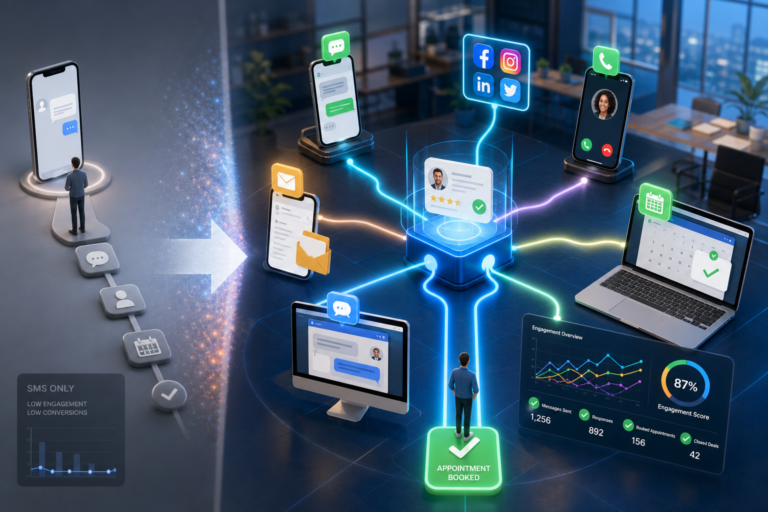
Multi-channel messaging automation sends messages across SMS, email, website chat, social media, and phone calls using a unified system. Instead of relying on one channel, businesses reach leads through whichever method gets the best response.
When a lead submits a form, multi-channel automation might send an instant SMS, follow up with an email five minutes later, and trigger a website chat message if they return to the site. If the lead doesn’t respond within 24 hours, the system can send another email or place an automated phone call.
The goal is to increase touchpoints without overwhelming the lead. Different people respond to different channels, and multi-channel automation adapts to individual preferences. If someone always responds to email but ignores texts, the system learns and prioritizes email. If another lead books appointments through chat, the platform focuses on that channel.
AI customer communication automation makes multi-channel messaging smarter by analyzing response patterns and adjusting outreach accordingly. The system tracks which channels get replies, which messages get ignored, and which follow-up sequences convert leads into customers.
How multi-channel messaging automation works
Multi-channel messaging automation integrates SMS, email, website chat, social media messaging, and phone calls into one platform. When a lead enters the system, automation triggers messages across multiple channels based on predefined workflows.
A typical workflow starts with instant AI lead response automation through SMS. If the lead doesn’t respond within 10 minutes, the system sends an email. If they visit the website again, a chat widget pops up with a personalized message. If they still don’t engage, the system schedules a phone call or sends a social media message.
The platform tracks all interactions in one place, so sales teams see every touchpoint without switching between apps. They know which messages were sent, which channels got responses, and what the lead’s journey looks like from start to finish.
Multi-channel automation also prevents duplicate messages. If a lead responds through email, the system pauses SMS follow-ups to avoid annoying them with redundant messages. If they book an appointment through chat, the system cancels scheduled reminder texts and sends a confirmation email instead.
Benefits of multi-channel messaging automation
Multi-channel messaging automation increases response rates by meeting leads where they are. Some people check email constantly but ignore texts. Others live in their SMS inbox but rarely open emails. Reaching both groups requires multiple channels.
It also improves lead conversion by creating more opportunities to engage. A lead who ignores an SMS might respond to an email the next day. A prospect who misses a phone call might click a website chat link. More touchpoints mean more chances to start a conversation.
Multi-channel automation reduces missed opportunities. Single-channel strategies lose leads simply because the message never reached them or didn’t match their preferred communication style. Using multiple channels ensures the message gets through.
Businesses also gain better data. Multi-channel systems track which channels work best for different lead sources, industries, and customer types. A dentist practice might learn that older patients prefer phone calls while younger patients respond to SMS. A solar company might find that email works better for commercial leads while residential leads prefer text messages.
Finally, multi-channel automation improves customer experience. Leads appreciate businesses that adapt to their preferences rather than forcing them into one communication channel. Flexibility builds trust and makes the sales process feel less intrusive.
Key differences between SMS automation and multi-channel messaging
SMS automation focuses on one channel. Multi-channel messaging automation uses several. That’s the fundamental difference, but the impact on business results goes much deeper.
SMS automation is simple to set up and manage. Businesses create a few message templates, set triggers, and let the system run. Multi-channel automation requires more planning because workflows involve multiple touchpoints across different platforms.
SMS automation works well for time-sensitive messages like appointment reminders and confirmations. Multi-channel automation works better for lead nurturing, complex sales processes, and building long-term customer relationships.
SMS automation reaches people quickly but depends entirely on text message engagement. Multi-channel automation reaches more people because it doesn’t rely on a single channel. If SMS fails, email or chat might succeed.
SMS automation provides limited data. Businesses see open rates, reply rates, and click rates, but they don’t know why a lead didn’t respond. Multi-channel automation provides richer insights because it tracks engagement across multiple channels and reveals which methods work best for each lead.
Channel reach and flexibility
SMS automation reaches anyone with a phone number. That’s a strength, but also a limitation. If someone doesn’t engage with texts, SMS automation can’t adapt.
Multi-channel messaging automation reaches leads through SMS, email, website chat, social media, and phone calls. If one channel doesn’t work, the system tries another. This flexibility increases the chances of starting a conversation.
Businesses using multi-channel automation can also segment their audience based on preferences. Older customers might receive more phone calls and emails. Younger leads might get SMS and social media messages. Personalization improves response rates and makes outreach feel less generic.
Response rates and engagement
SMS has high open rates, often above 90%. But open rates don’t equal response rates. Many people read a text and never reply.
Multi-channel messaging automation improves overall engagement by giving leads multiple ways to respond. A lead who ignores an SMS might reply to an email. A prospect who doesn’t answer a phone call might engage through website chat. More channels mean more opportunities to connect.
Studies show that businesses using multi-channel strategies see response rates 20-30% higher than single-channel approaches. The exact numbers vary by industry, but the pattern is consistent. More channels equal more replies.
Automation complexity and setup
SMS automation is straightforward. Businesses write a few messages, connect their CRM, and set triggers. Most SMS platforms are easy to use and require minimal technical knowledge.
Multi-channel messaging automation is more complex. Workflows involve multiple channels, conditional logic, and response tracking. Setting up effective multi-channel campaigns requires planning, testing, and ongoing optimization.
However, modern AI sales automation platforms simplify the process. Pre-built workflows, templates, and intelligent triggers reduce setup time and make multi-channel automation accessible even for small businesses.
Cost and resource requirements
SMS automation is typically cheaper. Businesses pay per message sent, and costs are predictable. A small business might spend $50-$200 per month on SMS automation depending on volume.
Multi-channel messaging automation costs more because it involves multiple platforms. Businesses pay for SMS, email, chat tools, and phone systems. However, the return on investment is often higher because multi-channel strategies convert more leads.
Resource requirements also differ. SMS automation needs minimal management once set up. Multi-channel automation requires ongoing monitoring, optimization, and coordination across channels. Businesses need someone to manage workflows, analyze performance, and adjust messaging based on results.
For companies serious about AI lead conversion automation, the extra cost and effort are worth it. Higher conversion rates and better customer engagement offset the additional investment.
When to use SMS automation
SMS automation works best in specific situations where speed, simplicity, and direct communication matter most. It’s not always the right choice, but when conditions align, SMS automation delivers strong results.
Use SMS automation when you need instant lead response. A prospect submits a form at 9 PM, and SMS automation replies within seconds, letting them know someone will follow up the next morning. That speed prevents leads from moving to competitors.
SMS automation is also ideal for appointment reminders. A quick text the day before a scheduled meeting reduces no-shows and keeps calendars full. Confirmation messages after booking appointments reassure customers and reduce last-minute cancellations.
Time-sensitive offers work well through SMS. A med spa running a flash sale can send a text to recent customers, driving immediate bookings. An automotive business promoting a weekend service discount can reach local customers instantly.
SMS automation is effective for simple transactional updates. Order confirmations, delivery notifications, and service reminders don’t require long explanations. A short text message delivers the information quickly without overwhelming the recipient.
Finally, SMS automation works when your audience prefers text messages. Some industries and demographics respond better to SMS than email or phone calls. Test your audience and use SMS automation if engagement is high.
Best industries for SMS automation
Some industries benefit more from SMS automation than others. Local service businesses like roofing companies, HVAC contractors, and plumbers see strong results because their customers value quick responses and appointment confirmations.
Healthcare practices, including dentists and med spas, use SMS automation for appointment reminders and follow-up care instructions. High no-show rates make SMS reminders essential for keeping schedules full.
Real estate professionals use SMS automation to confirm showing appointments and send property updates. Buyers and sellers appreciate fast communication, and text messages feel less intrusive than phone calls.
Restaurants, salons, and retail businesses use SMS automation for reservations, waitlist notifications, and promotional offers. Quick, direct messages drive foot traffic and fill appointment slots.
When to use multi-channel messaging automation
Multi-channel messaging automation works best when lead nurturing, relationship building, and long-term engagement matter more than instant transactions. It’s the right choice for complex sales processes, high-value services, and industries where leads take time to convert.
Use multi-channel messaging automation when your sales cycle lasts weeks or months. A law firm might nurture a potential client through multiple touchpoints before they decide to hire an attorney. Email, SMS, website chat, and phone calls keep the firm top of mind without overwhelming the prospect.
Multi-channel automation is ideal when different customers prefer different communication channels. A roofing company serving both residential and commercial clients might find that homeowners respond to SMS while business owners prefer email. Multi-channel automation adapts to each audience.
Businesses with complex services benefit from multi-channel messaging because they need multiple touchpoints to explain their value. A solar company can’t close a $20,000 installation through a single text message. They need email follow-ups, website resources, phone consultations, and ongoing nurturing.
Multi-channel automation also works when your team handles high lead volumes. Instead of manually deciding which channel to use for each lead, automation tests multiple channels and identifies what works best. This saves time and improves conversion rates.
Finally, use multi-channel messaging automation when you want richer data and insights. Single-channel strategies provide limited feedback. Multi-channel automation reveals which channels work for different lead sources, what messaging resonates, and where leads drop off in the sales process.
Best industries for multi-channel messaging automation
Multi-channel messaging automation benefits industries with longer sales cycles and higher-value services. Real estate professionals manage leads over weeks or months, and multi-channel automation keeps prospects engaged through email, SMS, and website chat.
Law firms use multi-channel automation to nurture potential clients who need time to make decisions. Email provides detailed information, SMS offers quick check-ins, and phone calls build personal relationships.
Solar companies benefit from multi-channel automation because solar installations require education, trust-building, and multiple consultations. Email delivers case studies and financing information. SMS schedules site visits. Website chat answers questions in real time.
HVAC companies offering maintenance contracts and system replacements use multi-channel automation to stay in touch with customers year-round. Seasonal promotions go out through email and SMS. Service reminders arrive via text. Website chat captures leads browsing equipment options.
Med spas and dental practices use multi-channel automation to nurture leads interested in cosmetic procedures. Email educates prospects about treatments. SMS books consultations. Website chat answers pricing questions.
How to build an effective multi-channel messaging strategy
Building a multi-channel messaging strategy requires planning, testing, and continuous optimization. Start by identifying which channels your audience uses most. Survey customers, review past engagement data, and test different channels to see what works.
Next, map your customer journey. Identify every touchpoint from first contact to closed sale. Determine which channels make sense at each stage. A new lead might receive an instant SMS followed by an email. A warm prospect might get a phone call and a follow-up text. A customer booking an appointment might receive email confirmation and an SMS reminder.
Create messaging templates for each channel. SMS messages should be short and action-focused. Emails can provide more detail and include links to resources. Website chat should feel conversational and helpful. Phone scripts should sound natural and personalized.
Set up automation workflows that trigger messages based on lead behavior. If someone submits a form, send an instant SMS. If they don’t respond within 10 minutes, send an email. If they visit your pricing page, trigger a chat message offering help. If they go silent for three days, schedule a follow-up call.
Integrate all channels into one platform so your team sees a unified view of every conversation. Sales reps should know which messages were sent, which channels got responses, and what the lead’s journey looks like. This prevents duplicate messages and ensures consistent communication.
Channel prioritization and sequencing
Not all channels should be used simultaneously. Bombarding leads with SMS, email, and chat messages at the same time feels aggressive and reduces response rates. Instead, sequence messages strategically.
Start with the fastest channel. For most businesses, that’s SMS. Send an instant text when a lead submits a form. If they respond, continue the conversation through their preferred channel. If they don’t respond, move to the next channel.
Follow up with email 10-30 minutes later. Email provides more context and allows leads to respond when convenient. Include helpful information, answer common questions, and make it easy to book an appointment.
If the lead visits your website again, trigger a chat message. Website chat captures leads when they’re actively researching and ready to engage. A well-timed chat message can turn a browsing visitor into a booked appointment.
Use phone calls strategically. Some leads prefer talking to a real person. Others find unsolicited calls annoying. Test your audience and use phone outreach when data shows it works. AI appointment booking automation can handle initial outreach, and human sales reps can take over when leads show strong interest.
Personalization and timing
Personalization improves response rates across all channels. Use the lead’s name, reference their specific inquiry, and tailor messages to their needs. A roofing lead asking about storm damage should receive different messaging than someone requesting a routine inspection.
Timing also matters. Send messages when leads are most likely to engage. For most industries, weekday mornings and early afternoons get better response rates than evenings and weekends. Test different send times and adjust based on results.
Avoid sending too many messages too quickly. A common mistake is overwhelming leads with daily follow-ups across multiple channels. Space out messages and give leads time to respond. If someone doesn’t reply after three touchpoints, pause automation and let them reach out when ready.
Tracking and optimization
Measure performance across all channels. Track open rates, response rates, and conversion rates for SMS, email, chat, and phone calls. Identify which channels work best for different lead sources and customer types.
A/B test messaging and timing. Try different subject lines in emails, different call-to-actions in SMS, and different opening lines in chat. Small changes can produce significant improvements in response rates.
Review workflows regularly. What worked six months ago might not work today. Customer preferences change, and automation strategies need to adapt. Update templates, adjust timing, and refine workflows based on real performance data.
Use AI CRM automation to track every interaction and identify patterns. The system should show which channels convert best, where leads drop off, and what messaging drives appointments. Use this data to improve your multi-channel strategy over time.
Combining SMS automation with other channels
SMS automation doesn’t have to be an all-or-nothing choice. The most effective strategies combine SMS with other channels to maximize reach and engagement.
Use SMS for instant lead response and time-sensitive messages. When a lead submits a form, send an immediate text acknowledging their inquiry. When an appointment is scheduled, send an SMS confirmation. When a meeting is tomorrow, send a reminder text.
Use email for detailed information and nurturing. After the initial SMS, follow up with an email that provides more context, answers common questions, and includes links to helpful resources. Email works well for sharing case studies, explaining services, and building trust over time.
Use website chat for real-time engagement. When a lead visits your site, trigger a chat message offering help. Chat is perfect for answering quick questions and guiding visitors toward booking appointments. It feels less intrusive than a phone call and more immediate than email.
Use phone calls for high-value leads and complex sales. Some prospects need to talk with a real person before making a decision. AI follow-up automation can qualify leads and identify which ones are ready for a phone conversation.
Combining channels creates a seamless experience. A lead receives an instant SMS, gets a detailed email an hour later, sees a chat message when they visit the website, and talks to a sales rep when they’re ready. Each channel serves a purpose, and together they guide leads through the sales process.
Common mistakes in multi-channel messaging automation
Multi-channel messaging automation delivers strong results when done right, but businesses often make avoidable mistakes that reduce effectiveness.
One common mistake is sending too many messages too quickly. Leads feel overwhelmed when they receive an SMS, email, and chat message within minutes. Space out messages and give leads time to respond before escalating to the next channel.
Another mistake is using the same messaging across all channels. SMS requires short, action-focused text. Email allows for more detail. Chat should feel conversational. Phone calls need a personal touch. Tailor messaging to fit each channel instead of copying the same content everywhere.
Businesses also fail when they don’t track performance. Multi-channel automation without analytics is guesswork. Measure response rates, conversion rates, and engagement for each channel. Use data to identify what works and eliminate what doesn’t.
Ignoring lead preferences is another mistake. If a lead always responds to email and ignores SMS, stop sending texts. If a prospect prefers chat over phone calls, adjust your workflow. Multi-channel automation should adapt to individual preferences, not force everyone into the same sequence.
Finally, businesses sometimes automate too much. Multi-channel messaging should feel human, not robotic. Use automation to handle repetitive tasks, but let real people take over when leads show strong interest. A balance between automation and personal outreach produces the best results.
How GetDMFlow helps businesses automate lead response and conversion
GetDMFlow is an AI sales automation platform designed to help businesses engage leads faster, automate follow-up, and improve conversion efficiency through multi-channel messaging automation.
The platform integrates SMS, email, website chat, and phone automation into one system. When a lead submits a form, GetDMFlow instantly sends an SMS, follows up with email, and triggers website chat if the lead returns to your site. All interactions are tracked in one place, so sales teams see every touchpoint without switching between apps.
AI lead response automation ensures no lead waits more than a few seconds for a reply. Instant engagement keeps prospects from moving to competitors and increases the chances of booking appointments.
AI appointment booking automation handles scheduling without manual back-and-forth. Leads can book available time slots directly through SMS, email, or chat. The system sends confirmations and reminders automatically, reducing no-shows and keeping calendars full.
AI follow-up automation nurtures leads who don’t respond immediately. The platform sends strategic follow-ups across multiple channels, adjusting based on engagement patterns. Leads who prefer email receive more emails. Leads who respond to SMS get more texts.
GetDMFlow also qualifies leads automatically by asking the right questions at the right time. The system identifies high-intent prospects and prioritizes them for sales teams. Low-intent leads receive nurturing campaigns until they’re ready to buy.
Businesses using GetDMFlow see faster lead response, more booked appointments, higher conversion rates, and improved customer engagement. The platform handles repetitive communication tasks so sales teams can focus on closing deals instead of chasing leads.
Whether you run a roofing company, HVAC business, dental practice, real estate firm, or any service-based business, GetDMFlow helps you capture more leads, engage them faster, and convert them more efficiently.
Frequently asked questions
What is the main difference between SMS automation and multi-channel messaging automation?
SMS automation sends automated text messages through one channel. Multi-channel messaging automation sends messages across SMS, email, website chat, social media, and phone calls. Multi-channel automation increases response rates by reaching leads through their preferred communication method.
Is SMS automation still effective in 2026?
Yes, SMS automation remains effective because text messages have high open rates and reach people quickly. However, relying solely on SMS limits your reach. Combining SMS with other channels produces better results.
Which industries benefit most from multi-channel messaging automation?
Industries with longer sales cycles and higher-value services benefit most. This includes real estate, law firms, solar companies, HVAC businesses, med spas, and dental practices. Multi-channel automation nurtures leads over time and adapts to different communication preferences.
How many channels should a business use in multi-channel messaging automation?
Most businesses see strong results using three to four channels: SMS, email, website chat, and phone calls. Using too many channels can overwhelm leads. Focus on the channels your audience uses most and sequence messages strategically.
Does multi-channel messaging automation cost more than SMS automation?
Yes, multi-channel automation typically costs more because it involves multiple platforms. However, the return on investment is often higher due to increased response rates and better conversion efficiency.
Can small businesses afford multi-channel messaging automation?
Yes, modern AI sales automation platforms make multi-channel messaging accessible for small businesses. Pre-built workflows, affordable pricing, and easy setup reduce the cost and complexity.
How do I know which channels my leads prefer?
Track engagement data across all channels. Monitor open rates, response rates, and conversion rates for SMS, email, chat, and phone calls. Test different channels and adjust based on performance.
How often should I send messages in a multi-channel workflow?
Space messages out to avoid overwhelming leads. A typical workflow might include an instant SMS, an email 10-30 minutes later, a chat message if the lead revisits the website, and a follow-up call after 24-48 hours if there’s no response.
What is AI sales automation and how does it improve multi-channel messaging?
AI sales automation uses artificial intelligence to send messages, qualify leads, and book appointments automatically. It improves multi-channel messaging by analyzing response patterns, personalizing outreach, and adjusting workflows based on lead behavior.
How does GetDMFlow handle multi-channel messaging automation?
GetDMFlow integrates SMS, email, website chat, and phone automation into one platform. The system sends instant lead responses, automates follow-up across multiple channels, books appointments, and tracks all interactions in one place.
Conclusion
SMS automation delivers fast, direct communication, but relying on a single channel limits reach and reduces response rates. Multi-channel messaging automation meets leads where they are, increases engagement, and provides more opportunities to start conversations.
Businesses using multi-channel strategies see higher response rates, more booked appointments, and better conversion efficiency. The key is combining channels strategically, personalizing messaging, and using data to optimize performance over time.
Whether you start with SMS automation or build a full multi-channel strategy, the goal is the same: engage leads faster, reduce missed opportunities, and convert more prospects into customers. AI sales automation platforms like GetDMFlow make it easier by handling repetitive communication tasks and delivering intelligent, multi-channel outreach automatically.
Ready to automate lead response and boost conversions?
GetDMFlow helps businesses capture, engage, and convert more leads through intelligent multi-channel messaging automation. See how AI sales automation can transform your lead response and booking process.
Book a demo and discover how GetDMFlow can help your business respond faster, book more appointments, and close more deals.
