
Every business faces the same challenge: how to communicate with customers quickly, consistently, and personally without burning out your team. Whether it’s responding to new leads, following up with prospects, or keeping existing customers engaged, manual communication creates bottlenecks that cost you money.
Customer communication automation platforms solve this problem by handling repetitive conversations, routing messages intelligently, and making sure no customer inquiry falls through the cracks. These platforms help businesses respond faster, book more appointments, and convert more leads without hiring additional staff.
This guide covers the best customer communication automation platforms available today, what features matter most, and how to choose the right solution for your business.
The guide explains customer communication automation and why businesses use it to respond faster, qualify leads, book appointments, and manage follow-up across multiple channels. It compares leading platforms such as GetDMFlow, Intercom, Drift, HubSpot, Zendesk, and Freshdesk, highlighting their strengths, limitations, and best-fit use cases.
It also outlines key features to evaluate, common implementation mistakes, integration needs, success metrics, industry applications, and emerging trends. The article emphasizes matching platform capabilities to business goals, with a strong focus on service businesses that depend on rapid lead conversion.
What is customer communication automation?
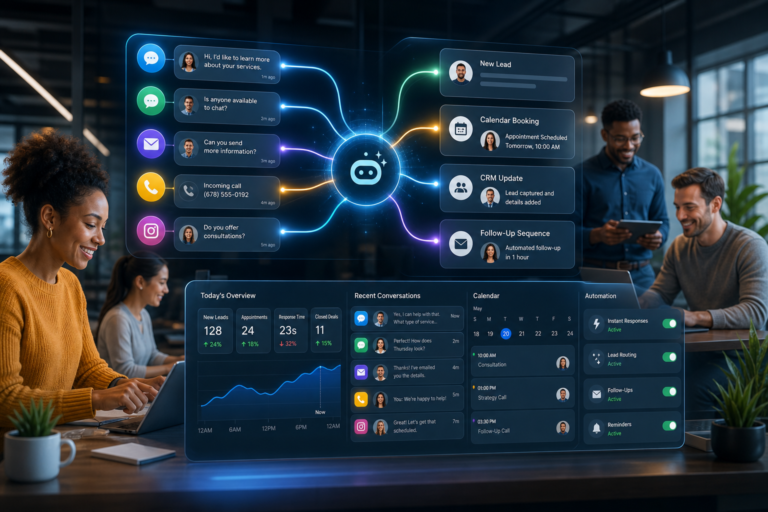
Customer communication automation uses software to handle conversations with leads and customers across multiple channels without manual intervention. Instead of requiring a team member to respond to every message, automated systems can answer questions, schedule appointments, send follow-ups, and route complex inquiries to the right person.
These platforms typically connect to your website, phone system, social media accounts, and messaging apps. When someone reaches out, the system responds immediately based on pre-built workflows, natural language processing, or artificial intelligence. The goal is to provide fast, helpful responses while freeing your team to focus on high-value conversations.
Modern automation platforms go beyond simple auto-replies. They can qualify leads by asking relevant questions, update your CRM automatically, send personalized follow-up sequences, and even handle complete sales conversations from initial contact to booked appointment.
Why businesses need communication automation
Speed matters in customer communication. Research shows that businesses responding to leads within five minutes are 100 times more likely to connect than those waiting 30 minutes. Manual processes make fast response impossible when your team is busy, in meetings, or outside business hours.
Customer communication automation solves several critical problems that hold businesses back. First, it eliminates response delays. Automated systems reply instantly to every inquiry, capturing attention when prospects are most interested. This speed advantage alone can double or triple your conversion rates.
Second, automation ensures consistency. Every customer receives the same quality of communication regardless of which team member would have handled their message manually. Your brand voice stays consistent, important qualification questions get asked every time, and nothing gets forgotten during handoffs.
Third, automation scales without adding headcount. Whether you receive 10 inquiries per day or 100, automated systems handle the volume without degrading quality. This scalability becomes especially valuable during busy seasons, marketing campaigns, or rapid business growth.
Fourth, automation captures opportunities outside business hours. Many customers research and reach out during evenings and weekends. Manual processes lose these leads to competitors who respond faster. Automated systems work around the clock, ensuring you never miss an opportunity because someone contacted you at an inconvenient time.
Key features of customer communication automation platforms
Not all automation platforms offer the same capabilities. Understanding which features matter most helps you evaluate options and choose the right fit for your business needs.
Multi-channel messaging
The best platforms handle communication across every channel your customers use. This includes website chat, SMS, email, Facebook Messenger, Instagram DMs, WhatsApp, and phone calls. Multi-channel support means customers can reach you however they prefer while your team manages everything from one unified inbox.
Look for platforms that sync conversations across channels. If a customer starts on website chat and continues via SMS, your system should maintain context and conversation history. This prevents frustrating experiences where customers must repeat information.
Intelligent lead qualification
Automation platforms should do more than relay messages. Smart qualification features ask questions that help you understand lead quality, urgency, and needs before involving your team. The system can gather project details, budget information, timeline requirements, and contact preferences automatically.
This qualification process serves two purposes. It provides your team with context needed for effective follow-up, and it filters out low-quality inquiries that would waste time. Some platforms can route qualified leads directly to booking calendars while sending unqualified leads to nurture sequences.
Appointment booking automation
Integrated scheduling eliminates the back-and-forth of finding meeting times. When leads express interest, the system can offer available time slots, handle booking confirmation, send calendar invites, and manage reminders automatically.
AI appointment booking automation reduces friction in your sales process by letting prospects book immediately when interest peaks. This convenience increases show rates and shortens sales cycles compared to manual scheduling.
CRM integration
Your communication platform should sync seamlessly with your existing customer relationship management system. Every conversation, contact detail, qualification answer, and appointment should flow into your CRM automatically. This integration eliminates double data entry and ensures your sales team has complete context.
Look for native integrations with popular CRMs or flexible API access that lets you connect any system. The best platforms can trigger CRM workflows based on conversation outcomes, update lead status automatically, and pull customer data to personalize messages.
Follow-up automation
Most sales require multiple touchpoints before conversion. Automation platforms should handle follow-up sequences that nurture leads over time without manual effort. These sequences can include educational content, appointment reminders, check-ins after quotes, and re-engagement campaigns for cold leads.
Effective AI follow-up automation knows when to stop following up, how to personalize messages based on previous interactions, and when to alert human team members that intervention is needed.
Top customer communication automation platforms in 2026
The market offers dozens of automation platforms with varying strengths, weaknesses, and ideal use cases. Here are the most capable options worth considering.
GetDMFlow
GetDMFlow is an AI sales automation platform built specifically for service-based businesses that need fast lead response and high conversion rates. The platform combines AI lead response automation, appointment booking, and customer communication in one system designed for industries like roofing, HVAC, real estate, dentistry, med spas, solar, automotive, and law firms.
What sets GetDMFlow apart is its focus on speed and conversion rather than just communication. The platform engages new leads within seconds, qualifies them through intelligent conversation, and books appointments automatically. This approach works well for businesses where fast response directly impacts revenue.
GetDMFlow handles website chat, SMS, email, and social media messaging from a unified inbox. The AI understands industry-specific questions and can handle complete sales conversations without human intervention. When complex questions arise, it routes conversations to the right team member with full context.
The platform includes built-in CRM capabilities and integrates with popular systems like Salesforce and HubSpot. Businesses using GetDMFlow typically see faster response times, more booked appointments, and higher lead conversion rates compared to manual processes.
Ideal for businesses that want AI-powered automation focused on revenue outcomes rather than just communication efficiency. Particularly strong for service industries where appointment booking drives the business model.
Intercom
Intercom offers a comprehensive customer communication platform that combines live chat, automation, and support ticketing. The system works well for SaaS companies and online businesses that need to balance sales conversations with customer support.
Intercom’s strength lies in its sophisticated segmentation and targeting capabilities. You can show different messages to different visitor segments based on behavior, company size, or dozens of other attributes. This targeting helps deliver relevant conversations that convert better than generic messages.
The platform includes a visual workflow builder for creating automation sequences, knowledge base functionality for self-service support, and product tours for user onboarding. Intercom also offers a mobile app so teams can respond to customers from anywhere.
However, Intercom can be expensive, especially as your contact database grows. The platform charges based on active users, which can create unpredictable costs. Setup and configuration also require significant time investment to get full value from the features.
Best for SaaS businesses and online companies that need advanced segmentation and want to combine sales automation with customer support in one platform.
Drift
Drift pioneered the conversational marketing category and remains a strong option for B2B companies focused on account-based marketing strategies. The platform emphasizes real-time conversations with high-value accounts rather than automated responses for all visitors.
Drift’s standout feature is its ability to identify website visitors from target accounts and route them immediately to the right sales representative. This approach works well when selling to specific companies where immediate human connection drives deals.
The platform includes video messaging, which lets sales reps send personalized video messages that stand out in crowded inboxes. Drift also offers strong integrations with marketing automation platforms and sales tools.
The downside is that Drift is optimized for B2B sales teams rather than service businesses or small companies. The platform assumes you have dedicated sales representatives available to take conversations. Pricing reflects this enterprise focus and may exceed budgets for smaller operations.
Ideal for B2B companies practicing account-based marketing with dedicated sales teams ready to engage target accounts immediately.
HubSpot
HubSpot provides a complete marketing, sales, and service platform that includes customer communication automation as part of a broader toolkit. The free tier offers basic live chat and email automation, making it accessible for businesses just starting with automation.
HubSpot’s main advantage is integration across marketing, sales, and service functions. Everything lives in one system with unified reporting. You can see how communication automation impacts overall revenue and customer lifetime value.
The platform includes a visual workflow builder, email templates, meeting scheduling, and comprehensive CRM functionality. As your needs grow, you can add marketing automation, sales enablement tools, and advanced analytics without switching platforms.
The challenge with HubSpot is complexity. The platform offers so many features that setup and optimization require dedicated resources. Businesses often need to hire HubSpot specialists or agencies to get full value. Pricing also increases quickly as you add features and contacts.
Best for businesses that want an all-in-one platform and have resources to invest in setup, training, and ongoing optimization.
Zendesk
Zendesk started as a support ticketing system and has expanded to include sales and communication automation. The platform works well for companies where customer support is central to the business model.
Zendesk’s strength is its ticketing workflow, which ensures no customer inquiry gets lost. The system can automatically categorize, prioritize, and route tickets based on content and customer attributes. This structure works well for handling high volumes of support requests.
The platform includes live chat, messaging, email automation, and phone support capabilities. Zendesk also offers strong reporting that helps identify common issues, team performance, and areas for improvement.
However, Zendesk is support-focused rather than sales-focused. While it can handle lead communication, the platform lacks sophisticated qualification and conversion features. Businesses focused on sales automation may find better options elsewhere.
Ideal for businesses where customer support drives retention and where support volume justifies dedicated ticketing workflows.
Freshdesk
Freshdesk provides affordable customer communication automation with a focus on small and medium businesses. The platform combines ticketing, live chat, phone support, and basic automation at price points accessible to growing companies.
Freshdesk offers a clean, intuitive interface that requires minimal training. Teams can start handling customer conversations quickly without extensive setup. The platform includes canned responses, basic automation rules, and reporting dashboards.
The free tier provides surprisingly robust functionality, making Freshdesk a good entry point for businesses new to communication automation. Paid tiers add features like time tracking, advanced reporting, and additional channels.
Limitations include less sophisticated automation compared to specialized platforms. Freshdesk handles basic workflows well but lacks the AI-powered intelligence of newer platforms. Integration options are also more limited than enterprise alternatives.
Best for small businesses that need affordable, straightforward communication automation without complex requirements.
How to choose the right platform for your business
Selecting a customer communication automation platform requires matching capabilities to your specific business needs, resources, and goals. Start by clarifying what problems you need to solve.
If your main challenge is slow lead response, prioritize platforms with instant engagement and AI lead conversion automation. If you struggle with appointment no-shows, focus on systems with strong booking and reminder capabilities. If your team drowns in support tickets, consider platforms built for high-volume ticket management.
Consider your industry and sales process. Service businesses that rely on booked appointments need different automation than SaaS companies selling subscriptions. B2B companies with long sales cycles need different features than local businesses converting leads quickly.
Evaluate your team’s technical capabilities and available time. Some platforms require significant setup and ongoing management. Others provide templates and AI that work with minimal configuration. Choose a platform that matches your team’s ability to implement and maintain it.
Test real-world scenarios during evaluations. Send test messages as if you were a customer. Try booking appointments. See how quickly the system responds and how naturally conversations flow. Many platforms look great in demos but feel clunky in actual use.
Calculate total cost of ownership beyond monthly subscription fees. Consider implementation costs, integration expenses, training time, and ongoing management requirements. A cheaper platform that requires extensive customization may cost more than a premium option that works immediately.
Common mistakes to avoid
Businesses often make predictable mistakes when implementing customer communication automation. Learning from these errors helps you avoid wasted time and money.
The biggest mistake is automating broken processes. If your manual communication approach doesn’t convert leads effectively, automation simply scales your inefficiency. Fix your messaging, qualification questions, and follow-up strategy before automating anything.
Another common error is over-automation. Some businesses try to automate every interaction, removing human touch completely. Customers notice when they’re talking to a system, and complex questions require human expertise. The best approach balances automation for simple tasks with human involvement for high-value conversations.
Many businesses also underestimate training requirements. Even the most intuitive platforms need team buy-in and proper training. Schedule training sessions, create documentation, and designate someone to champion the new system.
Ignoring mobile experience is another frequent mistake. Many customer interactions happen on mobile devices, yet some automation platforms deliver poor mobile experiences. Test every automated workflow on phones to ensure customers can complete actions easily.
Finally, businesses often set up automation and forget about it. Customer preferences change, new questions emerge, and conversion rates vary by message variation. Successful automation requires ongoing optimization based on real performance data.
Integration with your existing tools
Customer communication automation delivers the most value when integrated with your existing business systems. Standalone tools create information silos that reduce efficiency and visibility.
CRM integration is fundamental. Every conversation, lead detail, and customer interaction should flow automatically into your customer relationship management system. This integration ensures sales teams have complete context and prevents leads from falling through cracks between systems.
Calendar integration enables automatic appointment booking. When your communication platform connects to team calendars, it can offer real availability, prevent double-bookings, and send calendar invites automatically. This integration is essential for service businesses where appointments drive revenue.
Marketing automation integration allows you to trigger communication sequences based on customer behavior. When someone downloads a resource, abandons a cart, or visits a pricing page, your communication platform can start relevant conversations automatically.
Payment processing integration lets you collect deposits, process payments, and send receipts without leaving the conversation. This capability particularly benefits businesses that require payment to secure bookings.
Analytics integration provides visibility into how communication impacts business outcomes. Connecting your automation platform to Google Analytics, reporting dashboards, or business intelligence tools helps you understand ROI and optimize performance.
Measuring success with communication automation
Implementing automation without measuring results leaves you blind to what’s working and what needs improvement. Track these key metrics to understand platform performance and business impact.
Response time measures how quickly your system engages new inquiries. Faster response correlates directly with higher conversion rates. Track average response time and aim for under one minute for new leads.
Conversation completion rate shows what percentage of automated conversations reach your desired outcome. If you want leads to book appointments, this metric reveals what percentage completes booking versus dropping off mid-conversation.
Lead qualification rate indicates how effectively your automation identifies high-quality prospects. Track what percentage of engaged leads meet your qualification criteria. Low rates suggest your automation needs better questions or targeting.
Appointment booking rate measures conversion from conversation to scheduled meeting. This critical metric directly impacts revenue for service businesses. Compare automated booking rates to manual processes to quantify automation value.
Show rate tracks what percentage of booked appointments actually happen. Communication automation should improve show rates through better reminders and confirmation sequences. Declining show rates indicate your reminders need adjustment.
Customer satisfaction scores reveal whether automated communication meets customer expectations. Survey customers about their experience interacting with your automation. Low scores suggest your messages feel too robotic or fail to address needs.
Cost per lead and cost per acquisition show automation’s financial impact. Compare these metrics before and after implementing automation. Effective systems should reduce costs by improving efficiency and conversion rates.
Industry-specific applications
Customer communication automation delivers different value across industries based on unique business models and customer expectations.
Home services
Roofing companies, HVAC contractors, plumbers, and electricians benefit enormously from fast lead response. Homeowners typically contact multiple providers when they need service. The first company to respond professionally often wins the job.
Roofing AI automation can qualify leads by gathering property details, urgency information, and project scope. The system can send automated appointment confirmations, service reminders, and follow-ups for estimates. This automation is particularly valuable because service calls often happen outside regular business hours.
Healthcare practices
Dental offices, med spas, and medical practices use automation to handle appointment booking, insurance verification, and patient communication. Dentist AI automation can send appointment reminders that reduce no-shows, answer common questions about services and pricing, and handle rescheduling requests.
Healthcare automation must balance efficiency with compliance. Systems need to protect patient privacy and follow regulations while delivering convenient communication experiences.
Real estate
Real estate professionals juggle multiple clients across various buying or selling stages. Real estate AI automation can qualify buyer leads by budget and timeline, schedule property showings automatically, and nurture leads with relevant listings.
Automation particularly helps real estate agents who can’t respond immediately while showing properties or in meetings. The system keeps leads engaged until the agent can take over personally.
Legal services
Law firms use automation to qualify potential clients, gather case details, and schedule consultations. Law firm AI automation can ask initial questions about case type and urgency while maintaining the professional tone clients expect from legal services.
Sensitive nature of legal matters means automation should transition to human attorneys quickly for substantive discussions while handling administrative tasks automatically.
Automotive businesses
Car dealerships and auto service centers use automation to handle test drive bookings, service appointments, and lead follow-up. Automotive AI automation can answer questions about inventory, pricing, and service offerings while routing serious buyers to sales teams.
Automation helps automotive businesses handle high lead volumes from multiple sources while ensuring consistent follow-up that moves prospects through the sales process.
Future trends in communication automation
Customer communication automation continues evolving as technology improves and customer expectations change. Understanding emerging trends helps you prepare for what’s next.
Artificial intelligence is becoming more sophisticated at understanding context and intent. Early automation relied on keyword matching and rigid scripts. Modern AI can handle nuanced conversations, detect emotional tone, and adjust responses accordingly. This improvement makes automated conversations feel more natural and helpful.
Voice automation is expanding beyond phone trees to natural conversation. Customers can speak requests in plain language, and systems understand intent and respond appropriately. Voice automation will become particularly important as smart speakers and voice assistants grow more common.
Predictive automation anticipates customer needs before they ask. By analyzing behavior patterns and previous interactions, systems can proactively start relevant conversations. A customer browsing your pricing page repeatedly might receive an automated message offering to answer questions or schedule a demo.
Video messaging is becoming standard in customer communication. Automated systems can send personalized video messages that feel more human than text. Sales teams can record videos answering common questions that get sent automatically based on triggers.
Privacy-focused automation responds to growing customer concerns about data collection. Future platforms will provide powerful personalization while giving customers control over data sharing and storage. Transparency about automation and data use will become competitive advantages.
How GetDMFlow helps businesses automate lead response and conversion
GetDMFlow is built specifically to solve the lead response and conversion challenges that service businesses face every day. The platform combines AI sales automation, intelligent communication, and conversion optimization in one system designed to book more appointments and close more deals.
When a lead contacts your business through any channel, GetDMFlow responds immediately with relevant questions that qualify interest and gather essential information. The AI understands your industry and asks the right questions to determine if a lead is ready to buy, their timeline, budget considerations, and specific needs.
For qualified leads, GetDMFlow transitions seamlessly to booking appointments. The system presents available time slots, handles scheduling, sends confirmations, and manages reminders automatically. This AI customer communication automation eliminates the back-and-forth delays that cause leads to choose faster competitors.
GetDMFlow doesn’t stop at first response. The platform manages complete follow-up sequences that nurture leads over time, re-engage prospects who didn’t book initially, and check in after appointments or quotes. These automated workflows ensure no opportunity gets forgotten because your team is busy.
The platform integrates with your existing CRM, calendar, and business tools. Every conversation, qualification detail, and appointment flows into your systems automatically. Your team gets complete context without manual data entry, and you maintain single-source visibility into your sales pipeline.
Businesses using GetDMFlow typically see dramatic improvements in response speed, appointment booking rates, and overall conversion efficiency. The platform handles the repetitive communication tasks that bog down sales teams while ensuring every lead receives fast, professional engagement.
GetDMFlow works across industries including HVAC, solar, and med spa businesses. The AI understands industry-specific terminology and common customer questions, delivering relevant conversations without generic responses.
Frequently asked questions
What is the best customer communication automation platform?
The best platform depends on your specific business needs. GetDMFlow excels for service businesses focused on lead response and appointment booking. HubSpot works well for companies wanting all-in-one marketing and sales tools. Intercom suits SaaS companies balancing sales and support. Evaluate platforms based on your industry, sales process, and key challenges.
How much does customer communication automation cost?
Pricing varies widely from free basic plans to enterprise solutions costing thousands monthly. Entry-level platforms start around $50-$100 per month. Mid-tier solutions run $200-$500 monthly. Enterprise platforms cost $1,000+ per month. Consider total cost including implementation, integrations, and training beyond subscription fees.
Can automation replace human customer service?
Automation should complement human service, not replace it entirely. Automated systems excel at handling repetitive questions, routing inquiries, and managing simple transactions. Complex issues, upset customers, and high-value sales conversations still benefit from human expertise and empathy. The best approach combines automation for efficiency with human touch for quality.
How quickly can I implement communication automation?
Implementation timeline depends on platform complexity and your technical resources. Simple solutions can go live in days with basic templates. Comprehensive platforms with custom workflows and integrations may require weeks or months. Budget time for setup, testing, training, and optimization beyond initial installation.
Will customers know they’re talking to automation?
Modern AI communication feels natural enough that many customers don’t immediately recognize automation. However, transparency builds trust. Consider acknowledging automation while emphasizing benefits like instant response and 24/7 availability. Offer easy escalation to human team members when needed.
How does automation improve lead conversion?
Automation improves conversion through speed, consistency, and persistence. Instant response captures attention when interest peaks. Consistent messaging ensures every lead receives quality communication. Automated follow-up maintains engagement without requiring manual effort. These factors combine to significantly increase conversion rates.
What channels should my automation platform support?
Your platform should support every channel your customers use to contact you. Essential channels include website chat, SMS, email, and phone. Consider social media messaging if customers reach out via Facebook, Instagram, or other platforms. Multi-channel support ensures consistent experience regardless of customer preference.
How do I measure automation ROI?
Calculate ROI by comparing costs to measurable benefits. Track metrics like reduced response time, increased appointment bookings, higher conversion rates, and time saved by your team. Assign dollar values to improvements. A good automation platform should pay for itself through increased revenue and reduced labor costs within months.
Conclusion
Customer communication automation has become essential for businesses that want to compete effectively in 2026. Manual communication simply cannot match the speed, consistency, and scalability that customers expect. The right automation platform helps you respond instantly to every inquiry, qualify leads intelligently, book appointments automatically, and follow up persistently without overwhelming your team.
Choosing the best platform requires understanding your specific business needs, industry requirements, and growth goals. Service businesses focused on lead conversion benefit from platforms like GetDMFlow that prioritize speed and appointment booking. Companies needing comprehensive marketing and sales tools might prefer all-in-one solutions like HubSpot. B2B organizations practicing account-based marketing could choose conversation platforms like Drift.
The key is matching platform capabilities to your biggest challenges and opportunities. Evaluate options based on how well they solve your specific problems rather than general feature lists. Test platforms with real scenarios that mirror your customer interactions.
Successful implementation requires more than just purchasing software. You need clear processes, team training, ongoing optimization, and integration with existing business systems. Start with focused use cases, measure results carefully, and expand automation as you prove value.
Customer communication automation represents a competitive advantage that grows more important each year. Businesses that implement effective automation respond faster, convert better, and scale more efficiently than those relying on manual processes. The platforms, technology, and best practices exist today to transform how you communicate with customers and prospects.
Ready to automate your customer communication?
GetDMFlow helps service businesses respond to leads instantly, book more appointments, and convert prospects more efficiently through intelligent automation. The platform handles customer communication across all channels while your team focuses on closing deals and serving customers.
See how GetDMFlow can improve your lead response time and increase conversion rates. Book a demo to explore the platform and discover how AI automation can transform your sales process. Start converting more leads with faster response and smarter communication.
