
Local businesses lose revenue every day because of slow responses, missed follow-ups, and inconsistent customer communication. When a homeowner fills out a form for HVAC repair or a potential patient requests a dental consultation, speed matters. Responding within five minutes increases conversion rates by up to 400% compared to waiting just 10 minutes. Most local businesses can’t maintain that speed manually, especially when leads arrive after hours, on weekends, or during peak service times.
AI customer communication software solves this problem by automating lead response, follow-up workflows, appointment booking, and ongoing customer conversations across multiple channels. The right platform helps local businesses respond instantly, stay consistent, and convert more leads without hiring additional staff or working longer hours.
Why local businesses need AI customer communication software
Local service businesses face unique communication challenges. Unlike e-commerce companies or national brands, local businesses often operate with small teams handling multiple roles. The owner might be on a job site, the office manager might be scheduling appointments, and customer inquiries can come through phone calls, text messages, website forms, social media, and email.
Manual communication creates gaps. A roofing company receives a storm damage inquiry at 7 PM. By the time someone responds the next morning, the homeowner has already booked with a competitor. A dental practice gets five appointment requests during lunch hour. The front desk is overwhelmed, and three leads never hear back. These scenarios happen constantly in local businesses.
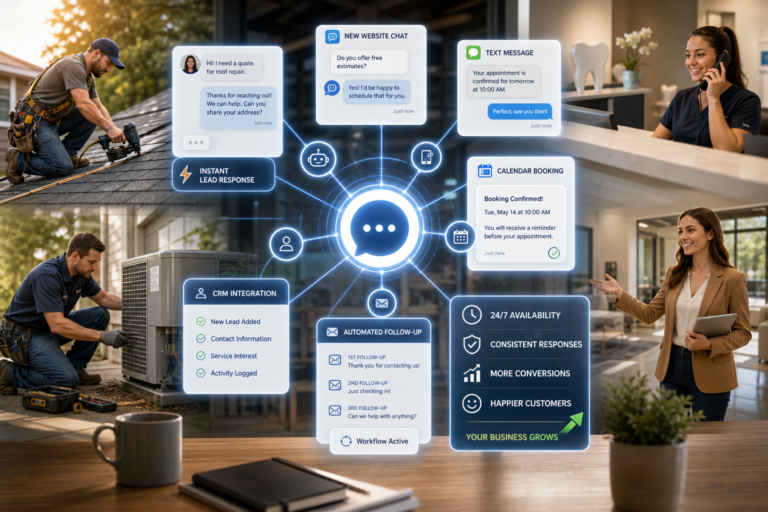
AI customer communication platforms automate these interactions while maintaining a natural, helpful tone. When a lead comes in, the system responds immediately, asks qualifying questions, provides relevant information, and books appointments directly into the calendar. This happens 24/7 without manual intervention.
Beyond speed, AI communication software brings consistency. Every lead receives the same quality of response. No one gets forgotten during busy periods. Follow-up happens automatically based on customer behavior and response patterns. The system remembers previous conversations and maintains context across multiple touchpoints.
Key features to look for in AI customer communication platforms
Not all AI communication tools deliver the same value for local businesses. The best platforms combine several capabilities that work together to improve lead conversion and customer satisfaction.
Instant lead response automation
When someone contacts your business, immediate acknowledgment matters more than perfect information. AI lead response automation engages prospects within seconds through their preferred channel. The system asks initial qualifying questions, confirms contact details, and sets expectations for next steps.
For a real estate agent, this means capturing buyer interest immediately when someone inquires about a property listing. The AI asks about budget, timeline, financing status, and preferred neighborhoods while the lead is still actively engaged. By the time the agent reviews the conversation, they have qualified information and a warm prospect ready for a showing.
Multi-channel communication management
Customers contact businesses through different channels based on preference and convenience. Some prefer text messages, others use website chat, and many still call directly. AI customer communication software manages all these channels from a single platform.
A med spa might receive Instagram messages about Botox pricing, website inquiries about facial treatments, and text messages from existing clients booking follow-up appointments. The AI system handles all three channels consistently while maintaining conversation history and customer context.
Appointment booking and calendar integration
Manual appointment scheduling creates friction. Customers send availability, businesses respond with options, multiple messages go back and forth, and sometimes appointments never get confirmed. AI appointment booking automation eliminates this friction.
The system presents available time slots based on real calendar availability, confirms the appointment, sends reminders, and handles rescheduling requests. An HVAC company can let customers book maintenance appointments directly through text message conversations without any back-and-forth coordination.
Intelligent follow-up workflows
Most sales require multiple touchpoints before conversion. A homeowner researching solar installation might not be ready to commit during the first conversation. AI follow-up automation maintains engagement through personalized sequences based on customer responses and behavior.
If someone requests information but doesn’t book an appointment, the system follows up with additional details, answers common questions, and creates opportunities for conversion. For a law firm, this might mean nurturing a personal injury lead who needs time to decide about legal representation by providing case study information and attorney credentials over several weeks.
Lead qualification and routing
Not every lead deserves the same attention. AI customer communication platforms can qualify prospects based on predefined criteria and route high-value opportunities appropriately. A roofing company might prioritize storm damage leads over general information requests, ensuring sales teams focus on the most promising opportunities.
The system asks qualifying questions naturally within conversations. For automotive businesses, this means identifying whether someone is ready to purchase within 30 days or just beginning research, then adjusting follow-up accordingly.
CRM integration and data synchronization
AI communication tools generate valuable data from every customer interaction. Integration with existing CRM systems ensures this information flows automatically into customer records without manual data entry. Every conversation, appointment, and qualification detail gets captured and organized.
This creates a complete customer journey view. When a dental practice reviews a patient record, they see initial inquiry details, appointment history, treatment preferences, and all communication exchanges in one place.
How AI customer communication software improves conversion rates
Local businesses implement AI communication platforms primarily to convert more leads into customers. Several mechanisms drive these conversion improvements.
Speed creates competitive advantage. When your business responds in 60 seconds while competitors take hours or days, you win more deals. Homeowners requesting roofing estimates typically contact multiple companies. The first business to respond professionally and book an inspection often gets the job.
Consistent follow-up prevents lost opportunities. Studies show that 80% of sales require five or more follow-up touchpoints, but most salespeople give up after two attempts. AI systems never forget to follow up. They maintain consistent outreach until leads convert or explicitly opt out.
Personalization at scale improves engagement. AI platforms use customer data to personalize conversations based on previous interactions, stated preferences, and behavior patterns. A real estate agent’s AI system might reference specific properties a buyer viewed on the website during follow-up conversations, creating continuity and relevance.
Reduced friction increases completion rates. Every extra step in the conversion process causes drop-off. AI appointment booking that happens within the conversation eliminates the need to visit separate scheduling pages or exchange multiple messages. Solar companies see higher consultation rates when prospects can book appointments through simple text exchanges.
Qualification improves sales efficiency. When AI systems qualify leads before human involvement, sales teams spend time only on prospects who meet minimum criteria. This increases close rates and allows businesses to serve more customers with the same staff.
Industry-specific applications of AI customer communication
Different local business types benefit from AI communication software in specific ways tailored to their customer journey and service model.
Roofing and home services
Roofing companies and contractors face seasonal demand spikes and urgent customer needs. A homeowner discovers a leak during a storm and needs immediate help. AI customer communication automation provides instant response even when crews are on job sites. The system qualifies the issue, schedules inspections, and provides emergency contact information when needed.
During storm seasons, roofing businesses might receive hundreds of inquiries. AI platforms manage this volume without overwhelming office staff, ensuring every homeowner receives prompt attention and appropriate routing based on damage severity.
Healthcare and dental practices
Patient communication requires professionalism, privacy awareness, and scheduling precision. Dental practices use AI communication software to manage appointment requests, send procedure information, handle insurance questions, and reduce no-shows through automated reminders.
Med spas benefit from AI systems that educate prospects about treatments, manage consultation bookings, and follow up with aftercare instructions. When someone inquires about cosmetic procedures, the AI can provide detailed information about options, pricing, and recovery while scheduling an in-person consultation.
Real estate professionals
Real estate agents manage multiple clients at different stages of buying or selling. AI customer communication platforms help agents stay responsive when showing properties, negotiating deals, or handling paperwork. The system can answer common questions about listings, schedule showings, and qualify buyer readiness.
For buyers, this means getting immediate information about properties that interest them. For agents, it means capturing serious buyers quickly and maintaining relationships with prospects who aren’t quite ready to act.
HVAC and home comfort services
HVAC businesses handle both emergency service calls and planned maintenance. AI communication systems differentiate between urgent cooling failures in summer heat and routine tune-up requests. Emergency situations get immediately escalated while maintenance appointments book automatically into available slots.
The system can also manage seasonal campaigns, reaching out to existing customers about maintenance before peak heating or cooling seasons. This proactive communication increases service revenue and customer retention.
Legal services
Law firms need to balance accessibility with attorney time management. Potential clients often have questions about whether they have a case before committing to paid consultations. AI customer communication platforms can provide initial case information, explain service areas, and qualify prospects based on case type and details.
Personal injury attorneys, family law practices, and business attorneys all benefit from automated lead qualification that identifies serious prospects before attorney involvement, improving efficiency while maintaining responsive client service.
Choosing the right AI customer communication platform
Local businesses should evaluate AI communication software based on specific criteria that impact daily operations and long-term ROI.
Implementation and ease of use
The best AI platform is one your team actually uses. Look for solutions with straightforward setup, intuitive interfaces, and minimal technical requirements. Some platforms require extensive configuration and ongoing management. Others work out of the box with simple customization.
Consider your team’s technical comfort level. If you don’t have dedicated IT staff, choose platforms with strong support and simple administration.
Customization and brand alignment
AI communication should sound like your business, not a generic assistant. Evaluate how platforms handle tone, messaging, and brand voice. Can you customize conversation flows for different service types? Does the system adapt to your specific qualifying criteria?
A solar company’s AI communication will differ significantly from a dental practice’s approach. Your platform should accommodate these differences.
Channel coverage and integration
Inventory every channel where customers contact your business. Does the platform support website chat, SMS, social media messages, and email? How does it handle phone call transcription and follow-up?
Integration capability matters equally. Can the system connect with your existing calendar, CRM, and business tools? Platforms that require manual data transfer between systems create work rather than reducing it.
Scalability and pricing structure
Local businesses grow and seasonal demand fluctuates. Choose platforms with pricing that scales reasonably with usage. Some charge per conversation, others per month, and some use tiered pricing based on features.
Understand what happens during peak periods. If you’re a roofing company that receives 10 times normal inquiry volume after storms, will your platform costs spike proportionally or does the pricing structure accommodate these surges?
Reporting and performance visibility
AI customer communication platforms generate data about response times, conversion rates, common questions, and customer behavior. Strong reporting helps you optimize messaging, identify bottlenecks, and measure ROI.
Look for platforms that show conversation outcomes, appointment completion rates, and lead quality metrics. This visibility allows continuous improvement and helps justify the platform investment.
Common challenges with AI customer communication implementation
Local businesses encounter predictable obstacles when implementing AI communication systems. Anticipating these challenges helps ensure successful adoption.
Initial setup and training
Configuring AI systems to represent your business accurately requires upfront effort. You need to define qualification criteria, create conversation flows, establish appointment rules, and train the system on your services and policies.
Allocate time for this setup phase. Rushing implementation leads to generic, ineffective communication that frustrates customers rather than helping them.
Team resistance and workflow changes
Staff members accustomed to manual processes might resist AI automation. Front desk personnel might worry about job security or feel the system can’t match human judgment. Sales teams might distrust AI-qualified leads.
Successful implementation requires explaining how AI handles routine tasks so humans can focus on higher-value activities. Frame automation as a tool that makes jobs easier, not a replacement for people.
Maintaining natural conversation quality
Early AI communication tools felt robotic and frustrating. Modern platforms sound much more natural, but they still require monitoring and refinement. Regularly review conversations to identify awkward exchanges or situations where the AI provides unhelpful responses.
Most platforms allow ongoing training and adjustment. Use real customer interactions to improve system responses over time.
Balancing automation with human touchpoints
Not every conversation should be fully automated. Some situations require human judgment, empathy, or expertise. Effective AI communication strategies define clear escalation points where conversations transfer to human team members.
A homeowner describing severe roof damage needs immediate human contact. A potential patient with complex medical history should speak with staff before booking procedures. Build these triggers into your automation rules.
Measuring success with AI customer communication software
Local businesses should track specific metrics to evaluate whether their AI communication platform delivers value.
Lead response time
Measure how quickly your business now responds to inquiries compared to before implementation. The goal is consistent response within minutes regardless of time of day or current workload.
Appointment booking rate
Track the percentage of leads that convert into booked appointments. AI platforms should increase this rate by reducing friction and maintaining consistent follow-up.
Conversation to conversion rate
Monitor how many conversations result in desired actions, whether that’s booking appointments, requesting estimates, or moving forward with services. Improving this metric directly impacts revenue.
Staff time savings
Quantify how much time your team previously spent on routine communication tasks now handled by AI. This saved time should redirect toward higher-value activities like customer service, sales conversations, or service delivery.
Customer satisfaction and feedback
Survey customers about their communication experience. Do they appreciate quick responses? Did they find appointment booking convenient? Were their questions answered effectively? Customer feedback helps identify improvement opportunities.
Revenue impact
Ultimately, AI customer communication software should increase revenue by converting more leads and reducing missed opportunities. Track closed sales attributed to leads engaged through the AI platform.
How GetDMFlow helps businesses automate lead response and conversion
GetDMFlow is a Canadian AI sales automation platform designed specifically for local service businesses that need to respond faster, book more appointments, and convert more leads without increasing staff workload.
The platform provides AI lead response automation that engages prospects within seconds regardless of when they make contact. When a homeowner submits a form requesting roofing estimates at 9 PM, GetDMFlow responds immediately, asks qualifying questions about the project, and books an inspection appointment directly into the company’s calendar.
AI appointment booking automation eliminates scheduling friction by presenting available times based on real calendar data and confirming appointments through natural conversation. HVAC companies use this capability to let customers book maintenance visits through simple text exchanges without phone tag or email back-and-forth.
AI customer communication automation maintains consistent engagement across multiple channels including SMS, website chat, and social media. A dental practice can manage appointment requests, insurance questions, and procedure inquiries through a single platform while maintaining complete conversation history.
AI follow-up automation ensures no lead falls through the cracks by maintaining personalized outreach based on customer responses and behavior. Solar companies use this to nurture prospects through lengthy decision processes by providing relevant information at appropriate intervals.
The platform serves roofing companies, HVAC contractors, dental practices, real estate professionals, med spas, solar companies, automotive businesses, law firms, and other service-based local businesses.
GetDMFlow integrates with existing CRM systems, calendars, and business tools through AI CRM automation that eliminates manual data entry and keeps customer information synchronized across platforms.
Businesses implement GetDMFlow to respond faster than competitors, reduce missed opportunities from slow follow-up, improve customer experience through 24/7 availability, and increase conversion rates by maintaining consistent engagement throughout the customer journey.
Frequently asked questions
What is AI customer communication software?
AI customer communication software uses automation to handle conversations with leads and customers across multiple channels. The platform responds to inquiries, asks qualifying questions, books appointments, sends follow-ups, and manages ongoing communication without manual intervention.
How does AI customer communication differ from standard messaging tools?
Standard messaging tools require humans to read and respond to every message. AI customer communication platforms automate responses based on customer input, conversation context, and predefined business rules. The system maintains natural conversations while handling routine tasks automatically.
Can AI communication software handle complex customer questions?
Modern AI platforms handle most common questions effectively by drawing from business information, service details, and previous conversation patterns. When questions require human expertise or judgment, the system escalates to appropriate team members while maintaining conversation context.
What happens if the AI doesn’t understand a customer inquiry?
Quality AI communication platforms acknowledge when they can’t answer questions confidently. The system might ask clarifying questions, provide related information, or transfer the conversation to human staff members. This prevents frustrating customer experiences from incorrect or confusing responses.
How long does it take to implement AI customer communication software?
Implementation timelines vary based on business complexity and customization requirements. Basic setup might take a few days while comprehensive implementations with multiple service types and detailed qualification criteria could require several weeks. Most businesses see value from basic automation within the first week.
Will customers know they’re communicating with AI?
Approaches vary by business preference and industry regulations. Some businesses clearly identify AI assistance while others let the natural conversation speak for itself. The goal is helpful, efficient communication regardless of whether customers specifically know about the technology involved.
Can AI communication software integrate with existing business tools?
Most modern platforms offer integration capabilities with popular CRM systems, calendar applications, email marketing tools, and business software. Integration requirements should be a key evaluation criterion when choosing platforms.
What types of businesses benefit most from AI customer communication?
Service-based local businesses with high inquiry volumes and appointment-based sales processes benefit significantly. This includes home services contractors, healthcare providers, real estate professionals, automotive businesses, legal services, and similar industries where response speed and consistent follow-up impact conversion rates.
How much does AI customer communication software cost?
Pricing varies widely based on features, conversation volume, channel coverage, and integration requirements. Some platforms charge monthly subscriptions starting around $200-500 for small businesses, while enterprise solutions might cost several thousand monthly. Evaluate pricing in context of expected lead value and conversion improvements.
Does AI communication software work outside business hours?
Yes, 24/7 availability is a core benefit. AI platforms respond to inquiries at any time, including evenings, weekends, and holidays. This ensures businesses never miss opportunities because prospects made contact outside traditional office hours.
Can AI communication platforms handle multiple languages?
Many modern platforms support multiple languages, which benefits businesses serving diverse communities. Language capabilities vary by platform, so verify specific language support if this matters for your customer base.
How do you measure ROI from AI customer communication software?
Track metrics including increased conversion rates, faster lead response times, more booked appointments, reduced staff time on routine communication, and revenue from leads engaged through the platform. Most businesses see positive ROI within 3-6 months through improved conversion efficiency and capacity to handle more leads.
Conclusion
AI customer communication software transforms how local businesses interact with prospects and customers. Speed, consistency, and 24/7 availability directly impact conversion rates and revenue growth. Businesses that respond within minutes capture opportunities while competitors lose leads to slow follow-up and manual processes.
The right platform automates routine communication tasks while maintaining natural, helpful conversations. Lead response happens instantly, appointments book without friction, follow-up occurs consistently, and qualification information flows automatically into CRM systems. This allows small teams to provide enterprise-level customer communication without hiring additional staff.
Local service businesses including roofing companies, HVAC contractors, dental practices, real estate professionals, med spas, solar installers, automotive businesses, and law firms all benefit from AI communication automation tailored to their specific customer journey and conversion process.
Successful implementation requires choosing platforms with appropriate features, ensuring team adoption, maintaining conversation quality through monitoring and refinement, and measuring results through key metrics that connect to business outcomes.
GetDMFlow provides AI sales automation specifically designed for local service businesses. The platform handles lead response automation, appointment booking, customer communication, and follow-up workflows that help businesses respond faster, convert more leads, and grow revenue without increasing operational complexity.
Ready to automate your customer communication?
Local businesses lose revenue daily because of slow responses and inconsistent follow-up. GetDMFlow eliminates these problems through AI automation that engages leads instantly, books appointments automatically, and maintains consistent communication across every customer touchpoint.
See how GetDMFlow helps businesses in your industry respond faster and convert more leads. Book a demo to learn how AI customer communication automation can transform your lead conversion process.
